

~Special Announcement~
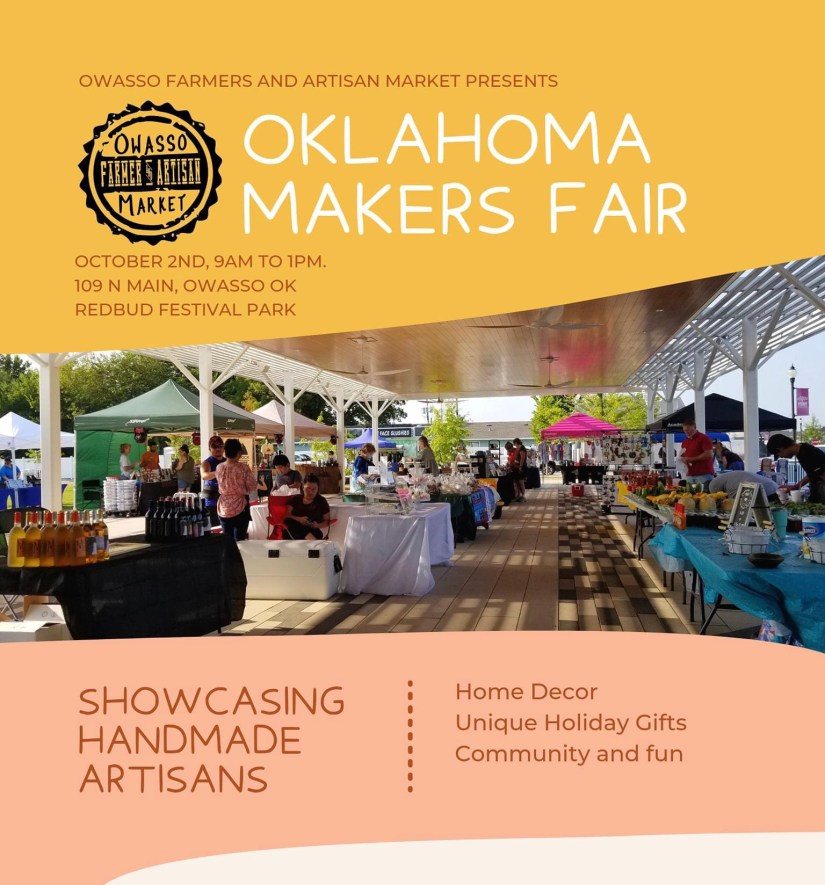
If you’re in the Tulsa, Oklahoma area, The Owasso Farmer and Artisan Market is having an end of season bash Saturday, October 2nd, and my friend Sarah from @doubledutchyarn and I will be there!
Be sure to come out and see us. You can get your hands on some unique small batch yarn from Sarah and some hand and machine knit accessories from me! The show is from 9AM-1PM, so be sure to get up early if you want to get the best it has to give!
Now back to your regularly scheduled post!
It’s been quite a while since I’ve done a craft show. We’re talking years. I still consider myself pretty much a newbie even though I’ve done a few shows before.
So what should you do if you’re new to vending?
And what if you’re not sure this is the direction you want your business to take?
Use What You Have
You can find lists of things to take to a craft show as a vendor all over the internet. There are lots of good lists and resources, so I’ll try not to repeat what others have said too much.
But.
I came across quite a few lists on Pinterest that mentioned buying things especially for the craft show instead of having dual purpose items from your home to use at the show.
I don’t know how much storage those bloggers had, but my house is not made of closets, and my garage is for vehicles.
If you’re a newbie, I think you should ignore that advice. Instead,
Borrow, rent, and repurpose.
Borrow or Rent Display Pieces
If you have friends who vend at shows, ask for their advice and help!
Besides vending advice, they might have a tent you could use for outdoor shows. They might have extra peg board displays.
It doesn’t hurt to ask!
In addition to borrowing display pieces, consider calling rental places and asking about renting displays.
If what you borrow or rent works out well for you, you can buy one yourself with confidence. If not, what you’ve learned is more than worth the money you’ve saved and the experiences you’ve gained.

Repurpose
I have a 2 x 4′ portable folding table that my LK-150 machine fits on when we have knit-togethers at a friend’s house. Since Sarah is also a machine knitter and has the same table, we’re going to use those both in our booth.
Repurposed item. Table costs saved.
I have a few vintage suitcases that work overtime as booth display during shows and inventory storage at home, though I suppose those could be considered “show only” items. One suitcase was my grandpa’s, so I guess that counts as borrowed!
If I don’t have enough display bins, you bet I’m going to grab some of my yarn baskets from around the house and use them for a show.
Existing items and more savings.
Why should I buy more? The yarn at home will survive sitting in a paper bag for a couple days. I’m not taking the ratty plastic bins from my college dorm room that are stained with paint and resin tints. I’m taking the nice, woven yarn baskets that are perfectly acceptable to use as displays.
Yes, I’ll agree with those vendor bloggers that it’s really nice to have dedicated craft show equipment. And yes, one day I plan to have a lot nicer show set up than I do now with things I use just for shows.
That’s it. One day.
But I’m not there yet, and buying single-purpose things just seems wasteful. If you add up the costs of tables, bins, and display items Sarah and I are borrowing or reusing, you could easily top over $100, perhaps $200 saved.
I want to be both frugal and efficient, and I think that’s a good path to follow for vending newbies.
It doesn’t make sense to throw lots of money at displays when shows are still being cancelled for health and safety reasons.
Don’t get me wrong. I’m not advocating for a sloppy booth thrown together on your coffee table. I want my knits to look their best so I have the best chance of selling my items and building a customer base. I will buy what I need for displays.
But as long as you display things nicely and have quality products, I don’t think you have to break the bank or overflow your garage to have an exclusive craft show setup, especially if you are new to vending at shows.
If craft show vending turns out to be something that isn’t for you (maybe you prefer online sales), you don’t want to be stuck storing a booth’s worth of booth-sized displays.

After the Show
You’re not done with your booth when the craft show is over! If you keep vending, there are important things to take note of for your next show besides inventory and sales taxes.
I suggest keeping a notebook or digital copy and recording your experiences before too much time has passed after the show:
What was the demographic of this show like?
-If you didn’t know beforehand and you’d like to do the same show again in the future, what can you learn to better curate your items to this crowd?
What was show management like?
-If the show was nice but management was all over the place, you might need to consider if it’s worth the trouble dealing with the people running it to vend there again.
How did my booth work?
How DIDN’T my booth work?
What ideas did I like from other vendors?
What item sold well?
What item didn’t move at all?
What items did I bring for my booth ended up being unnecessary?
What did I end up needing but not having?
What tips and tricks did I pick up from other vendors?
Keeping record of your show experience as soon after the show as you can, even if you’re exhausted, can be very valuable to you for your next shows. Perhaps you won’t make the same mistake twice this way, or you’ll realize that you really should make extra of a specific item since it sold really well at that show in the past.
Let Your Booth Evolve
Don’t immediately commit to one booth setup. There’s always something that can be improved.

This is my first ever setup. It’s kind of cute, but there is definitely room for improvement there!
What changes do you think should happen to make this a better booth? Here are some of the things I learned from my first show:
-Signage and identifying yourself is really important so potential and returning customers can recognize you, but there’s none of that there.
-My items at this show were all hand knit, one-of-a-kind pieces, but I didn’t do anything to let potential buyers know and develop interest in my wares.
-The table setup with me behind it didn’t really do much to invite customers in to explore my pieces, either. It created a separation that made the space slightly less welcoming than it could have been.
-My business cards were in one spot on the table instead of spread around to give customers more opportunities to pick one up.
-Some items are priced individually, but some don’t look to be from this picture (and I can’t quite remember, to be honest). Pricing should be obvious on a tag or a flyer if certain items are priced the same.
It’s important to reflect on your booth and improve each time. Be willing to make changes to suit your needs and to reflect the customers who will be at the specific show where you are about to vend.
Getting started as a craft show vendor can be a little intimidating sometimes, but as long as you keep an open mind and are ready to learn from every experience, you’ll be just fine!
Have you been a vendor at a maker’s market before? What tips and tricks do you have to share with new or prospective vendors?
Do you agree or disagree with my booth advice?
Let me know in the comments below!

 ELY Knits