
From colorwork trends to brioche fads, you can find nearly everything knitting, crochet, or yarn-related on ravelry.com. I’ve been a user for years now, and I can spend hours looking through patterns, projects, and yarn pages.
Ravelry has over 600K hand knitting patterns and is quickly closing in on 400K crochet patterns, but there are only 3,775 machine knitting patterns listed in their database.

That doesn’t mean you can’t find things to knit on your machine, though! Ravelry’s search feature has a wonderful amount of refinement options.
If you haven’t used their expanded search features before, I recommend reading Ravelry’s own tip articles on refining searches and saved searches.
Here’s how I use Ravelry when I’m looking for patterns to knit using my machines. The process is pretty straightforward, and you’re really only limited by how many modifications or adjustments you’re willing to make so a pattern will work.
This is where you can get really picky about what you what to knit and what you’re willing to do for modifications. Do you want to work with multiple colors? Scroll down the left side and select the number of colors you want to use from the “Colors used (typical)” box. Do you only have a certain amount of yardage in that special skein? Limit your search to a yardage/meterage range.
Craft Type
First of all, try refining by “Machine Knitting” as your craft type! Ravelry is nearing 4,000 machine knitting patterns in their database, after all. The term includes Addi circular knitting machines as well as Circular Sock Machines (CSM), but many patterns will indicate compatible machines in their titles.
If you sort by “New to Ravelry,” you’ll find there are designers like Lauren Riker who regularly upload new patterns. I find that new designs by Machine Knitting Monthly are only sporadically included in the database, though.
If you didn’t find something that spoke to you in the “machine knitting” tag, don’t worry. There are a lot more options out there.
Do the Math with a Schematic
If you know how to use proportions and your pattern has a schematic, you can fill in stitches and rows per inch using the pattern garment’s measurements to fit whatever machine gauge you’d like to use.
Ravelry has the searchable pattern attribute “has schematic” (just start typing it in the search bar and it will pop up), but not all designers will check the box so the database knows this.
I’ll do a more detailed post on knitting math in the future, so stick around if this is something you’re interested in learning more about!
Search Refinement: Yarn Weight
When you’re considering a new project without making anything specific in mind, think about what machine you want to work with and compatible yarn sizes.
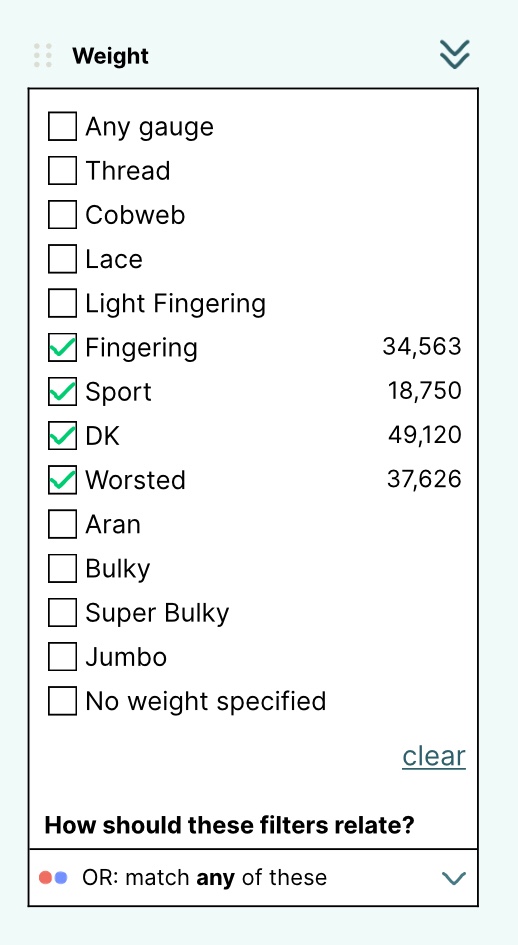
If I’m working with my 4.5mm standard gauge machine, I generally select yarn sizes of sport weight and lighter. If it’s my 6.5mm mid-gauge, I select fingering through worsted weights. If it’s my bulky machine, I switch to excluding yarn sizes with the drop-down menu at the bottom of a search refinement box. and remove super bulky from search result possibilities.
Remember to consider the size of the garment you want to make and how many stitches/needles you’ll need. Standard gauge beds have 200 needles. Mid-gauge beds have 150, and Bulky beds have 120. If your pattern needs 300 stitches, you probably need to do some math and play with stitch gauge to make things work.
Search Refinement: “Worked-Flat”
I like to start out my potential machine knitting project browsing sessions with “craft: Knitting, has photo: yes, and attributes: worked-flat” as the minimum search refinements.

If something is worked flat already, you generally don’t have to worry as much about dividing pattern or colorwork repeats.
Some patterns are worked in-the-round and then separated at the arms to be worked flat, but they’ll show up in this search refinement. You can generally divide the total stitch count in half and then work front and back separately and be just fine. I like to add one stitch to each side of the separated halves as a selvedge stitch for later mattress stitching.
Once you’ve found a set of search refinements that fits what you’re looking for, be sure to save your search! Ravelry lets you save multiple searches, so you can select search terms according to your mood and come back to them whenever you want.
First Translations
If you’re worried about converting patterns to your machine or you’re just not sure about your skill levels, first try a knitting project that requires fewer modifications to make it to the machine.
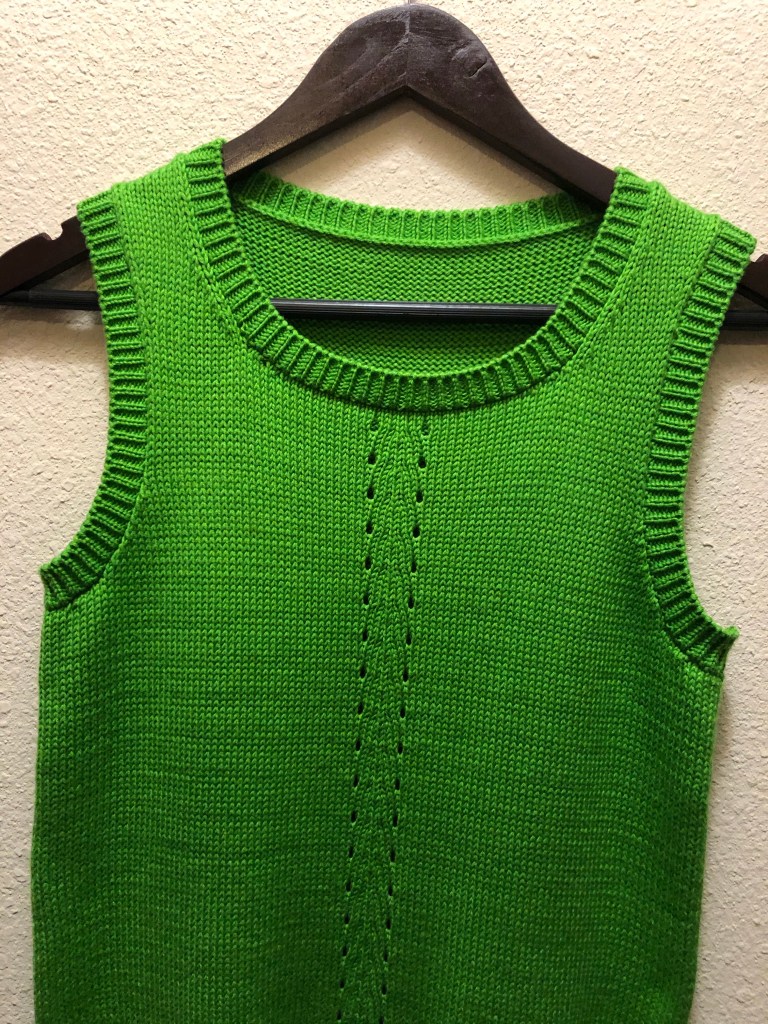
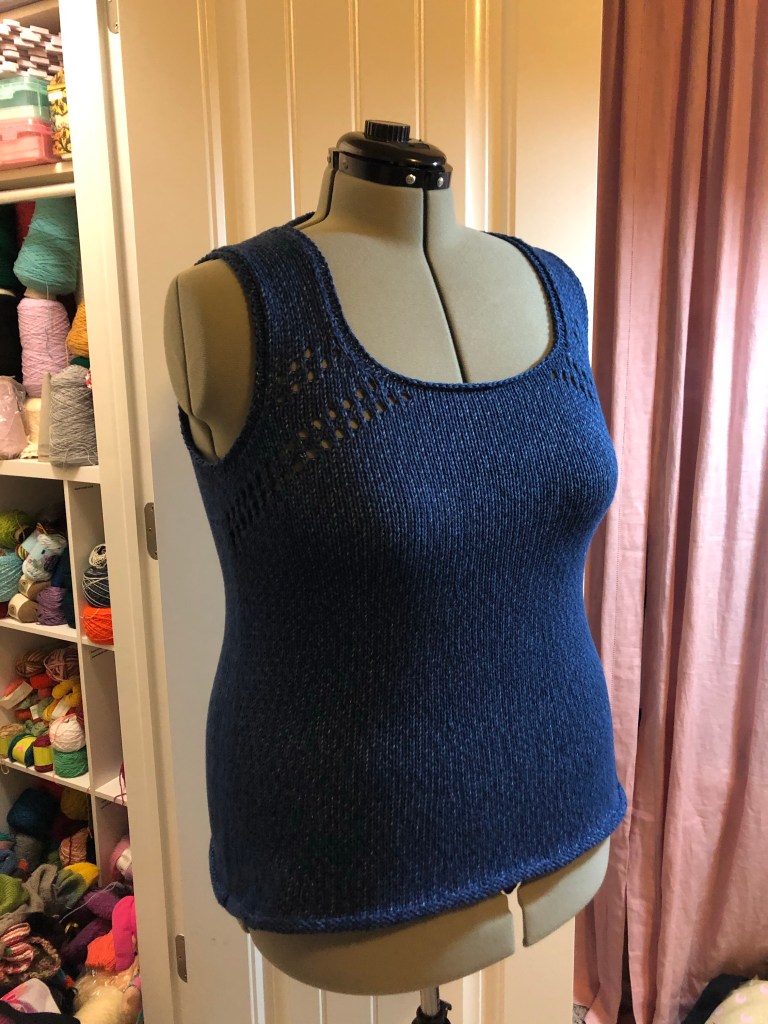
A lot of DK weight patterns are at easily achievable gauges for the SilverReed LK-150 and have stitch counts that fit within your 150 needle limit. If you’re new to translating hand-knitting patterns to machine knitting, this can be a great place to start because you will be able to knit some patterns nearly exactly as written.

I have knitted most of the patterns from the Mojave Knits Collection by Meghan Kelly on my LK-150 without modifications. I’ve also used some of them on my Brother KH-890 standard gauge at upper tensions. Most of the patterns feature a large amount of stockinette stitch with smaller areas/panels of eyelets that can be easily created with a transfer tool.

Hybrid Knitting
If you also hand knit, consider knitting garter stitch borders or complicated lace repeats by hand and then hanging your work on the machine when you come to a more machine-friendly part.
Don’t limit yourself to one craft just because you think you have to! Machine knitting does some things better than hand-knitting, and hand-knitting does some things better than machine knitting.
For the Alanis Sweater by Elizabeth Smith below, I finished the last few short-rows in the yoke shaping by hand because I didn’t want to worry about wraps and the garter bar. The sweater is knitted in-the-round by hand, but it was easy to separate the sides and add selvedge stitches.
Stay Flexible
When you’re looking at your pattern, keep an open mind. You can always replace hand knit borders with a machine knit variant. Mock rib is simple on the machine and is often included in your machine’s manual. You can ladder down purl stitches and latch them up with the latch tool as knit stitches for true ribbing, or you can use a ribber attachment if your machine has one.
If a lace pattern has purls in it, you can re-form them with the latch hook or simply leave them as-is for your own variation without the purl bump on the right side of the garment. If you don’t want to hand-transfer a lace pattern, consider replacing the lace area with a lace carriage punch card pattern.
If you can crochet, don’t rule out a crochet edging, either!
When you translate and modify a pattern to fit your machines, you really can create something one of a kind.
Because you’re modifying a pattern, remember there’s a chance it might not look exactly like the designer’s original piece. You are completely changing the craft they designed it for, after all. I personally don’t mind differences that might arise when changing crafts because they just add to the originality of the garment.
That being said, sometimes your attempts to modify a pattern won’t work. Whether it’s because of a gauge calculation error, a stitch miscount, or you need to keep working on your machine knitting skills, you might not succeed on your first or second try. Maybe that stitch wasn’t meant to be done by machine.
You might finish a garment and then be hit with something in hindsight that would have worked for your project much better than the choice you made, and that’s OK.
Don’t be afraid to rip out something that doesn’t work! You are allowed to rip it out and start over. If you’re like me and you need permission to undo something you spent a lot of time on, even though it didn’t work, here’s your sign. You can rip it out. It is OK. Learn from it, take a deep breath, and move on. You’re still on the right path and leveling up your skills.
How do you find patterns to knit on your machine? What search refinements do you like to use on ravelry? Do you use another site to find patterns, or do you stick to books and magazines?
Let me know in the comments!

 ELY Knits