Uncategorized

Stuck without a Ravel Cord? Try this!

Ravel cord is a strong and slippery-smooth braided nylon that machine knitters use to connect scrap yarn pieces knitted from the cast-on up with the main yarn of the garment in a way that can be easily removed.

After the hem has been hung and the main yarn stitches have been secured, you simply pull on the ravel cord and away the scrap yarn falls to reveal a beautiful hung hem or finished graft.

Coming from a hand-knitter who adores the look of a provisional cast on grafted to live stitches to create a seamless look but is too lazy to actually do it a decent amount of the time, the scrap yarn and ravel cord combo is a dream come true.


“Scrap’n’Ravel” is one of my favorite ways to cast on to the machine, so I use my ravel cord a lot.

To “Scrap’n’Ravel” on, I like to use the Automatic Cast On from my knitting machine manual. (That’s simply because it’s faster, so you can cast on whatever way you like. Scrap yarn is a great opportunity to practice new techniques, after all!)

After I’ve knitted at least 6 rows, it’s time to reach for the ravel cord before the real fun of the project starts.

But recently, that’s where I’ve been running into problems…
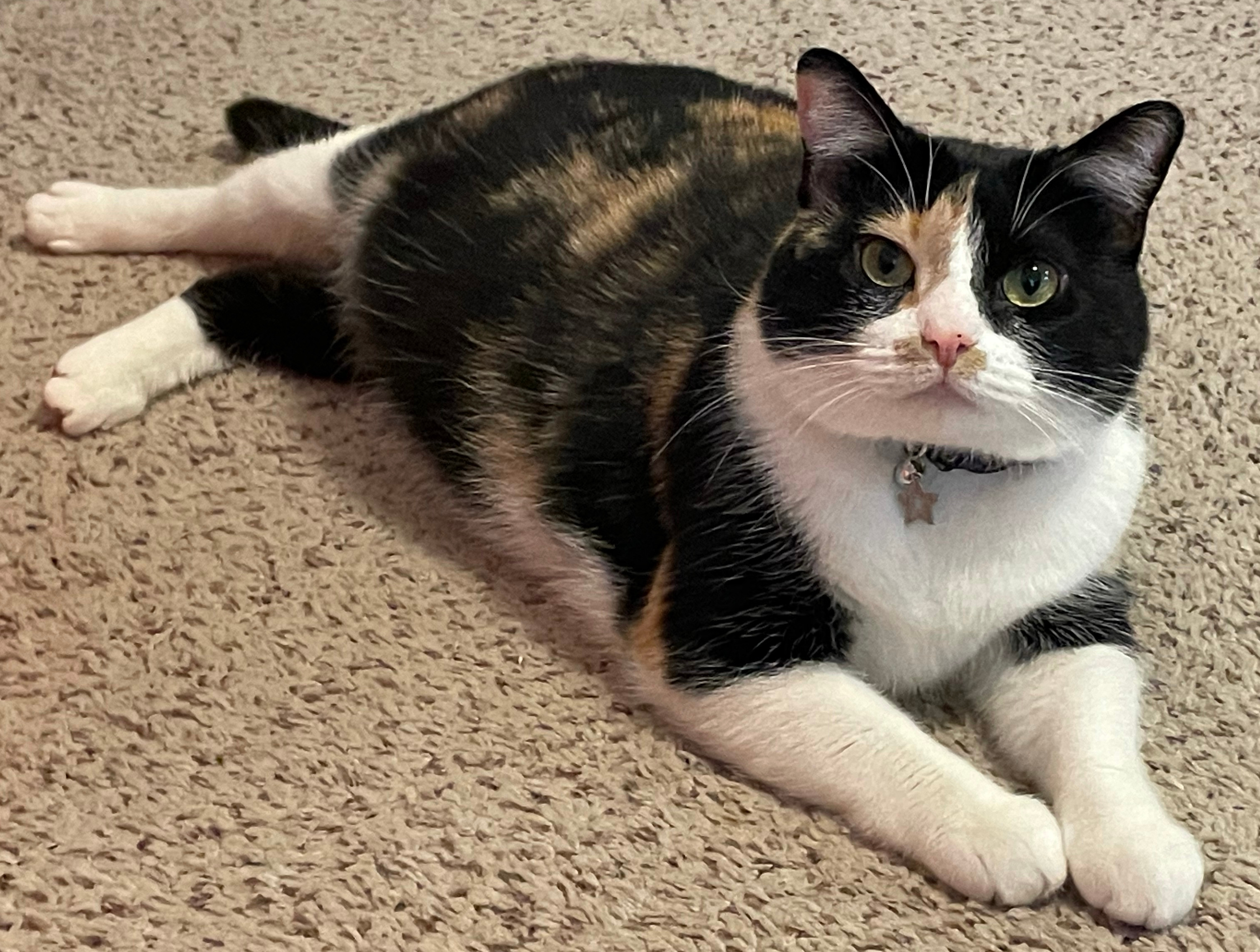
“problems” aka the Yarn Inspektor

We adopted a cat back towards the end of 2020. She is a lovely, talkative calico, and she loves yarn.

She loves sitting on yarn. She loves staring at yarn. She loves sprawling across yarn. She loves flossing with yarn. (That one I haven’t tried yet.)

But she also loves stealing my yarn!

I stopped her from chomping the cones, and I stopped her from sprinkling the skeins with wee, but I can’t seem to stop her from batting the bobbins.

These kumihimo bobbins, sometimes sold as Bryson EZ Bobs, are just too tempting for her! They’re primo cat toy size, after all, AND they have a “tail!”
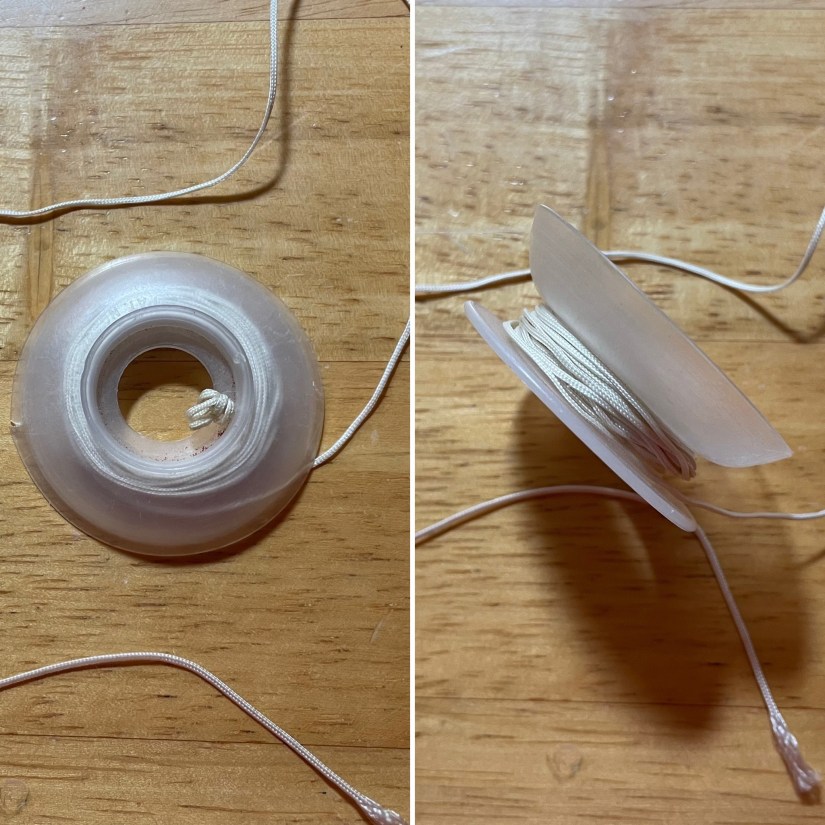
kumihimo bobbins with ravel cord in closed and open positions

I have a stash of these things. Or, I suppose, had a stash. Now the Yarn Inspektor has a stash somewhere.


If things were going as they should, I’d knit a row using ravel cord. It would look like this…
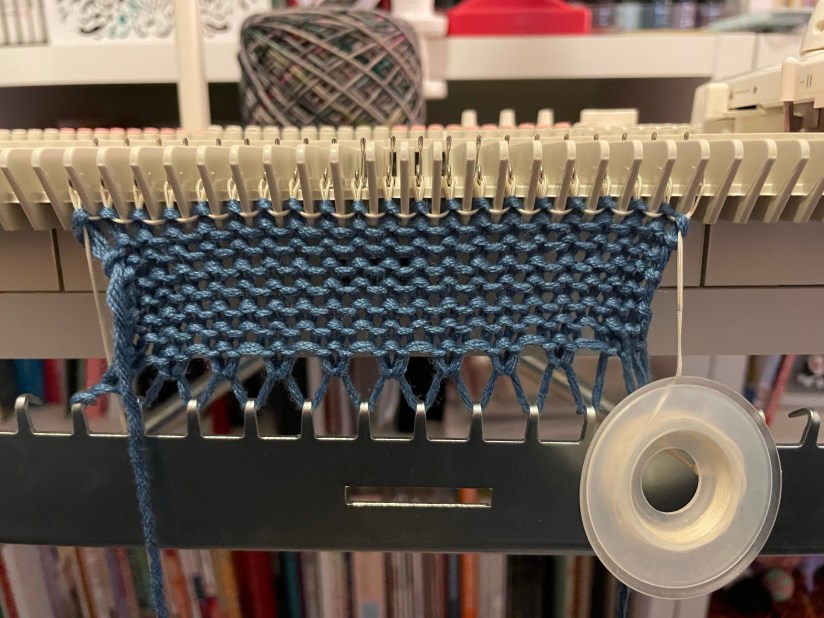
… and I’d be ready to knit with my main yarn!

But since the Yarn Inspektor has decided my ravel cord is her ravel cord, sometimes I’ve had to make do.

Thanks to this trick I learned from my mentor, Pamela Carrico of CMO Designer Knits, I don’t have to spend hours searching for my bobbins of ravel cord.

I can use the scrap yarn I was knitting with as ravel cord!

(Is your mind blown like mine was?!)


This trick works best with smooth, strong yarns. A crispy acrylic or toothy wool is not a good idea. Removing the scrap-yarn-as-ravel-cord strip is not as smooth as working with ravel cord. I wouldn’t recommend this trick over using ravel cord.

But it will save you if “problems” meow your way.

When you’re ready to knit what would normally be your single row of ravel cord, use your fingers to grab onto the scrap yarn just under the carriage where the yarn is loaded into the feeder and pull a bit down, like so:
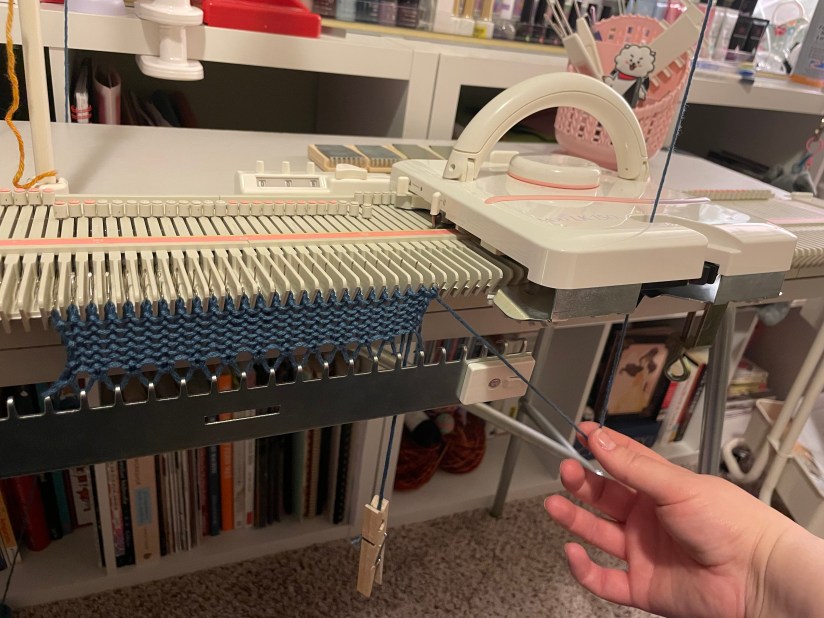
Without moving your hand, knit one row across. You’re left with a loop of scrap yarn at the edge of your work like this:
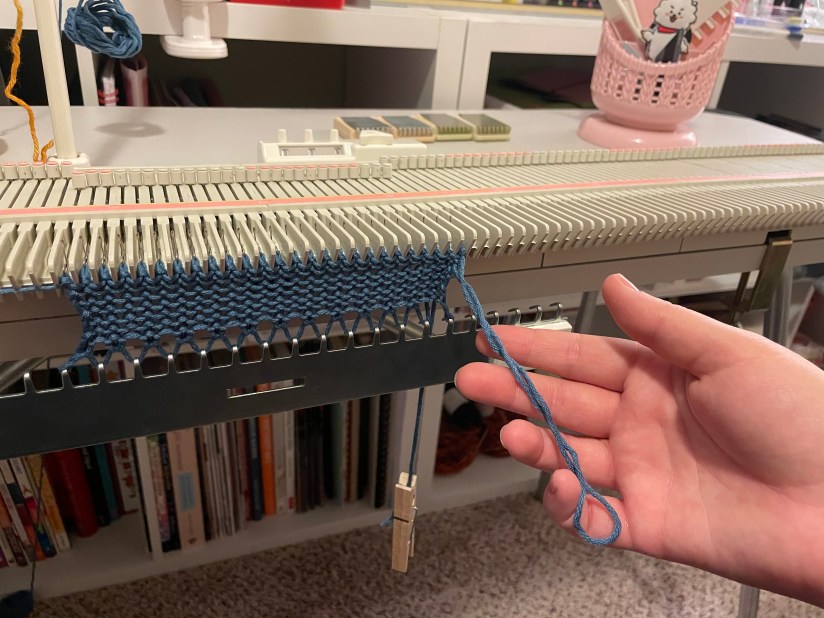
Now you’re ready to cut your scrap yarn and move on to the main event, just like you would be if you had knitted the row with ravel cord!

When it’s time to remove your scrap-cord, tug on the top half of the loop you made. It takes a bit more force than pulling ravel cord does.

As you can see in this clip, it is a bit of a tug, but it does the job! Just make sure to tug the top half.


What do you think? Is this a trick you think you’ll try in your knitting? Do you have any tips or tricks of your own to share?

Leave me a message in the comments below!


Thank you for joining me on my machine knitting journey!

Uncategorized

Resource Roundup #2: Machine Knitting Etc

There are so many wonderful machine knitting resources floating around on the internet, but theyโ€™re not always easy to find. Theย Resource Roundupย series goes through the links on theย Helpful Links and Resourcesย page in more detail to help you discover new places to learn more about machine knitting.


What is Machine Knitting Etc?

Machine Knitting Etc is the best place to find FREE knitting machine manuals and other PDF resources. If your machine didn’t come with a manual or yours is damaged, you’ll likely be able to find a copy here, even if it isn’t one of the more well-known brands like Brother or Passap.

For the DIY knitting machine mechanic, you can often find parts and service manuals.

If you’re looking for a punchcard pattern, you’ll find copies of standard punchcard sets, such as the “M” series that came with the Brother KH-890, along with sets from other brands and models.

And that’s still not all! You can find various stitch dictionaries, tip and technique articles, and …

Vintage magazines!

Some of the color choices may seem questionable now, but the vintage magazines Machine Knitting Etc host on their site are wonderful sources of patterns and inspiration.

Those 80s and 90s magazines sure boast some familiar looks to what some stores are hanging on their racks now. Classic shapes are classic for a reason, after all!

Many patterns offer schematics so you don’t need to worry about anything being written for a long-discontinued yarn. Simply fit your yarn’s gauge to the pattern, and you’re ready to go after a little math.


I could drone on and on about this wonderful site, but I hope you’ll take some time for yourself to explore it. These manuals and magazines are snippets of machine knitting history, and you never know where your next project might come from!

Please consider adding Machine Knitting Etc. to your ad-blocking software’s white-list so we can support this valuable resource to our craft!


Do you have a resource to share? Comment below or send it to me via the contact me page!

Uncategorized

Resource Roundup: The Answer Lady and Ask Jack

There are so many wonderful machine knitting resources floating around on the internet, but they’re not always easy to find. The Resource Roundup series will go through the links on the Helpful Links and Resources page in more detail to help you discover new places to learn more about machine knitting.


What is “The Answer Lady” all about?

The Answer Lady, Kathryn Doubrley, not only has a website full of books, patterns, and articles, she also has a YouTube channel featuring machine knitting videos and repair advice from her husband Jack.

To be blunt, the website looks outdated and visually unappealing, but don’t let that keep you from exploring it. You will miss out on a wealth of knowledge.

Doubrley has filled the site with her designs featuring different techniques, such as “cables” that do not use crossed stitches or circle sweaters with fun construction and lots of drape. Just clicking through her book offerings and seeing the pictures could have you thinking, “I didn’t know you could do that with a machine!”

Doubrley’s books are offered as PDF downloads through Ravelry’s store system, and she even advertises Zoom lessons on some book pages. Even if her website design doesn’t keep up with the times, her pattern delivery and accessibility sure do. I believe her pricing is very reasonable, and she also offers some freebies on her site.

There is a new Answer Lady & Friends app for Android devices, but I am an iOS user, so I can’t try it out. If you’ve tried it, let me know what you think!


Ask Jack on YouTube

If you have a knitting machine, you need to know how to maintenance it! Unfortunately, shops and dealers who maintenance machines are few and far between, and shipping a machine to and from the shop is fairly expensive on top of repair costs.

Doubrley’s husband Jack, a former mechanic, used to accept machines for repair work, but he is currently on a break. You can still benefit from his knowledge with The Answer Lady’s YouTube Ask Jack series.

This Ask Jack & Machine Maintenance playlist on YouTube is a priceless resource for any machine knitter, especially those of us without someone who can repair machines in our state or even our country. There is also a topical video index on their website.

Watching Jack repair and explain his process will help you maintenance your machine, and it will also teach you more about how your machine actually works.

I have used these videos to learn to clean carriages, and I’m currently restoring and repairing a Brother/Knit-King KH-260 bulky machine using Ask Jack and parts manuals as my guides.

If you decide to maintenance your machine yourself, I advise watching the relevant Ask Jack video a couple times before you start working on your machine and having it pulled up as reference while you are working.


Do you have a resource to share? Comment below or send it to me via the contact me page!