

Happy New Year, everyone!
You might recognize this stitch from my Using The Needle Beetle with Bonus Baby Blanket Recipe post.
I received a few requests for a step-by-step tutorial (a few of which were tied up in spam filters, so my apologies to those of you who haven’t received a reply yet) so here it is!
This is a nice introduction to tuck/textured stitches for beginners since needle selection and carriage changes are isolated to the first and fourth row of this four-row repeat.
Check the notes after the pattern if you’re interested in modifications! The abbreviation key also follows the pattern.
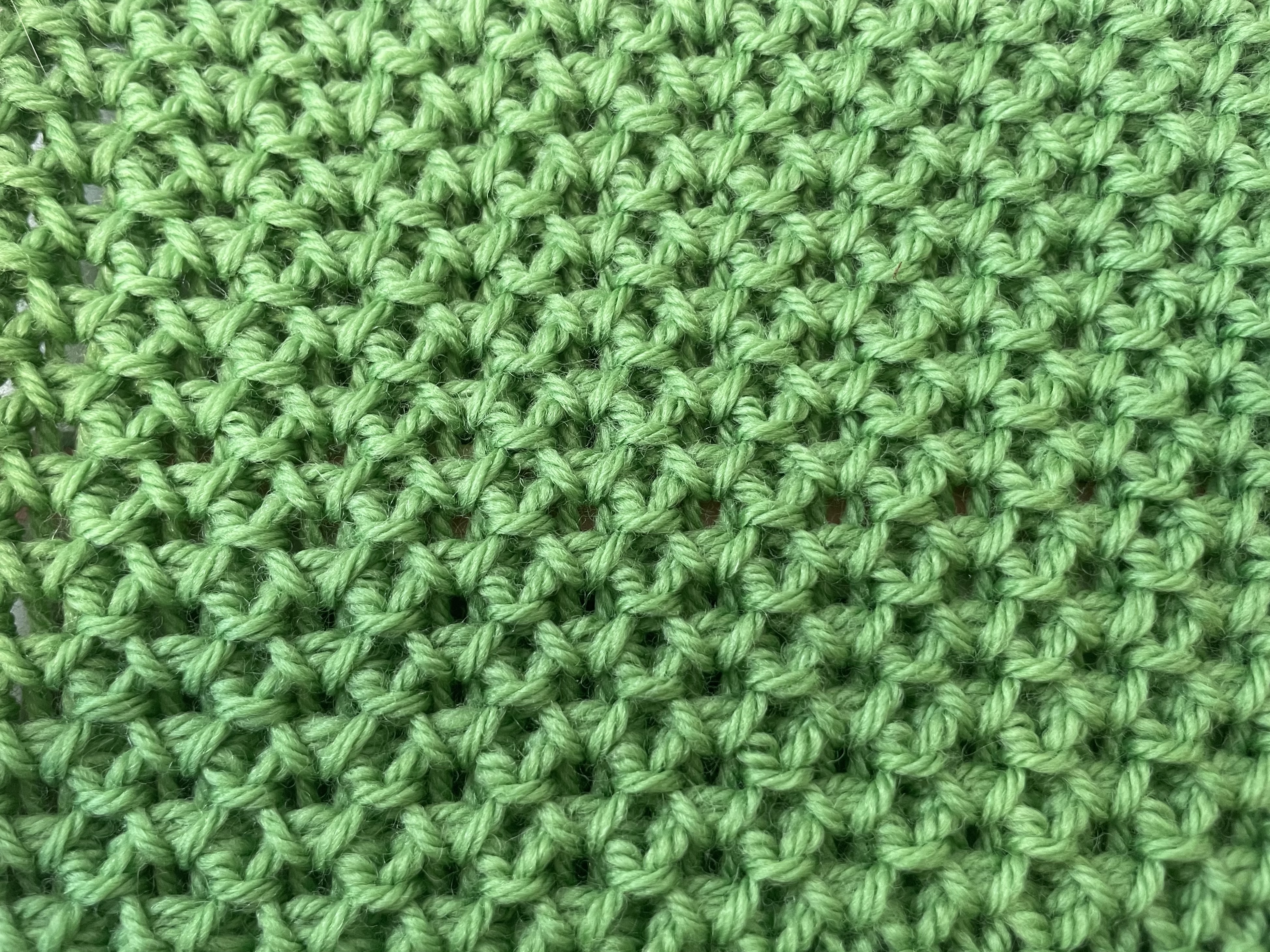

Materials
Silver Reed LK 150 6.5mm Mid-Gauge Knitting Machine & Accessories
1 ball Cascade 220 Superwash (or any in the 220 family)
-or-
100g worsted weight yarn
Pattern Instructions
Set carriage to Tension 6 or number needed to achieve desired fabric
Initial Setup:
1) E-wrap CO 32 stitches from left to right (16L to 16R). COR
2) Knit 1 row. COL
3) Hang cast on comb and weights. COL
4) Knit 1 row. COR. Reset RC to 000.
Pattern Repeat:
Pattern row setup:
RC 000. COR.
Set Carriage to HOLD.
Place EON in hold beginning with the second needle (16R in WP, 15R in HOLD, etc). Last needle on the left (16L) should NOT be in HOLD. You should have two stitches in WP at the left edge.
Knit 3 rows.
RC 003. COL.
Set Carriage to KNIT.
Knit 1 row.
RC 004. COR
All needles are now in WP ready for selection for the next repeat.
Repeat from pattern row setup 18 times until RC 072.
Finishing:
Knit 1 row. RC 0073.
Perform the Backstitch Bind Off. This can be found in the LK 150 manual on page 38.
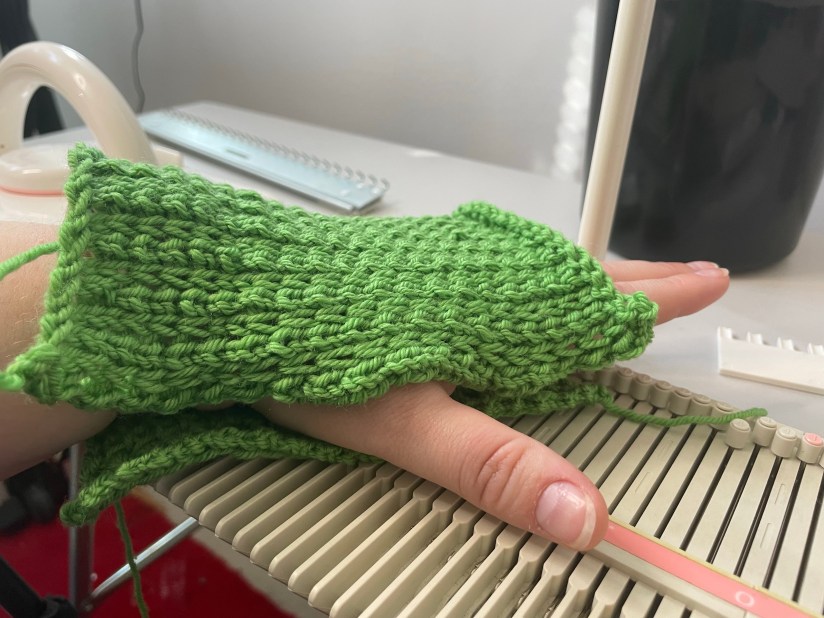
Choose whether you wish to use the purl side (the side that faces you during knitting and the side pictured at the top of the post) or the knit side (looks like a wonky stockinette stitch, pictured just above) as the public/outward facing side of your wristwarmers.
Wrap the rectangle around your hand to determine how much room to leave for your thumb and sew up with a tapestry needle using your stitch of choice.
Repeat for second wristwarmer.
Step-by-Step in Pictures
Setup:
RC 000. E-wrap CO from left to right.
Knit 1 row.
Hang cast on comb and weights, being careful not to catch working yarn in the cast on comb.


If you have trouble catching stitches, try pulling the e-wrap forward into the small dip in the needles. Do not pass the latches. (Click to enlarge pictures)

Reset to RC 000. Place EON in HOLD with Carriage set to HOLD before knitting. COR.
Knit across.

RC 001. One row knitted. COL
EON in HOLD should have a strand of yarn over it.
Knit across.

RC 002. Second row knitted. COR.
EON in HOLD now has two strands of yarn over it.

Knit across.
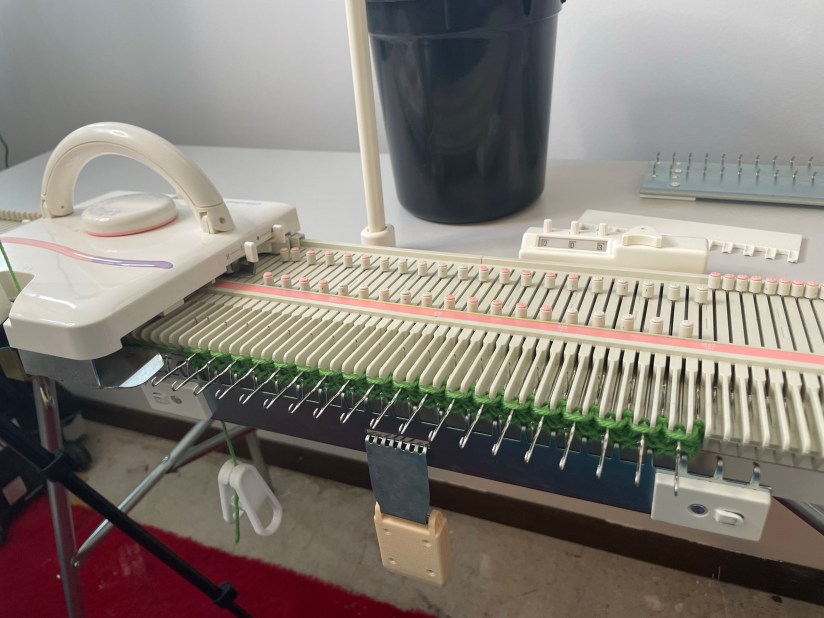
RC 003. Third row knitted. COL.

*RC 003. Set carriage to KNIT. COL.*
Knit across.

RC 004. Fourth row knitted. COR. Needles are in WP ready to be selected for pattern repeat.

Front view of setup rows plus one pattern repeat
Pattern Notes and Modification Tips
This pattern repeat will work with any machine and appropriately-sized yarn.
Stitch count must be a multiple of 2 + 2. The +2 stitches are seaming allowance.
If you change CO and BO types, make sure to use something stretchy. Tuck is a very horizontally stretchy stitch, and hands are active!
Remember to consider the finished project’s purpose when considering changes to a pattern!
Please consider making a tension swatch before you knit.
If you feel like walking on the wild side, note that tuck stitch patterns tend to be shorter and wider than stockinette, so plan on doubling your stockinette row count to reach your desired length.
Weights are very important when knitting tucked stitches. Weight helps the strands over needles in HOLD knit off properly. If you are having issues where stitches aren’t knitting off, try adding weight.


Abbreviations
| CO | Cast On |
| BO | Bind Off |
| WP | Working Position |
| COR | Carriage on Right |
| COL | Carriage on Left |
| EON | Every Other Needle |
| RC ### | Row Count ###, i.e. Row Count 023 |
Did you make wristwarmers using this step-by-step pattern tutorial? Please consider sharing your projects on ravelry so I can see what you made! I love seeing project pictures!
If you’d like to help support the site, please consider buying me a Ko-Fi.
As always, thank you for joining me on my machine knitting journey! Let me know what you think in the comments! I’m also happy to hear from you via my contact form or on Instagram. I believe I’ve fixed the comment/contact spam filter issue, so please don’t let that stop you!


 ELY Knits