Accessories, Knitting Machines

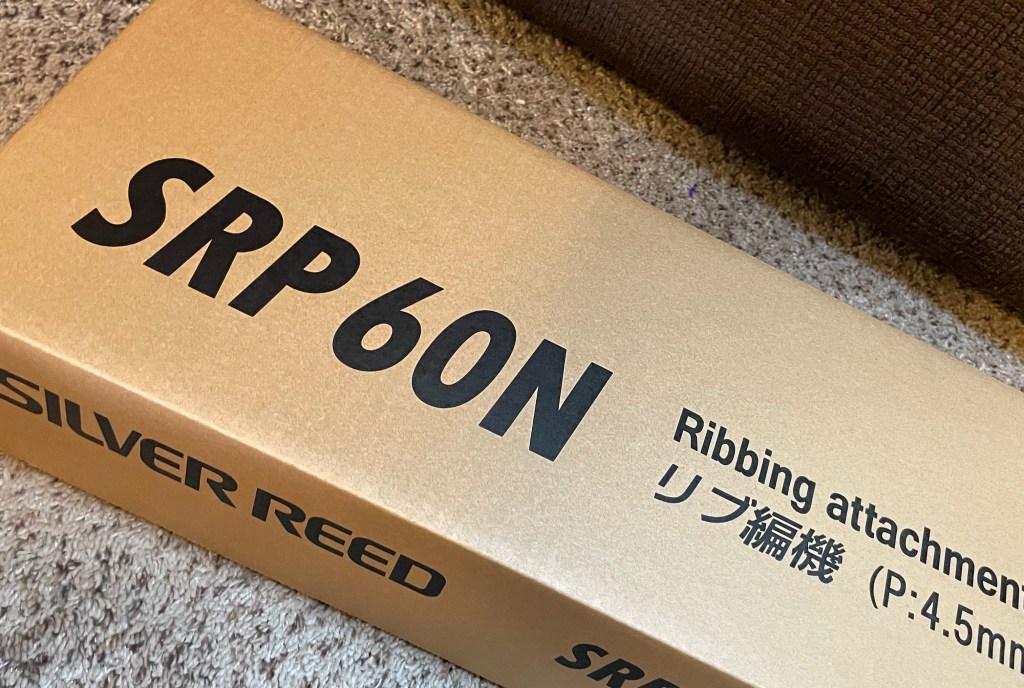
Silver Reed SRP 60N Ribber Attachment Unboxing and Assembly

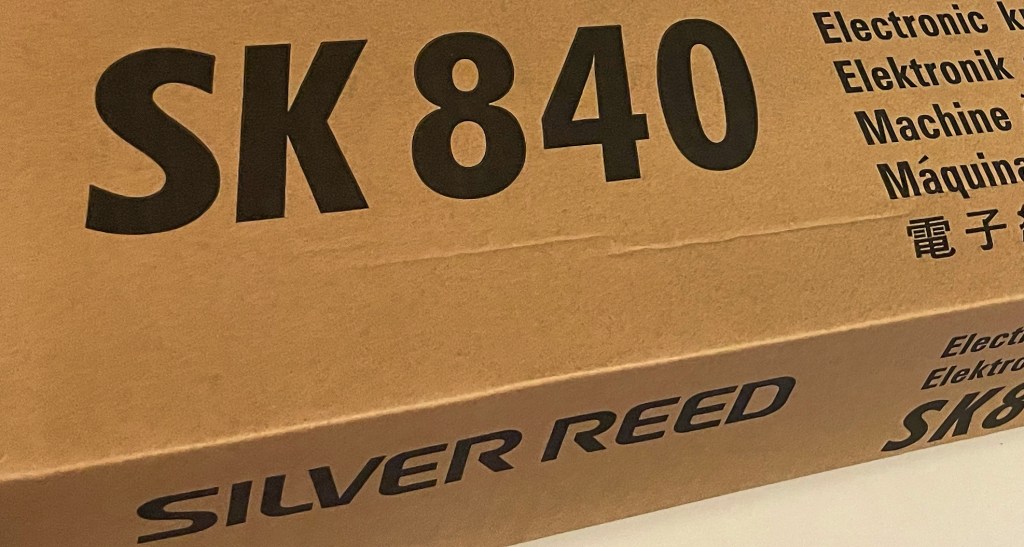
Last time, we unboxed and assembled the Silver Reed SK 840 standard gauge 4.5mm knitting machine. Now itโ€™s time to learn what comes standard with the Silver Reed SRP60N 4.5mm ribbing attachment, often referred to as a ribber bed or simply a ribber.

Let’s see just how adding a second needle bed expands your machine knitting repertoire!


Compatibility

The Silver Reed SK 840 standard 4.5mm gauge knitting machine is the only current model the SRP60N bed fits. The SRP60N will not knit on its own and must be used with a main bed.

This attachment also fits older, discontinued models SK 210, SK 500, SK 580, SK 700, and SK 740. These could be labeled with Singer, Studio, Knitmaster, or Empisal brands, which were also produced by Silver Reed. This bed works with both punchcard and electronic machines.


Unboxing

Just like the main bed, the SRP60N ribbing attachment is securely packed in a shipping box and another box contains the actual ribber bed unit. The attachment and its accessories weigh in at around 30 pounds.


“helping” with accessories

The accessories come in a long, specially molded styrofoam block that slides in over the needle bed.

The styrofoam holds ribber-specific cast-on combs, a needle pusher, punch cards, a handle, a plating guide, and weights.

Instead of claw weights, the weights are cylindrical with a hook at the top. The smaller weigh about half a pound, and the larger weigh about a pound.

Mind your feet with these weights! It does NOT feel good if one falls on your bare feet!
(Learn from me and wear shoes when you machine knit.)


Be careful with this part of the unit!

The ends of the needle bed are held up with the help of two more molded styrofoam pieces and a flat spacer. These keep the back of the ribber bed safe during shipping and storage.

Each back side of the bed hosts a joiner point where the ribber slides into the main bed. These can be easily bent and damaged if the ribber bed rests on them, so the bed is packed needle-side down.

The ribber is not built into its own carrying case like the main bed and needs to be stored in a way that does not damage the attachment plates on the back, so I strongly recommend keeping the box and foam it came in.

If you uninstall the ribber from the main bed for transport or storage, put it back in the box with its special foam pieces, even if it’s temporary. Otherwise, gently place it needle side down in an out of the way place, or needle side up on a chair and allow the attachment points to hang down without touching anything.


auxiliary pieces to the main bed

Important note: the SRP60N comes with two “auxiliary pieces” that screw into the main bed on each side front that are required to attach to the main bed. The ribber will not fit properly unless you install these, so don’t lose them!


What does adding a ribber let you do?

Ribbed Stitches

As you’ve probably guessed by its name, the SRP60N ribber bed allows you to knit rib stitch patterns without manually reforming the stitches with a latch hook tool. If you knit ribbed edgings often, this attachment will save you a lot of time.

The main bed (the SK 840, sold separately) creates knit stitches while the ribber bed (the SRP60N) creates purls. You can use needles from each bed in combination to create simple rib stitch patterns like 1×1 or 2×2 ribbing, but that’s just the beginning.

Using punch cards or design software like Design A Knit 9, you can create special stitch combinations for endless fabric design opportunities. New combinations include tuck stitch ribbing and fisherman’s rib (think brioche, hand knitters! That’s actually a type of tuck stitch), as well as lace, cables with defining purl stitch patterns, and a special type of colorwork called double bed jacquard.

Circular Knitting

One bed means everything is made flat, but two beds means a tube!

Because the SRP60N has 200 needles just like the main bed, circular knitting with up to 400 stitches is possible simply by adding a ribber.

One round of knitting will take two passes of the carriageโ€”one pass for the main bed and one pass for the ribber bed.

I love being able to knit in the round on my flatbed machines. Socks are my current circular knitted favorite, but youโ€™re not limited to small items like you are with circular sock knitting machines that generally have around 70 stitches. Remember, you have 400 needles now!


Assembly

“Read the manual!” sounds like a cop-out on an unboxing and assembly post, but the manual should always be your first stop, especially if you are installing the ribber on a different model than the SK 840 I’m using.

There are diagrams, instructions, part names, and troubleshooting sections.

If you lose your manual, you can download a PDF copy at Machine Knitting Etc.

Table or Stand

Whatever you use to set up your machine needs to be able to withstand some torque. I prefer using a metal tilt/A-frame stand when I work with two machine beds since I don’t have a sturdy table that fits the clamps.


The first step in installing your ribber is to take down the main bed.

Take the tension unit out and set it aside.

The ribber needs to sit at a specific angle on the table/stand for the beds to knit properly, so taller, angled clamps are included with the attachment.

left: ready to install
right: installed

Remove the main bed’s original clamps and install the clamps that came with the ribber. Make sure the clamp slides to the smaller side of the hole and securely tighten it. Reattach the main bed to your table/stand.

Screw the auxiliary pieces (pictured earlier in the unboxing and seen in use below right) into the main bed and then insert the ribber attachment points into the slot of the auxiliary pieces. Secure the ribber to the table/stand with the main bed’s clamps.

left: angled clamp securing main bed
right: original main bed clamp securing ribber bed

Stand users: Your stand may have come with a part that sits around and under the tall clamps (as seen above on the left). This piece did not come with the ribber. I personally haven’t noticed a difference in stability between using it and leaving it out, so don’t worry too much if your stand doesn’t have one.


In addition to four clamps, the needle beds are further stabilized with ribber join supports. You simply flip the pieces up so they touch the main bed.


top: aligned
bottom: offset

The centers of the main bed and ribber bed are each marked with a zero. The alignment of the beds is adjustable depending on which type of knitting you want to do, but when you’re setting things up, you generally want the zeroes to align and then adjust from there according to the manual.

The ribber can be lowered so you can knit using only the main bed without uninstalling the ribber, but it must be fully raised to perform its functions.


The ribber has its own carriage that slides across the needle bed and has a special attachment for the main carriage called the ribber arm. You must use the ribber arm in the main carriage for ribber functions.

To install the ribber arm, remove the main carriage sinker plate by unscrewing the knobs and sliding it out. Put it away in the main bed’s lid. Slide the ribber arm in place where the sinker plate was, and tighten the knobs.

Do not over-tighten. You could strip the knobs. Hand tight is enough to securely hold the ribber plate.

The ribber carriage slides on to the tube-like railing at the bottom of the ribber needle bed. It leans toward you when you install it, but it must be flush with the ribber bed to use. Simply push it toward the needle bed to achieve this.

The main carriage and ribber carriage work in tandem and must be attached to properly function. The ribber carriage will click into place under the main carriage as you slide it along the bed. The two carriages can now move as a unit to knit.

The final step is replacing the tension unit. The tension rod has a bend at the bottom that bends away for use with the main bed alone but needs to bend towards you when the ribber is attached. This puts the rest of the tension unit pieces backwards, so you need to flip them around on the rod.

And there you have it! The Silver Reed SK 840 with the SRP 60N attachment, all set up and waiting for yarn!


If youโ€™re interested in purchasing current Silver Reed knitting machines or accessories, please contact me. I sell Silver Reed knitting machines through Get Stitchinโ€™ in Tulsa, Oklahoma. Weโ€™re happy to custom order current Silver Reed machines and parts for you, and we keep the Silver Reed LK 150 plastic hobby machine in stock. Please be aware that we are experiencing some delays in delivery due to supply chain issues like everyone else, but we will keep you informed each step of the way.

And stay tuned! More accessory unboxings and demos are coming to help you learn what each machine can do and what add-ons you might want or need for your favorite stitches.


Thanks for reading! I hope you enjoyed this look at everything that comes standard with the Silver Reed SRP60N ribbing attachment that fits the SK 840 standard gauge metal bed knitting machine.

Did I miss anything? What would you like to see next? Let me know in the comments below!

Knitting Machines

Silver Reed SK 840 Knitting Machine Unboxing and Assembly

If you’re wondering what comes with the Silver Reed SK 840 standard gauge electronic knitting machine right out of the box, this is the post for you!


Unboxing

Unboxing this machine feels a bit like a Christmas box-in-a-box prank at first, but with good reason. The SK 840 is manufactured in China and has to make its way to you safely, after all. The machine ships in a long box that contains the actual box that contains the machine in its built-in case.

The interior box is clearly labeled, and at this point, I accidentally ripped one of the sides off in my excitement to get it open. Be a little bit more careful than I was when you’re removing the shipping box. It’s a tight squeeze, so you may need someone else to pull the other end while you ease it out.

This metal bed machine weighs in at around 35 pounds. In its closed case, it’s 44 inches long, about 8 inches deep, and just under 4 inches tall. The long size and weight make it a bit unwieldy to carry.

Once you open the interior box, you’ll be greeted with two manuals and the machine in its closed case. The extra padding on the ends keeps the machine from moving around too much during shipping.

Both manuals contain basic how to instructions, but the green Operation Manual provides more extensive guidance for using the machine with various (separately purchased) accessories.

sneaky Pete not included

The SK 840 and its accessories are neatly packed inside its case. Paper strips protect the needle bed and gate pegs from scratches while foam keeps the carriage tension dial in place. The carriage itself is locked to the needle bed with a carriage lock, and the tension dial on the carriage is held in place with a rubber band to prevent the buttons and levers from moving.

The padding in the lid is attached, which is oddly one of the things I was most excited to find out. Sometimes putting the sinker plate and tension mast back in a case for storage is confusing, so I’m very glad the foam is there as a guide. Some machines case lids have plastic pieces with drawings on them to indicate where each piece goes, but those are often lost or damaged over the years.


The tools come in their own box as opposed to the storage drawer some machines (especially punch card machines) have built in to the plastic portion of the needle bed.

It’s nice to see that there are three hot pink nylon ravel cords included. (I think their color may vary.) My cat is constantly making off with my ravel cord bobbins, and I end up needing to use scrap yarn as ravel cord most of the time. (See this post if you’re interested in learning how to use scrap yarn as ravel cord in a pinch.)

The manuals detail which accessories you’ll need for different functions, so be sure to read it. Remember, the manual is your best friend!


Everything you see above is what comes standard with the Silver Reed SK 840. To connect to Design A Knit software, you do need to purchase a separate cable or use a separate pattern control unit.


Assembly

To use your machine, you’ll need to place it on a table or machine stand and secure it with the included clamps. Your tabletop should be relatively shallow and straight-edged. The clamps don’t work well on a beveled edge.

I’ve set up the SK 840 on a metal stand I bought from my mentor.

Ready for more pics?

The carriage lock keeps the carriage from sliding about in transit. You should always use it when you pack your machine away for storage or travel.

I recommend keeping the carriage lock in your accessories box when it’s not in use so you don’t lose it.

After removing the carriage lock, you can attach the sinker plate to the carriage. The plate has guides to help you install it securely. Be careful not to over-tighten and strip the knobs.

The yarn tension guide attaches to the back side of the tension rod. There are high and low placement options on the rod with metal nubs that help keep the tension guide secure.

The tension springs are attached to the back of the auto tension unit but are folded back for storage. They will snap into place when you fold them forward.

The smaller end of the tension rod fits into the bottom of the auto tension unit and is different enough in size that you can’t install it incorrectly or upside down. I’ve done that in the past with a couple of Brother machines and wondered why the yarn clip holders didn’t work very well. I like that this unit saves you from that silly mistake.

You can assemble the entire tension unit (rod, guide, springs, and auto tension piece) before placing the rod into the machine, or you can place the rod in the machine first and add the other pieces from there. I don’t think order matters too much as long as you remember which direction the tension unit pieces should face.


Here it is set up and waiting for yarn. Looks pretty great, doesn’t it?


If you’re interested in purchasing a Silver Reed SK 840 knitting machine, feel free to contact me. I sell Silver Reed knitting machines through Get Stitchin’ in Tulsa, Oklahoma. We’re happy to custom order current Silver Reed machines and parts for you, and we keep the Silver Reed LK 150 plastic hobby machine in stock. Please be aware that we are experiencing some delays in delivery due to supply chain issues like everyone else, but we will keep you informed each step of the way.

Still thinking about it? Don’t worry! Accessory unboxings and demos are coming to help you learn what this machine can do and what add-ons you might want or need for your favorite machine functions.


Thanks for reading! I hope you enjoyed this look at everything that comes standard with the Silver Reed SK 840 standard gauge metal bed knitting machine. Also, apologies for the late post! It’s 2022 and it looks like I still can’t count days and weeks correctly. Whoops! I’m sure glad those needle beds are numbered….

News

What a year!

Merry Christmas, Happy Holidays, and Happy New Year, everyone!

I hope you’re spending the end of the year how you want, where you want, with whomever you want.

From launching ELY Knits as a site to attending my first in person market in years, a lot of things have happened this year. I didn’t accomplish everything that I wanted to, but I was able to do some unexpected things like team up with a local store to become a machine dealer and team up with some local fiber artists to make some exciting projects for 2022.

I’m looking forward to next year. If you’d like to see specific techniques or yarns, as always, drop your suggestions in the comments below or send me a note through the contact page.

Thank you for taking time out of your busy schedule to join me on this machine knitting journey.

Good luck on your last minute knitting, and may you always win at yarn chicken.

hand knitting, Knitting Machines

Knitting with Hand and Wrist Pain: My Journey to Machine Knitting

This post includes my own experiences with pain and hand and machine knitting and should not be considered medical advice. If you have a concern about knitting-related pain, you should seek help from a medical professional.

More Common Than You Think

Over the years I spent working in a yarn shop, I heard a lot of things about customers knitting less or even stopping their hand-based yarn hobbies altogether because of hand pain.

Quite a few of our shop patrons experienced occasional or chronic hand pain, and their responses to it varied as much as their yarn projects.

Some customers swore off small yarns and began knitting with bulky yarns on large needles. Others blamed the bulk of large projects and decided to only work on small, lightweight pieces.

Some knitters swore by compression gloves to remedy their pain. Others relied on copper bracelets and rings to help with blood flow to their fingers. Some made lotions and balms with different oils to soothe and relax tired hands. One customer even suggested certain yoga poses to help release arm and hand tension.

Whether itโ€™s arthritis, carpal tunnel, or tendinitis, knitting is a repetitive motion, so it does carry a bit of a risk of injury or aggravation with too much of it.

But what do you do when the pain gets to be too much and you canโ€™t knit more than a row or two without stopping to rest or reaching for some medical pain relief?

If youโ€™ve ever seen a knitting machine, you may think it could be the answer to keep you knitting.

Pushing a carriage across a needle bed to make a blanket or turning a crank to make a sock seems like such a simple motion compared to the steps you complete to make a stitch in hand knitting.

Knitting that quickly and simply must be super easy, right?


Life with Hand Pain

Iโ€™ve had issues with the joints in my hands and arms since I was a child. They gave me trouble with things from learning piano to writing class notes.

I learned to hand knit in college, but I didnโ€™t ever knit long enough in one sitting to notice anything past the usual pain, swelling, and weakness flaring up, and it did that anyway with normal daily activity.

A doctor first noticed a bit of minor arthritis in one finger in my mid-20s, but she wasnโ€™t able to pin down a reason for the rest of the weakness, inflammation, or swelling of my hands and arms.

She told me I should just stop knitting.

That advice came right as I was launching an Etsy shop and beginning to attend craft shows. It was a day ruiner, thatโ€™s for sure.

I loved knitting, and I wasn’t about to give it up, so I decided to follow the advice of my fellow knitters and tried stretches and compression gloves along with frequent breaks to alleviate my hand pain. If my hands were swollen and weak that day, I wore my braces and read knitting magazines or browsed ravelry instead.

I tried taking over the counter medicines and went back to the doctor again, but she still said there wasn’t anything wrong with me other than that small spot of arthritis. At this point, I was barely able to hold a pen or a fork, let alone knit.

I randomly saw a machine knitting video on Youtube. I don’t think I knew knitting machines existed before 2017, to be honest, but I finally started considering one a solution that could keep me knitting.


Hand Involvement in Machine Knitting

If you think machine knitting is only pushing a carriage across a needle bed, you’d be incorrect.

True, that is the most basic action in machine knitting, but you use your hands a lot.

If you have a manual machine like the SilverReed LK-150 or Brother KX 350 (click here to read a post about cleaning and testing this machine), you do everything besides knitting the stitches themselves by hand.

Needle selection is by hand. Transferring stitches for increases, decreases, lace, or cables is done by hand with specialized tools. Any decent cast on with a finished edge is done by hand wrapping or using the latch tool. Bind offs? By hand. Seaming? Unless you buy a linking machine, you’re doing it by hand.

And that’s the thing. It is quite easy to remove the majority of the hand manipulated element of machine knitting, but it isn’t cheap. You have to buy specific machines or accessories to lessen your manual involvement.

You can hand select and do things manually on all machines, but punchcard and electronic machines have settings that enable a lot less handwork. Those extra functions come with extra cost. They are more expensive, sometimes double the cost of the manual machines mentioned above, and some require buying even more accessories to accomplish what would otherwise be manual tasks.

Lace and intarsia specialty carriages can be over $100 each. Buying a second bed to knit ribbing can run about $500. Whether you buy used or new, you’re still looking at a range from a few hundred dollars to a couple thousand invested in removing the manual element from your knitting.


Adapting to Painful Hand Knitting with Machine Knitting

I still hand knit. It is what started me down the fiber road, after all. But I cannot knit as much as I used to. I’m down to about a tenth of what I once could do. Moving my hands in certain ways seems to flare things up more than others, so I’ve written off entire stitch patterns if they hurt.

It definitely feels awkward as an instructor to say I physically can’t do that knitting stitch other than showing how it’s done once or twice, but awkward is a better feeling than pain. I tell my students as long as they’re forming the stitches correctly, there’s not really a “wrong” way to knit. But if it hurts, that’s knitting the wrong way.

Some days I wake up and my hands feel fine. Others I can barely hold the spoon to eat my morning oatmeal. Checking how my hands are functioning is a part of my morning routine now.

I modified how I hand knit so that most of the motion comes from my better hand, my left. My right hand is basically a needle stabilizer. I can knit this way with braces on my hands, so I still get a little bit of hand knitting accomplished on painful days.

Moreso than trying to knit wearing my braces, I look for ways to blend hand my hand and machine knitting together. I figure out what parts I can hang on a machine so I can save my hands. Does the pattern call for 12″ of stockinette stitch? That’s going on the machine. Is there a complicated lace repeat on a hem? I’ll do that by hand with plenty of breaks on a good day or I’ll try to find a similar punchcard lace pattern on the machine.

I can operate almost every function of a punchcard machine on all but the worst pain days. I can push a machine carriage and change lever- and button-based settings; I can use transfer tools, the latch tool, and thread the machine’s tension unit. I’m not going to choose something with a lot of hand manipulation like cables or hand transferred lace on a bad pain day, but that’s easy enough to stay away from.


Return to Teaching

I had to pause teaching classes and working at the yarn shop when the pandemic started, and after the shop closed earlier this year, I was unsure if I’d teach hand knitting again.

I’m currently working with Get Stitchin’ in Tulsa, OK to offer classes and SilverReed machine sales through the shop. It’s a dream come true for me to be teaching again and connecting with the fiber community once more, but working around my hands sometimes feels iffy.

When you check the Classes page on Get Stitchin’s site, you’ll see hand knitting classes. With me. I’m not stopping, but I am adjusting.

I have to give myself much more time to compete a project. What would previously have taken me less than a month might now take three. Trying to have a sample done in time for in-store class advertising has been a little rough on my hands. Instead of the larger projects I once wanted to do with multiple-part classes, I’ve chosen smaller things that teach and reinforce skills and concepts but do it in a more compact project.


Worth It

Investing my time and money into knitting machines has enabled me to continue on my fiber journey. I didn’t have to give up my creative passion, and that alone makes machine knitting priceless to me. In addition, I’ve been able to speed up my design process because knitting a piece on the machine takes so much less time than doing it by hand. Making mistakes and ripping them out is not necessarily an uncommon occurrence for me when I’m working on the machine, but making those mistakes has given me more confidence in my ability to create and fix designs.

Knitting machines can’t always produce the exact same fabrics that hand knitting can, but there are analogs and even more stitch options to produce all kinds of wonderful fabrics that would be nearly impossible, or at the very least extremely impractical, to do with hand knitting.

I did manage to get some answers regarding my hands this year with a new doctor, but other than steroid shots, there’s not much that has been able to help. There are a couple surgical options in my future, but one always has to weigh risks and benefits with them. How long will I have to stop knitting to recover, and is it a permanent solution? I’m cautiously optimistic that I may finally be able to eat, write, and hand knit pain free someday.


Have you experienced yarncraft-related hand pain? What did you do to combat it? Did you turn to machine knitting to stay creative? Are you considering a knitting machine to give you more flexibility in your knitting? Let me know in the comments below, and, as always,

Thank you for coming on this knitting journey with me.

yarn review

Yarn Review: Lion Brand Touch of Yak

I bought this yarn in 2020 to review, and, well, 2020 (and now most of 2021) happened. Now it’s on clearance, but if this yarn seems like it’s for you, you might find a good deal on

Lion Brand Touch of Yak

Touch of Yak in Water Lily

All opinions are honest and my own. I am not affiliated with any company or individual mentioned or linked unless otherwise noted. I purchased this yarn myself and did not receive compensation for this review.


About

Fiber Content90-% Acrylic / 10 % Yak
Yardage/Meterage219 / 200
Ounces / Grams3.5 / 100
Yarn Weight4 / Medium / Worsted
Made inChina
AvailabilityLocal Yarn Store, Online
Put upSkein

This yarn is on clearance for $6.99 at the time of this post, so if it’s something you’re interested in, grab it while you can. The clearance price brings the price per yard down from $0.06 per yard to $0.03 per yard.

Originally retailing for 13.99, Touch of Yak is part of Lion Brand’s “Touch of Luxe” collection. The listing mentions “Yak fiber is as soft and warm as cashmere, with wonderful drape,” but with 90% of this yarn being acrylic, any drape you achieve will be from steam blocking or “killing” the acrylic.

Colors are soft, muted, and generally neutral. Now that it’s on clearance, three colorways remain.


Care Guide

Hand WashYes
Machine WashYes
Flat DryYes
Machine DryNo

I machine washed and dried this yarn with no problems. To be honest, I couldn’t tell any difference made by the minimal presence of yak fibers compared to any other decent machine washable and dry-able acrylic.


Knitting Machine Compatibility

4.5mm Standard GaugeNo
6.5mm Mid-GaugeYes
8mm / 9mm Bulky GaugeYes

This is a worsted weight yarn. I wouldn’t put it through any standard gauge machine, but it worked fine on other gauges.


Touch of Yak in Waterlily in a warm light
Pattern: Mirror Cable Mitts on ravelry

Performance

This yarn knitted up fine. It wasn’t anything special, but it wasn’t terrible to work with. When I transferred stitches to form cables, the yarn was annoyingly splitty, but plain knitting was fine. The stitch definition was fine for cables and the finished project looked nice.

There’s really nothing to point out if you treat this like any decent acrylic. The yak is nowhere to be found, especially if you’ve worked with 100% yak fiber before. If you haven’t, you might be able to convince yourself this yarn is softer than another mid-range acrylic, but really, it’s not anything special. There is a slight halo of potential yak fiber if you squint. Maybe?


Blocking

This yarn is 90% acrylic, so block it as such. Too much heat will “kill” the acrylic and freeze it in place. “Killing” acrylic is literally melting the plastic it is made of. You’ll achieve a great drape with this but lose any other properties acrylic might offer.

Careful steam blocking is my blocking method of choice for all yarns, even acrylics, but you should make sure you do not leave your steamer in one location for too long.


Touch of Yak in Water Lily wound into a cake

Final Thoughts

This yarn is fine. That’s it. It’s fine. The “touch” of yak is barely noticeable. It feels like almost any other mid-range acrylic. It’s soft, it works, it’s machine washable, and even though it says not to, it really is machine dry-able. The color range is limited, and the yarn is now on clearance. If you like a slightly softer than normal acrylic and you snatch it up, this could be a good yarn for you provided you aren’t picky about colors. Just don’t expect anything that actually touched a yak when you purchase this.

I give Lion Brand LB Collection Touch of Yak a 2 out of 5 score.


Have you used Lion Brand Touch of Yak before in your machine knitting? What about in your hand knitting? What kind of projects did you use it for, and what did you think of its performance?

Are there other properties you think I should include in my yarn reviews? What yarn should I review next? Let me know in the comments!


Uncategorized

Free Machine Knitting Pattern: Sarah in Lace

Hello all, and here’s to another happy day of knitting!

Did you see last month’s free hand-knitting pattern, the Sarah in Lace cowl? I am so grateful for all of the wonderful feedback I’ve received about this piece.

Thank you all for your support!

This month, it’s the machine knitting version’s turn!

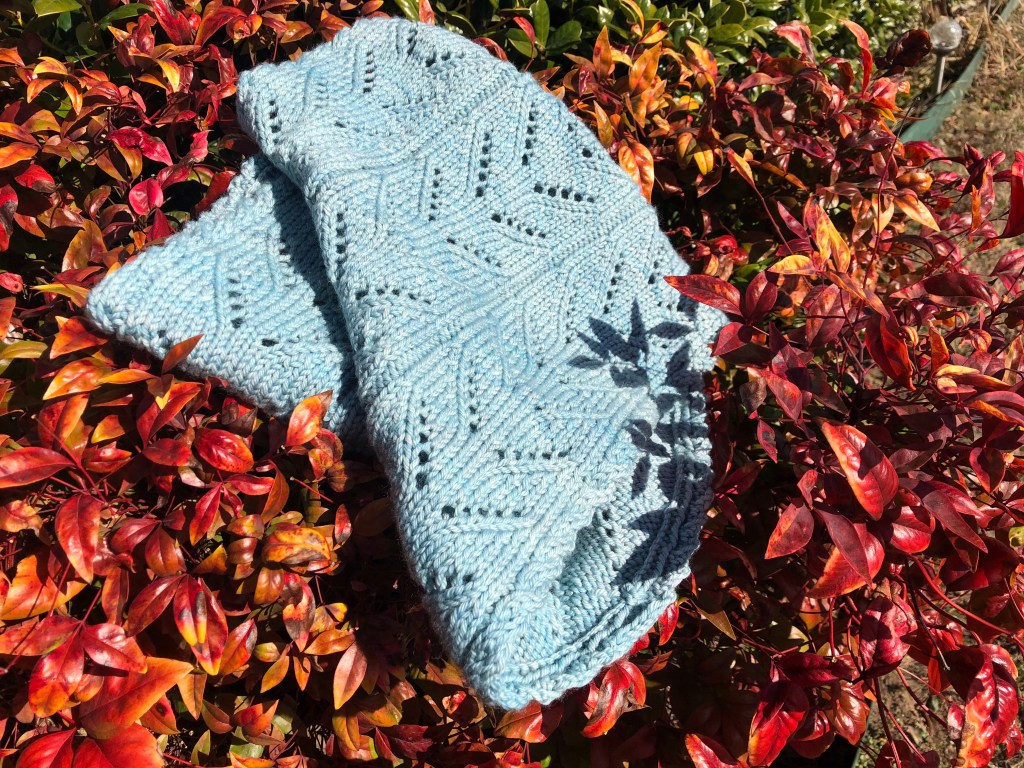
Sarah in LaceMachine Knitting Version

Ideal for hand dyed or natural yarns with slight color gradient, this cowl will let the yarn speak for itself. Cables on each side create a scalloped, slightly rolling edge without allowing the normal roll of stockinette stitch.

The simple lace repeat is suitable for beginners familiar with the latch tool and transfer tools.

The length and width are easy to modifyโ€“just add lace repeats to achieve your desired size, but note that adding repeats will require more yarn.

Gauge is not vital to this project, but you do not want a tight fabric.


This is the machine knitting version of this pattern.

Visit this post if you’re looking for the hand-knitting version.


Written and Charted Instructions

The lace chart and simplified instructions are on one page (page 5) to be printer-friendly for more experienced knitters, and detailed written instructions for newer knitters follow.

In the written instructions section, I take you step-by-step through the first lace row and the first cable row. The other lace and cable rows build off of those techniques, but are not explained in detail, needle number by needle number.


Decrease Choices

Like its hand-knitting sister, this PDF pattern contains modification tips to help you really make this piece your own.

There are different choices of decreases with instructions for each.

On the left, you’ll see the original decrease intended for the pattern. The detailed row instructions in this pattern assume you are using this decrease.

The yellow sample pictured on the right shows two other decrease options-one on the left of the sample and one on the right. Instructions are provided for this decrease in the pattern notes but not the detailed row instructions like the original decrease.


Pattern Repeat Tip

Mark it up!

Use a set of wet erase markers like Expoโ€™s Vis-ร -Vis markers (non affiliate link) to denote cabled stitches, purl stitches, or central stitches of the lace pattern repeat on the bed of your knitting machine. This can help you remember where to start each lace repeat, which stitches to ladder down to latch up as purl, and which direction cable crosses should go.

In this picture, I’ve used an “X” across two needles to denote the center of the lace pattern repeat’s “V” shape. A bullet marks the needle that I need to ladder down and latch up purl stitches on, and diagonal arrows and “CC” for “cable cross” remind me which direction the four-stitch cable over those needles needs to go.

Wet erase markers work great for any project with pattern repeats and are easy to remove once you’ve finished. Have you given them a try yet?


You can find this pattern in my Ravelry Store as a Free Ravelry Download.

This pattern is available to non-Ravelers, too, so donโ€™t worry about signing up unless you want to. download now


As always, please contact me if you find anything missing or notice an error in my patterns. I will correct them ASAP.


Thanks for coming on this machine knitting journey with me! If you like what you see and want to help me bring more machine knitting content, please consider supporting me on Ko-fi.

Uncategorized

Stuck without a Ravel Cord? Try this!

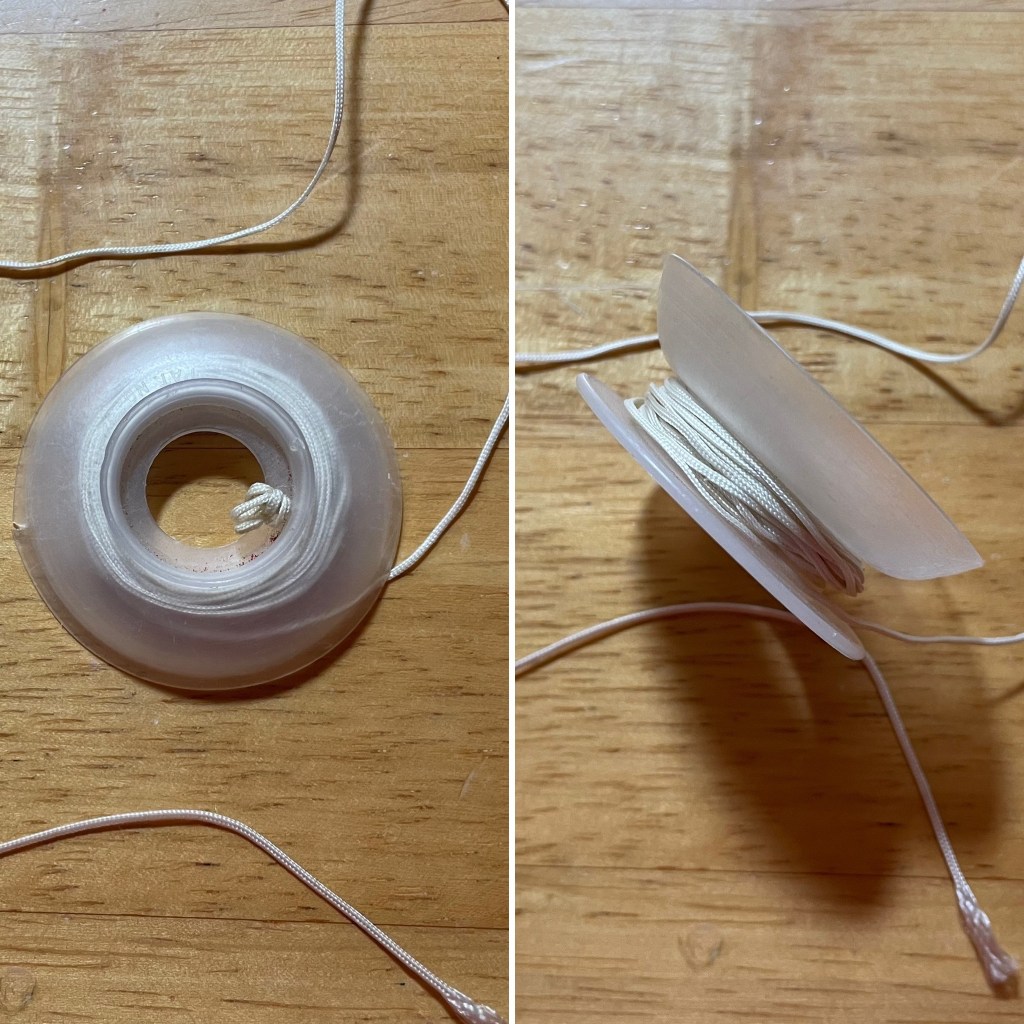
Ravel cord is a strong and slippery-smooth braided nylon that machine knitters use to connect scrap yarn pieces knitted from the cast-on up with the main yarn of the garment in a way that can be easily removed.

After the hem has been hung and the main yarn stitches have been secured, you simply pull on the ravel cord and away the scrap yarn falls to reveal a beautiful hung hem or finished graft.

Coming from a hand-knitter who adores the look of a provisional cast on grafted to live stitches to create a seamless look but is too lazy to actually do it a decent amount of the time, the scrap yarn and ravel cord combo is a dream come true.


“Scrap’n’Ravel” is one of my favorite ways to cast on to the machine, so I use my ravel cord a lot.

To “Scrap’n’Ravel” on, I like to use the Automatic Cast On from my knitting machine manual. (That’s simply because it’s faster, so you can cast on whatever way you like. Scrap yarn is a great opportunity to practice new techniques, after all!)

After I’ve knitted at least 6 rows, it’s time to reach for the ravel cord before the real fun of the project starts.

But recently, that’s where I’ve been running into problems…

“problems” aka the Yarn Inspektor

We adopted a cat back towards the end of 2020. She is a lovely, talkative calico, and she loves yarn.

She loves sitting on yarn. She loves staring at yarn. She loves sprawling across yarn. She loves flossing with yarn. (That one I haven’t tried yet.)

But she also loves stealing my yarn!

I stopped her from chomping the cones, and I stopped her from sprinkling the skeins with wee, but I can’t seem to stop her from batting the bobbins.

These kumihimo bobbins, sometimes sold as Bryson EZ Bobs, are just too tempting for her! They’re primo cat toy size, after all, AND they have a “tail!”

kumihimo bobbins with ravel cord in closed and open positions

I have a stash of these things. Or, I suppose, had a stash. Now the Yarn Inspektor has a stash somewhere.


If things were going as they should, I’d knit a row using ravel cord. It would look like this…

… and I’d be ready to knit with my main yarn!

But since the Yarn Inspektor has decided my ravel cord is her ravel cord, sometimes I’ve had to make do.

Thanks to this trick I learned from my mentor, Pamela Carrico of CMO Designer Knits, I don’t have to spend hours searching for my bobbins of ravel cord.

I can use the scrap yarn I was knitting with as ravel cord!

(Is your mind blown like mine was?!)


This trick works best with smooth, strong yarns. A crispy acrylic or toothy wool is not a good idea. Removing the scrap-yarn-as-ravel-cord strip is not as smooth as working with ravel cord. I wouldn’t recommend this trick over using ravel cord.

But it will save you if “problems” meow your way.

When you’re ready to knit what would normally be your single row of ravel cord, use your fingers to grab onto the scrap yarn just under the carriage where the yarn is loaded into the feeder and pull a bit down, like so:

Without moving your hand, knit one row across. You’re left with a loop of scrap yarn at the edge of your work like this:

Now you’re ready to cut your scrap yarn and move on to the main event, just like you would be if you had knitted the row with ravel cord!

When it’s time to remove your scrap-cord, tug on the top half of the loop you made. It takes a bit more force than pulling ravel cord does.

As you can see in this clip, it is a bit of a tug, but it does the job! Just make sure to tug the top half.


What do you think? Is this a trick you think you’ll try in your knitting? Do you have any tips or tricks of your own to share?

Leave me a message in the comments below!


Thank you for joining me on my machine knitting journey!

Uncategorized

Resource Roundup #2: Machine Knitting Etc

There are so many wonderful machine knitting resources floating around on the internet, but theyโ€™re not always easy to find. Theย Resource Roundupย series goes through the links on theย Helpful Links and Resourcesย page in more detail to help you discover new places to learn more about machine knitting.


What is Machine Knitting Etc?

Machine Knitting Etc is the best place to find FREE knitting machine manuals and other PDF resources. If your machine didn’t come with a manual or yours is damaged, you’ll likely be able to find a copy here, even if it isn’t one of the more well-known brands like Brother or Passap.

For the DIY knitting machine mechanic, you can often find parts and service manuals.

If you’re looking for a punchcard pattern, you’ll find copies of standard punchcard sets, such as the “M” series that came with the Brother KH-890, along with sets from other brands and models.

And that’s still not all! You can find various stitch dictionaries, tip and technique articles, and …

Vintage magazines!

Some of the color choices may seem questionable now, but the vintage magazines Machine Knitting Etc host on their site are wonderful sources of patterns and inspiration.

Those 80s and 90s magazines sure boast some familiar looks to what some stores are hanging on their racks now. Classic shapes are classic for a reason, after all!

Many patterns offer schematics so you don’t need to worry about anything being written for a long-discontinued yarn. Simply fit your yarn’s gauge to the pattern, and you’re ready to go after a little math.


I could drone on and on about this wonderful site, but I hope you’ll take some time for yourself to explore it. These manuals and magazines are snippets of machine knitting history, and you never know where your next project might come from!

Please consider adding Machine Knitting Etc. to your ad-blocking software’s white-list so we can support this valuable resource to our craft!


Do you have a resource to share? Comment below or send it to me via the contact me page!

Uncategorized

Yarn Review: Universal Cotton Supreme DK

Universal Yarn has been offering up yarn of all kinds for more than a decade. I first experienced their yarns in 2012 when looking for washcloth cotton at my old Local Yarn Shop. Their Universal Cotton Supreme worsted weight yarn was just too nice for a dishrag, so I ended up using it for a baby gift.

Today’s review focuses on Cotton Supreme DK but is also applicable to Cotton Supreme (worsted) and Cotton Supreme DK Seaspray.

“Knit, Relax, Smile, Repeat!”


All opinions are honest and my own. I am not affiliated with any company or individual mentioned or linked unless otherwise noted. I purchased this yarn myself and did not receive compensation for this review.


About Universal Cotton Supreme DK

Fiber Content100% Cotton
Yardage230
Ounces3.5
Yarn Weight3 / Light / DK
Made inTurkey
AvailabilityLocal Yarn Shops, Online
Put upHank

Universal Cotton Supreme original/worsted weight comes in 45 solid colors, Supreme DK in 32 solid colors, and Supreme DK Seaspray in 13 marled/ombre color options.

Cotton Supreme DK solid colors wound into yarn cakes

MSRP is $10.50 per hank, but it is easy to find this yarn on sale online for as low as $5.49 per hank depending on colorway. Many LYS offer deals on bulk purchases like online stores will do, so be sure to contact your LYS and support your local area’s businesses when you can!

Care Guide

Hand WashYes
Machine WashYes
Flat DryYes
Machine DryYes

Cotton is an easy-care material, and Cotton Supreme DK follows that. It may be washed warm and tumble dried on low heat. You can iron and steam this material safely. Expect some shrinkage in the wash, as with all cotton yarns and fabrics in general.

Even after washing and drying, Cotton Supreme still has good stitch definition.

This gentle cotton is a good choice for individuals with allergies or other sensitivities.


Knitting Machine Compatibility

4.5mm Standard GaugeNo
6.5mm Mid-GaugeYes
8mm / 9mm Bulky GaugeYes

As a plant-based fiber, cotton yarn has much less give or stretch to it than animal fibers or synthetic options. While some standard gauge machines function just fine with DK weight yarn, I did not want to risk bent needles or other problems due to using a less forgiving yarn at the thicker end of yarn sizes that might work.

I do not recommend this yarn for standard gauge machines.

This yarn functions wonderfully at mid-gauge and above. My machine did not struggle with this yarn at lower tensions on the SilverReed LK-150, but I did notice a slightly harder push due to less elasticity in this yarn than animal-based fibers. This is normal and not unexpected with cotton yarns.

Don’t be surprised if pushing your carriage feels different to pushing a wool or acrylic yarn, but remember never to force the carriage across the needles if it is struggling. That is not the type of resistance I am referring to in this instance.

Cotton yarn also sounds different on the machine to me, producing a slightly deeper rasp as the needles fly through the carriage.


Swatches, Performance, and Blocking

This yarn is wonderfully soft and gentle to the touch. I spent a bit of time rubbing it against my face. Purely for review purposes, of course. This yarn would make a wonderful washcloth in a spa-themed gift basket.

I have hand-knitted with Universal Cotton Supreme before and noticed it tends to shed a bit of fluff as you go. Initially I believed Supreme DK to shed almost double its worsted weight sister, but now I believe that is due to moving through the machine at a much faster rate than it will ever fly through someone’s fingers as they hand knit.

You should dust and maintenance your machine after each project (and I will guiltily admit to not doing this as often as I should), but you definitely want to make sure to brush out the carriage and needle bed after using this yarn. Fluff and yarn shed from any yarn can gunk up a carriage, so it’s best to perform frequent cleaning.


If youโ€™re curious about how I swatch yarn, please read this post.


Mid-gauge SilverReed LK-150 swatch at Tension 5

BeforeAfter
20 stitches4″4.0625″
30 rows4.5′4.0625″

Cotton generally shrinks in the wash, but as long as you are working from the gauge of a โ€œfinishedโ€ or washed and dried swatch, you should not run into problems. (I cannot stress the importance of working from a finished swatch enough!)

I experienced about 10% shrinkage in row-gauge, so I know how much shrinkage I can expect in projects as I wash and dry them.


Pattern Ideas

This yarn is a great choice for spa gift basket washcloths, baby items, and spring or fall sweaters. I think it’d make great tops for summer wear, as well.

This yarn could make lovely kitchen sets for housewarming gifts, but the cotton is so soft that I kind of dislike the idea of using it for dishes when it could be something soft and sweet on the skin.

I’m currently working on Crux by Kindred Red from the Spring 2021 issue of pompom magazine. This is a hand-knitting pattern that translates to the machine with very few modifications.

Crux in progress

Final Thoughts

I’m a cotton kind of girl. Most of my favorite yarns turn out to contain at least some cotton, so I’ll get that bias right out in the open. Cotton is a really nice fabric to wear year-round here in Oklahoma.

I appreciate the color options available to Cotton Supreme DK. It would be nicer if it had all the solid colors its worsted weight sister offered, but since the weights are so close, if you are desperate to use a color offered in worsted weight and not DK, you could probably fudge your way along just fine.

The fluff shedding during actual knitting can be a bit annoying, especially if you breathe one into your nose. Sneezing fits aside, it’s hard to find much wrong with this yarn. It’s a good staple cotton to have in your stash, and its easy care makes it a great choice for knitted gifts.

At just under $0.05 a yard, project costs aren’t too bad. You can find a similar cotton in Hobby Lobby’s I Love This Cotton Yarn, a lighter weight worsted yarn that costs around $0.01 per yard when it rotates through their 30% off sale cycle. ILTC doesn’t have the color availability in stores or come anywhere close to Cotton Supreme’s softness, but Hobby Lobby’s version is the closest comparable yarn I’ve used.

If you’re looking for a quality cotton yarn, you’ll find it in Universal Yarn’s Cotton Supreme line. I give this super soft but stable cotton a 4.7/5.


Have you used Universal Cotton Supreme DK before in your machine knitting? What about in your hand knitting or crochet? What kind of projects did you use it for, and what did you think of its performance?

Are there other properties or categories you think I should include in my yarn reviews? What yarn should I review next?

Let me know in the comments!

Uncategorized

Resource Roundup: The Answer Lady and Ask Jack

There are so many wonderful machine knitting resources floating around on the internet, but they’re not always easy to find. The Resource Roundup series will go through the links on the Helpful Links and Resources page in more detail to help you discover new places to learn more about machine knitting.


What is “The Answer Lady” all about?

The Answer Lady, Kathryn Doubrley, not only has a website full of books, patterns, and articles, she also has a YouTube channel featuring machine knitting videos and repair advice from her husband Jack.

To be blunt, the website looks outdated and visually unappealing, but don’t let that keep you from exploring it. You will miss out on a wealth of knowledge.

Doubrley has filled the site with her designs featuring different techniques, such as “cables” that do not use crossed stitches or circle sweaters with fun construction and lots of drape. Just clicking through her book offerings and seeing the pictures could have you thinking, “I didn’t know you could do that with a machine!”

Doubrley’s books are offered as PDF downloads through Ravelry’s store system, and she even advertises Zoom lessons on some book pages. Even if her website design doesn’t keep up with the times, her pattern delivery and accessibility sure do. I believe her pricing is very reasonable, and she also offers some freebies on her site.

There is a new Answer Lady & Friends app for Android devices, but I am an iOS user, so I can’t try it out. If you’ve tried it, let me know what you think!


Ask Jack on YouTube

If you have a knitting machine, you need to know how to maintenance it! Unfortunately, shops and dealers who maintenance machines are few and far between, and shipping a machine to and from the shop is fairly expensive on top of repair costs.

Doubrley’s husband Jack, a former mechanic, used to accept machines for repair work, but he is currently on a break. You can still benefit from his knowledge with The Answer Lady’s YouTube Ask Jack series.

This Ask Jack & Machine Maintenance playlist on YouTube is a priceless resource for any machine knitter, especially those of us without someone who can repair machines in our state or even our country. There is also a topical video index on their website.

Watching Jack repair and explain his process will help you maintenance your machine, and it will also teach you more about how your machine actually works.

I have used these videos to learn to clean carriages, and I’m currently restoring and repairing a Brother/Knit-King KH-260 bulky machine using Ask Jack and parts manuals as my guides.

If you decide to maintenance your machine yourself, I advise watching the relevant Ask Jack video a couple times before you start working on your machine and having it pulled up as reference while you are working.


Do you have a resource to share? Comment below or send it to me via the contact me page!