News

The Inaugural Oklahoma Yarn Crawl Part Two: The Central and Western Shops

The 2024 Oklahoma Yarn Crawl recently wrapped, and my gosh was it FUN! If you havenโ€™t checked out Part One of my recap, read it first here.

Twelve fiber businesses from across Oklahoma got together to put on the stateโ€™s first yarn crawl. Yarn shops, dye works, a working farm, and a mini fiber mill dot the state map, and fiber lovers made the trek to each one during the August 16th to 24th (excluding Sunday) special event. 

Each shop had their own special charm and yarns in addition to special events just for the yarn crawl. Some fiber businesses arenโ€™t usually open to the public every day of the week, but they all kept special hours for the crawl.

My friend Susan and I had five of our twelve yarn crawl stops stamped, and set off early in the morning to visit our first shop of the day.

We learned our lesson trying to hit five stores in one day, so we broke up the remaining seven yarn crawl locations into two daysโ€” Thursday and Friday,August 22 & 23, 2024.


Each shop we visited was wonderful, and I hope I can convey something special about each one, as they all have their own unique charms and strengths. Oklahoma has a widespread and vibrant fiber community, and the yarn crawl really showcased that. 


The Oklahoma Yarn Crawl website had a handy link to a Google Maps list all of the stops on the crawl.


It was a two and a half hour drive to our first shop of the day, the westernmost in the crawl

Cozy Corner Knits – Enid

Iโ€™m fairly familiar with the western part of the state because I have family there. Itโ€™s full of farms, oil wells, and wind turbines, but thatโ€™s about it. I used to think there wasnโ€™t much else worth visiting in that part of the state. 

Cozy Corner Knits is such a welcome addition to that part of the state.

The shop is easy to find if you ignore Google and trust your eyes and common sense while driving. Maps had us take an odd detour through a really cute neighborhood before telling us to turn the opposite direction from the shop we could see right there just across the street. 

That wasnโ€™t the shopโ€™s fault at all, so consider calling ahead for directions to any shop if your map app has your route doing silly things.
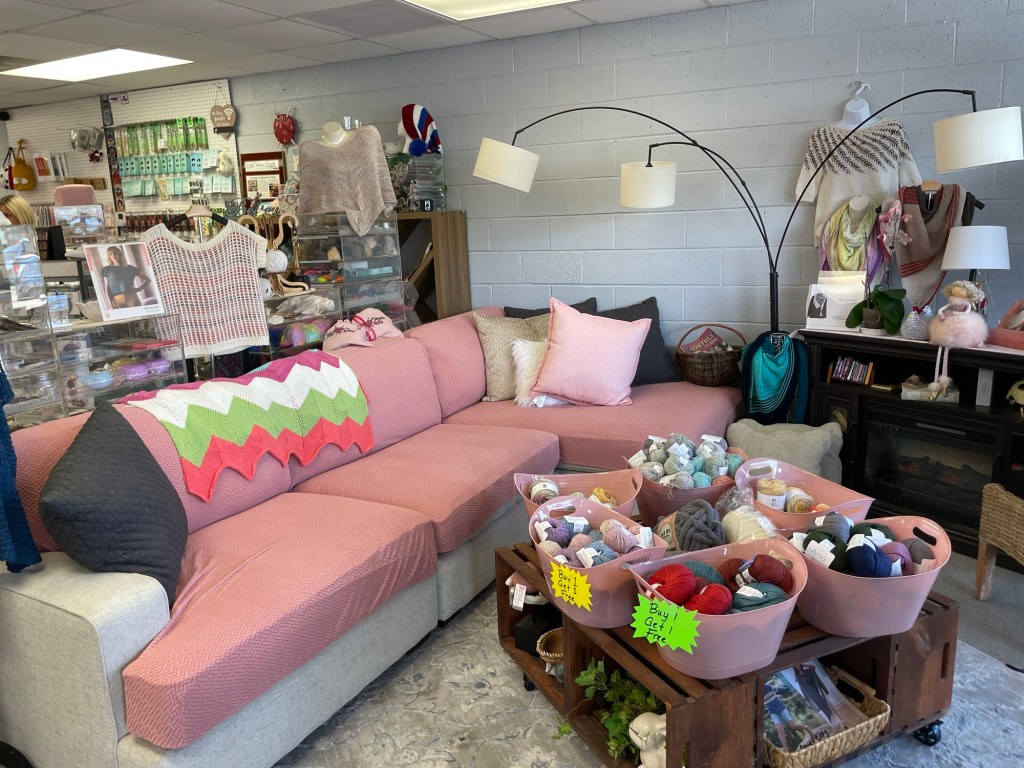
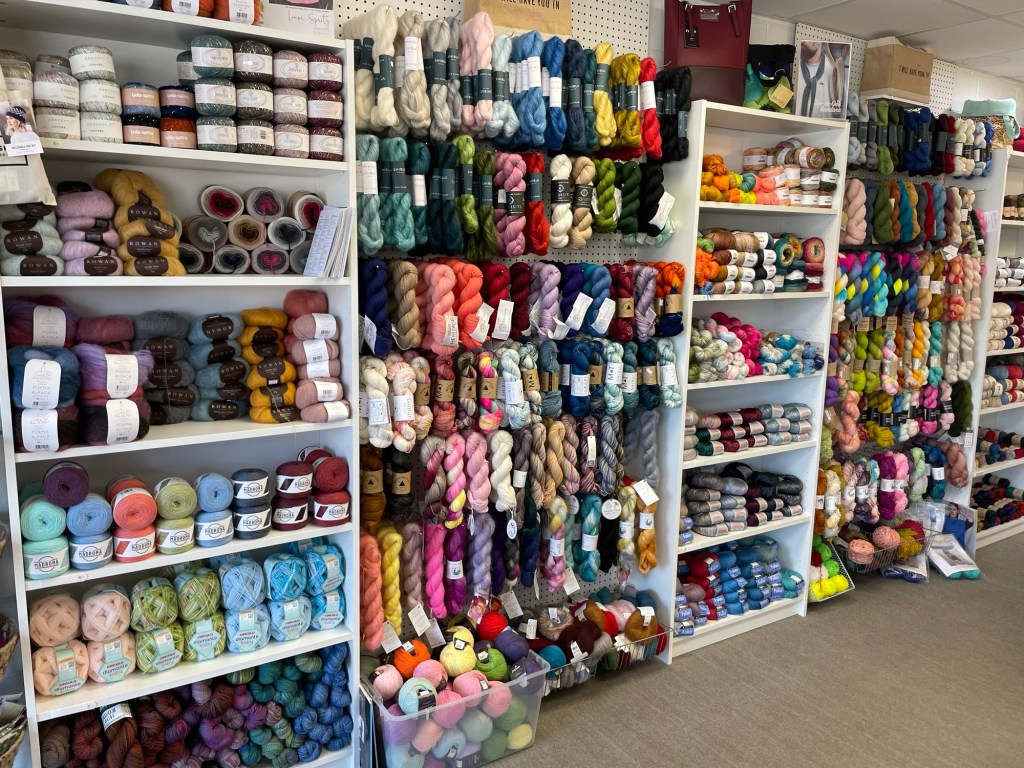
Cozy Corner Knits is very neatly laid out with a knitting area near the front window and nice displays guiding you back to the classroom area at the rear of the shop. 

Susan and I had such a fun time chatting with the owner, her husband, and another customer that it was after 1:00 before we knew it, and we needed to move on to our next stop. 

I had briefly considered not visiting Cozy Corner Knits because of the drive out to Enid, so Iโ€™m glad Susan convinced me that we absolutely needed to see all of the shops to experience our first yarn crawl to the fullest. 
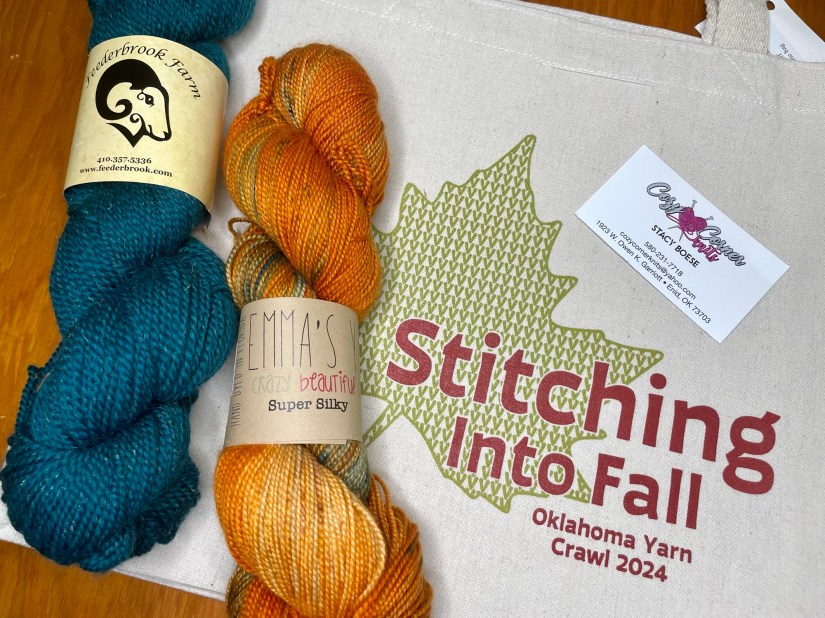
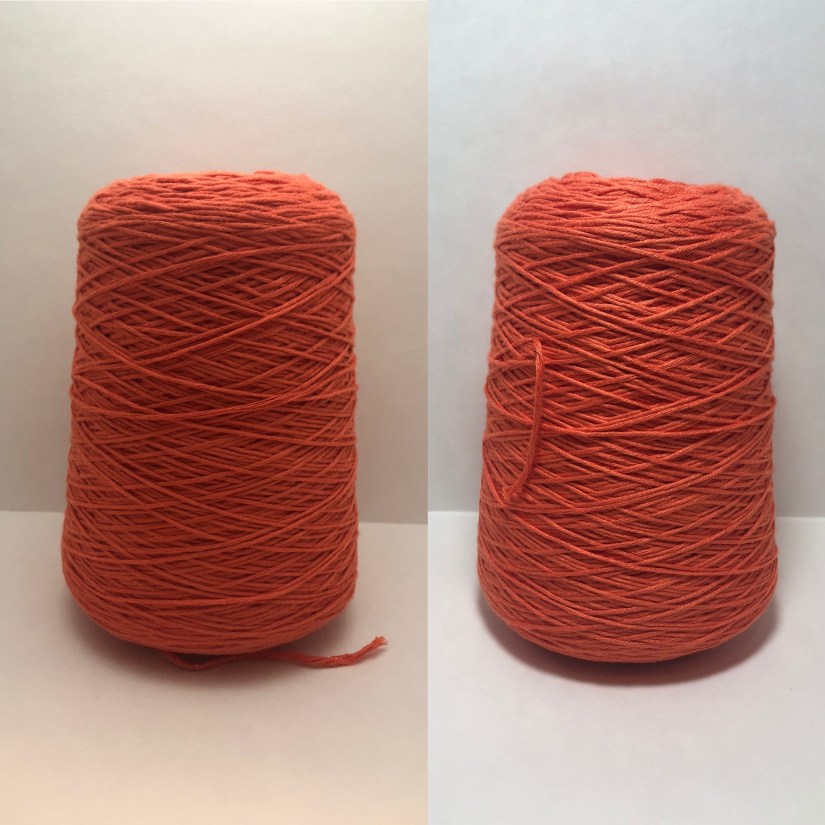
I stuffed some yarn with subtle sparkle from Feederbrook Farm and some gorgeous orange Emmaโ€™s Yarn Super Silky into my yarn crawl tote, and we were off to the next one. 

You can learn more about Cozy Corner Knits at their Instagram or Facebook pages.


It was about an hourโ€™s drive to our second stop, Susanโ€™s favorite of the trip, 

Oklahoma Mini Mill – Guthrie

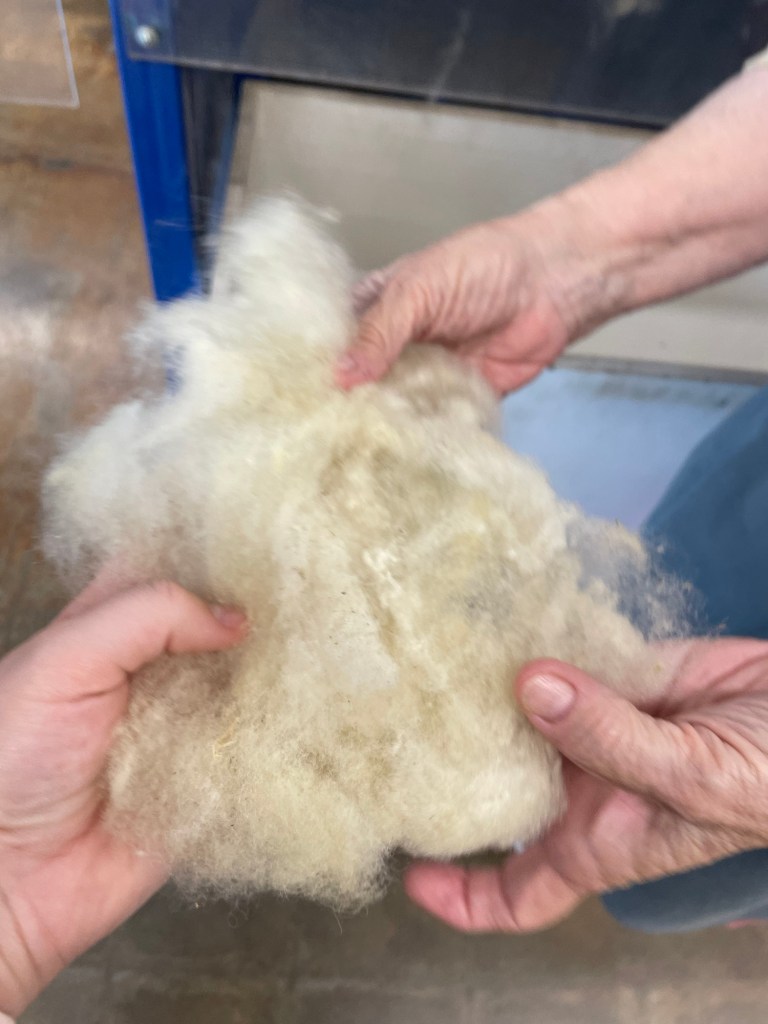
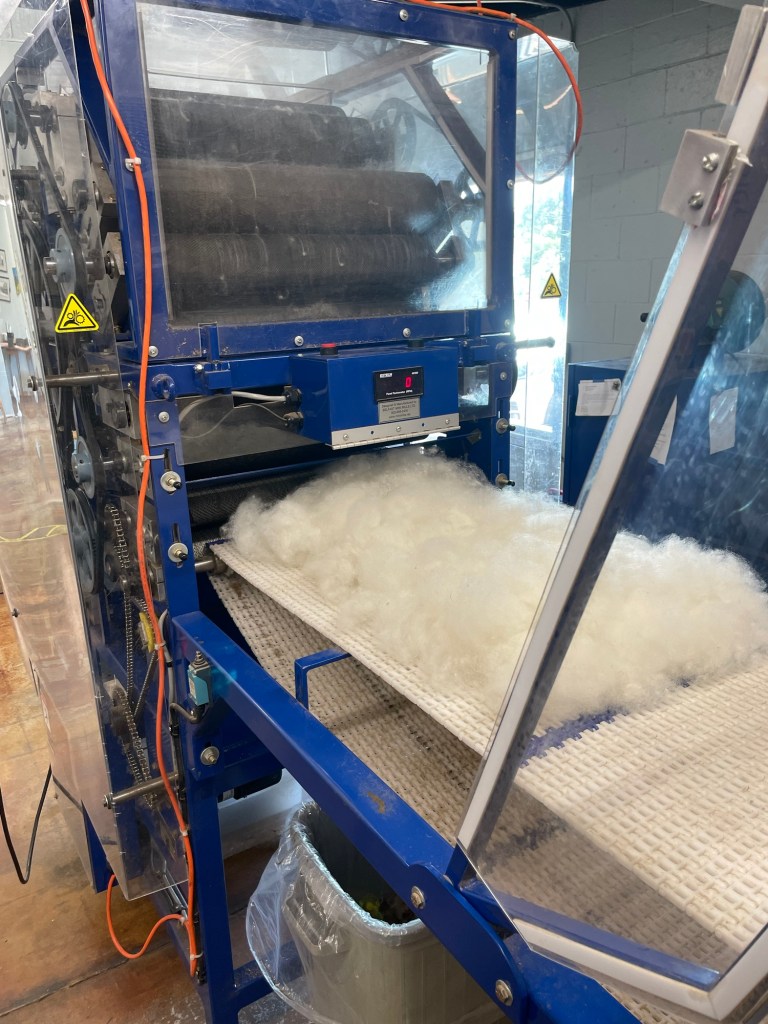
Oklahoma Mini Mill (OMM) isn’t usually open to the public for walk-ins since theyโ€™re a working mill and conduct most of their business online, but one of the owners gladly gave us a tour after she stamped our card. We got to feel some amazing fibers at different stages of processing. It was really interesting to be able to feel the different lanolin contents of wool as the cleaning and fluffing (industry standard term, I’m sure) progressed. 

I’ve seen a friend hand process llama fiber before but never really paid attention to this part of the yarn process before, so this visit was very educational and interesting. We even got to touch some amazingly soft bison fiber that costs around $30-35 an OUNCE, and I think that’s the cost before processing.

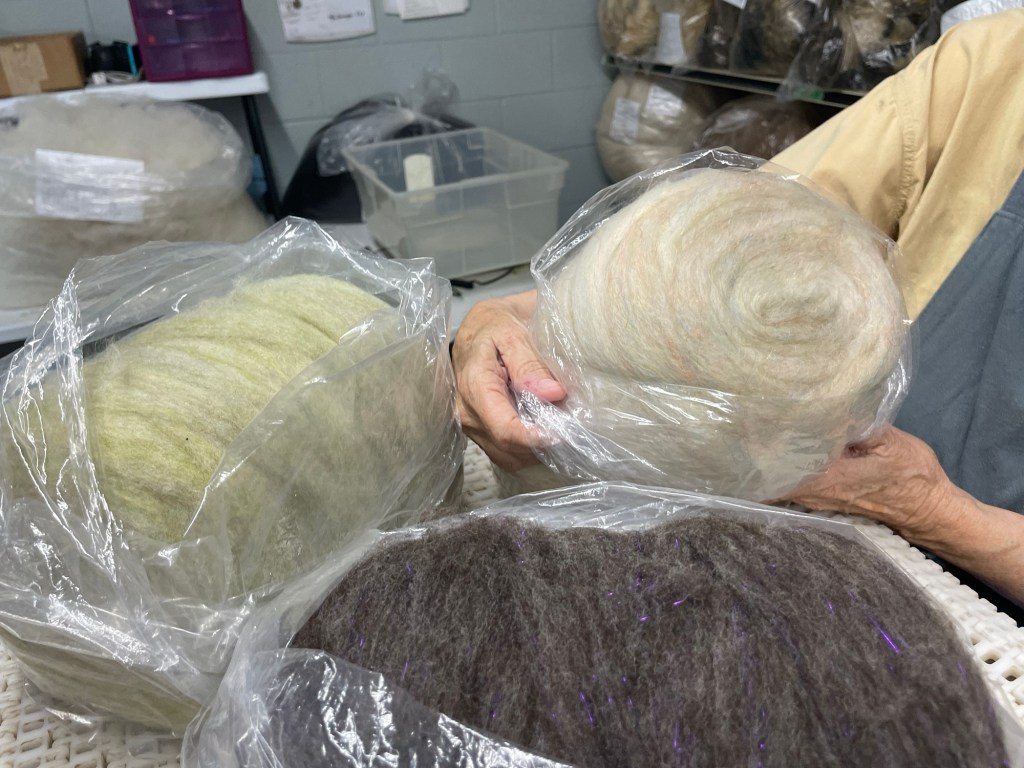
Oklahoma Mini Mill mainly focuses on processing fleeces for hand spinners, so they process fibers until they are ready to be spun but don’t do the actual spinning. Customers send their fibers to be cleaned and blended into fiber batts. They can even add in special things like this angelina sparkle.
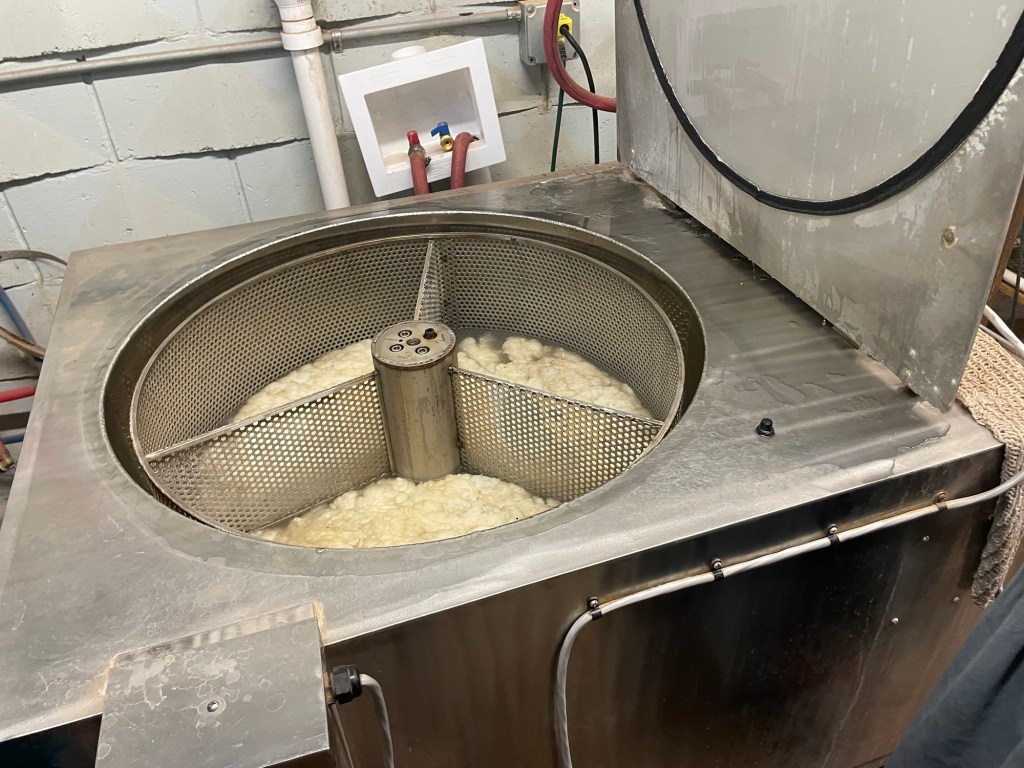
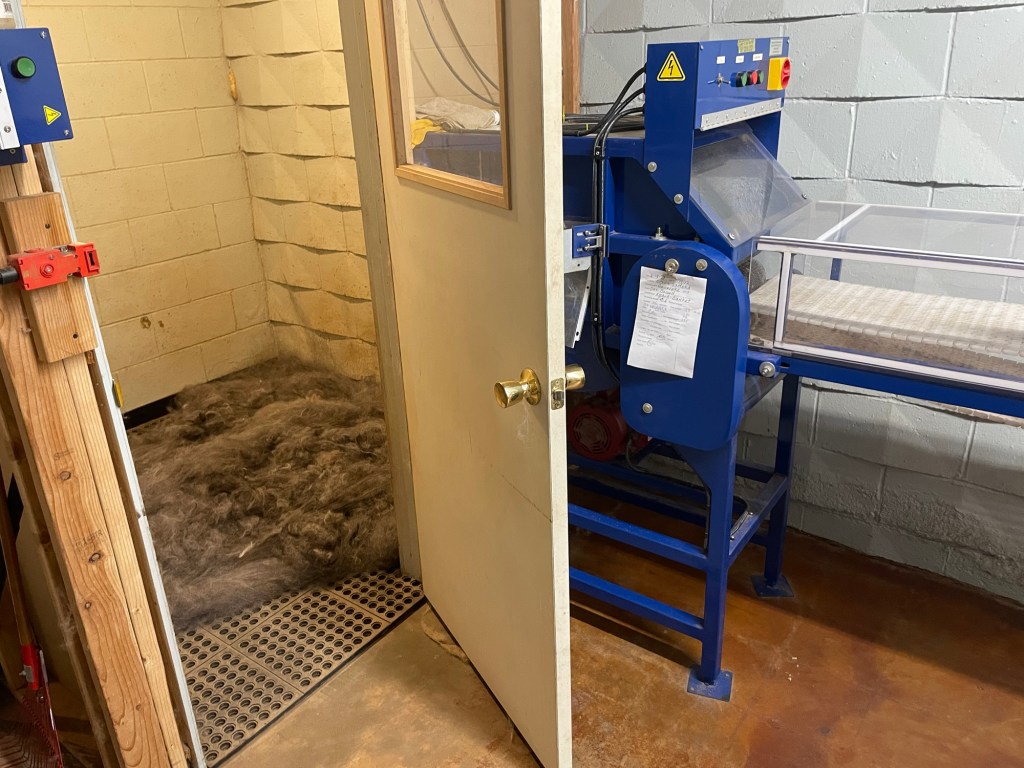
Another neat factoid about OMM: They don’t waste any wool! Pieces that arenโ€™t suitable for processing and spinning are saved and used as insulation.

I didnโ€™t purchase anything from OMM while we were there during the yarn crawl. Most of their business is actually online through Etsy, which I’ll link below.

Oklahoma Mini Mill also vends at the Fiber Christmas in July show, so there is yet another incentive to attend Fiber Christmas if you haven’t yet!

You can learn more about Oklahoma Mini Mill at their website, Instagram, Facebook, or Etsy pages.


Guthrie had two stops on the yarn crawl. Next up was in historic downtown Guthrie

Sealed with a Kiss – Guthrie

Sealed with a Kiss brought in trunk shows and debuted HowdyDo, a new locally dyed yarn inspired by the women of the Wild West, during the yarn crawl.

We missed their Lunch in the Loft event by a couple hours because I forgot to check ahead with every yarn crawl stop like I meant to. Learn from my mistakes and check each shop ahead while planning!
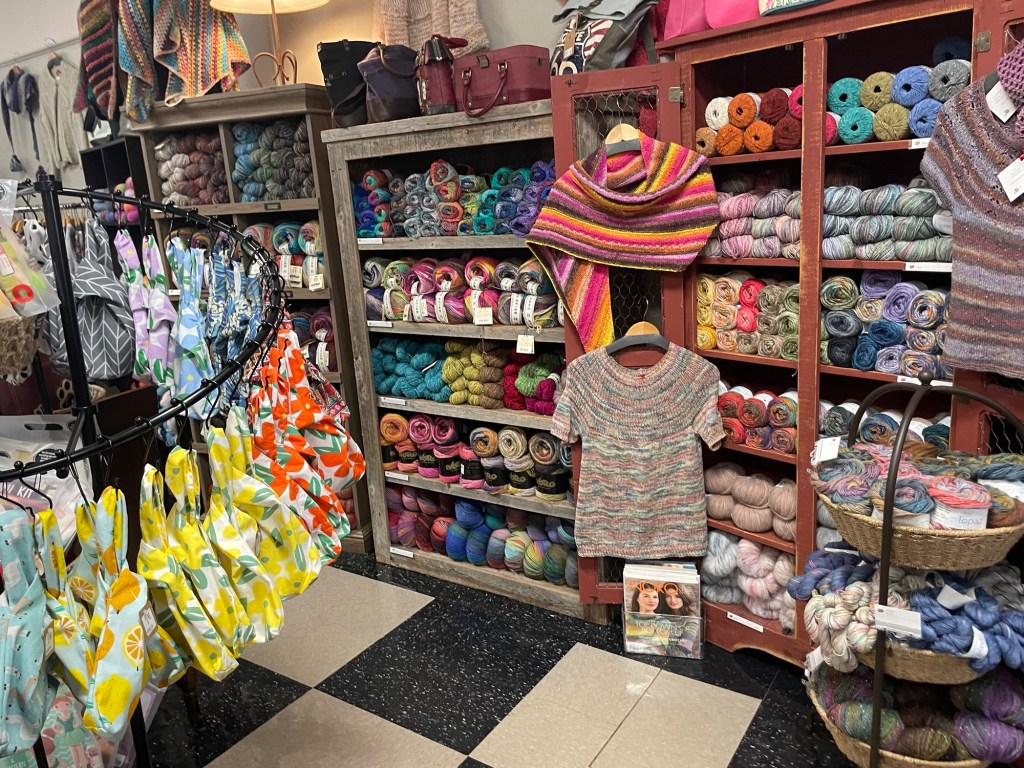
Sealed with a Kiss had a really nice selection of knitting accessories as well as bags, fashion accessories, and even some non knit garments. Itโ€™s a yarn boutique but not just a yarn boutique. 

I bought a wonderfully sparkly shawl pin. I just can’t resist sparkles.

You can learn more about Sealed with a Kiss by visiting their website, Instagram, and Facebook pages.


Susan and I got a hotel in Edmond for the night that ended up being less than 10 minutes from our next stop

Kristyโ€™s Fiber Arts -Edmond

Kristyโ€™s Fiber Arts is a dyeworks that features Kristyโ€™s hand dyed yarns with a few other yarns alongside them. 

Susan and I grabbed a coffee and waited in the parking for 10AM, the daily yarn crawl start time, but Kristy saw us and another group in our cars and invited us all in early.

We had a great time browsing and chatting, and Kristy shared a little bit about how she names her colorways. A lot depends on who or what sheโ€™s thinking about when she dyes. Mine would all end up being named after my chickens or food! 
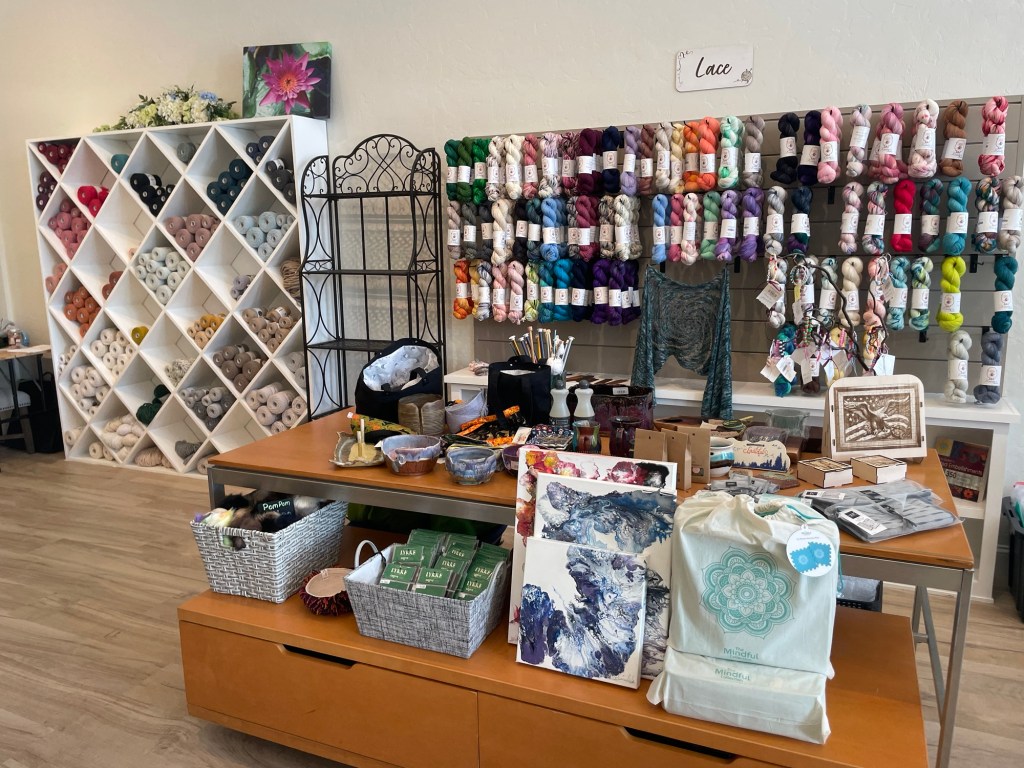
Yarns were organized by weight. I love to see hand dyers working with more than just sock weight yarn. I want those pretty colors and one-of-a-kind skeins in lace and bulky weights, too! 

Kristy also stocked pretty macrame cord, so I made note of that for my mom, who does really nice macrame work. It was the most colors of cord I have ever seen in store, so if you like macrame, Kristy’s Fiber Arts is a great stop for it, too!

I bought some orange yarn and a mini skein kit from her at Fiber Christmas in July this year that I really liked, so I was excited to see what I missed that she’d have in store. The green and black yarn made me think of my younger brother, so Merry Christmas to him! I hope heโ€™s not tired of beanies!

You can learn more about Kristy’s Fiber Arts from their website, Instagram, and Facebook pages.


The next stop was also in Edmond-another dyeworks. 

A Chick That Knitz – Edmond

A Chick That Knitz used to be a โ€œfull blownโ€ yarn shop a few years ago, but they werenโ€™t as able to focus on dyeing yarn as much as they wanted, so they took a step back and opened as a dyeworks with exclusively their own yarn and limited days open to the public. 

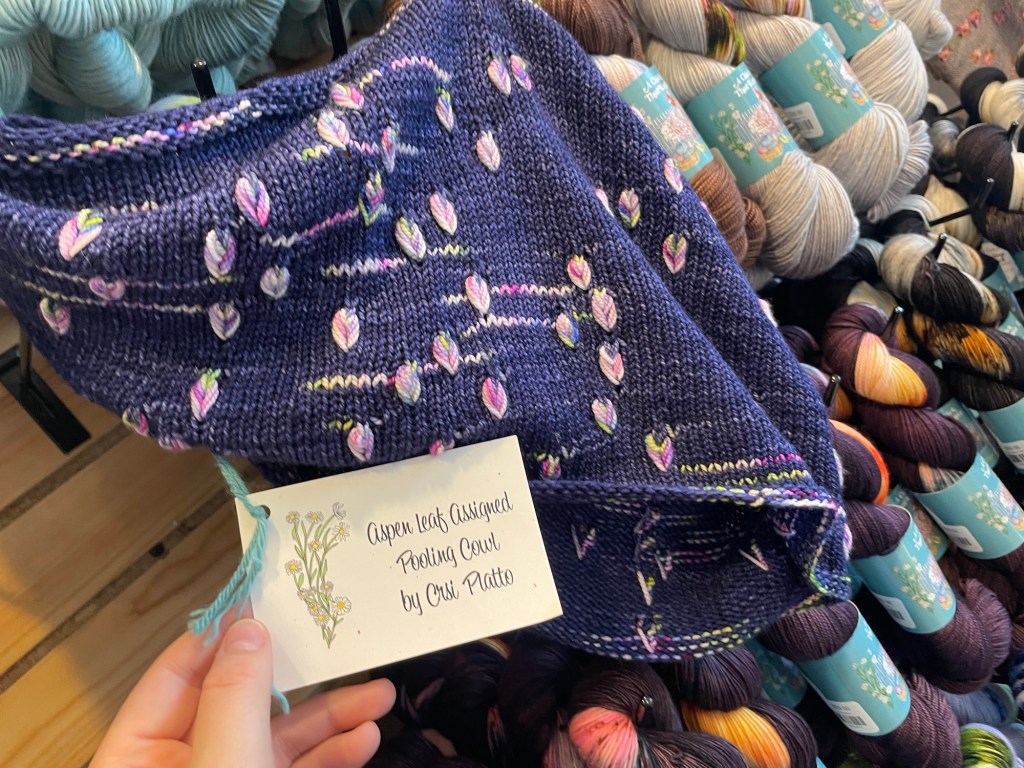
Iโ€™ve followed A Chick That Knitz online for quite a while, and I was excited to see their planned pooling yarns in person. The concept is simpleโ€” knit in one stitch, perhaps stockinette or garter stitch, for the main color of the yarn until you come across the color pooling bit (this is the section that isnโ€™t the main color) and perform a special stitch. 

Itโ€™s simple enough, but because each hand dyed skein is unique, it really enables you to create a one-of-a-kind item. 

A Chick That Knitz has much more than just planned pooling yarns, but those were something I had been waiting to see for a long time because they’re how I learned about this way of using planned pooling. Iโ€™m in their area a few times a year, but the timing never lined up before to be able to see their space, so Iโ€™m glad I finally got to experience it during the yarn crawl. 

I bought planned pooling yarn from their website after the yarn crawl ended.

You can learn more about A Chick That Knitz at their website, Instagram, and Facebook pages. Also look at their cool chicken logo!


The cloud ate my pictures from our next stop alongside most of my pictures from A Chick That Knitz, so Iโ€™ve linked some of their Instagram posts to show you their space.

MoonDrake Co. – Oklahoma City

When we reached MoonDrake Co. dyeworks in Oklahoma City, it started to hit me that our yarn crawl journey was almost over. The public part of the shop is on the small side but is nicely organized. Wool and dye scents wafted from the back room, and I really enjoyed that. Wool and lanolin smell is so comforting to me.

Because the display area was smaller, it was easy to see the many different types of yarn bases MoonDrake uses in their yarn lines. 

I went home with a large skein that was actually two skeins โ€”one of a stubby yarn and one of a cashmere/mohair blendโ€” that were meant to be worked together into the same project. I also purchased a really pretty neon tweed yarn that I am looking forward to working with. 

I really wish my photos hadnโ€™t been eaten because the display did a really good job of telling the neon tweed lineโ€™s color story. They’re gorgeous, vibrant, and fun.

You can learn more about Moondrake Co. at their website, Instagram, and Facebook pages.


Our final stop on the 2024 Oklahoma Yarn Crawl was 

Yarnatopiaโ€”Oklahoma City 

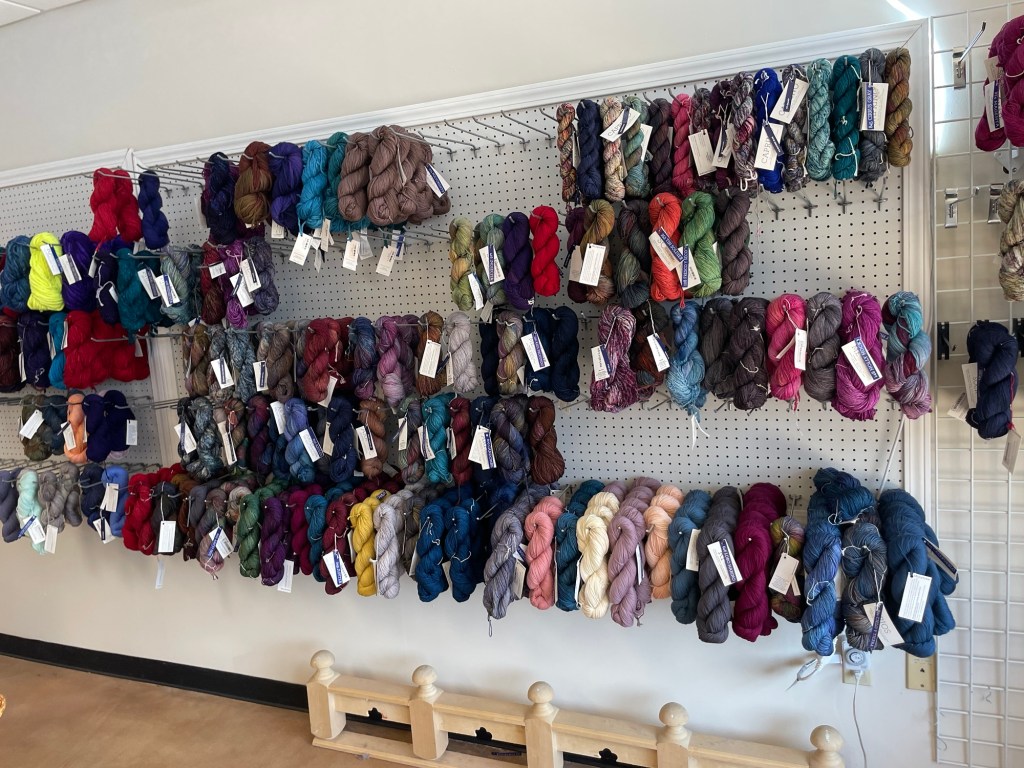
Iโ€™ve been to Yarnatopia a few times over the years, having pleaded with Chris to stop by on the way to or from visiting family. I really enjoy stopping by. The shop is a very nice size and has a really nice Malabrigo yarn wall. I know others appreciated it, too, because it had been picked through by the time we got there, and the yarn crawl had two days left! 
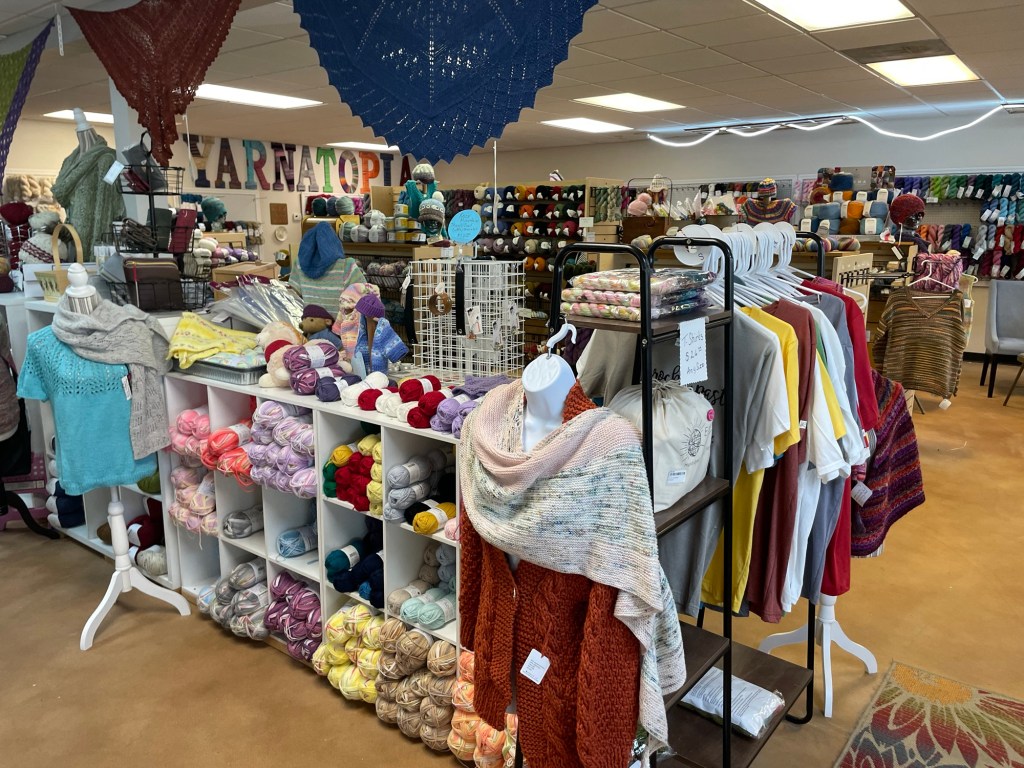
I found some really nice โ€œhi-vizโ€ yarn to make a hat for my dad (he always requests a hat for Christmas) and a very nice slub yarn by Emmaโ€™s Yarn. (I tried to buy from all different brands but didnโ€™t realize the sock yarn I bought from Cozy Corner Knits was also Emmaโ€™s Yarn. Guess that means I need to look into that brand more since I really like what Iโ€™ve seen so far!)

I really like the โ€œYarnatopiaโ€ yarn-wrapped letters on the wall, but I don’t think Chris would go for that in our house….

You can learn more about Yarnatopia at their website, Instagram, and Facebook pages.


The End of the Road Trip

We were both pretty tired at the end of the Yarn Crawl and had a two and a half hour drive back to my place. Susan had another hour to go after she dropped me off. I think we’ll attend a few more days of the yarn crawl next year rather than trying to squish everything into three total days. We’ll be able to spend more time at each shop and participate in events that way, too.

Every shop owner I talked to seemed very excited about the results of the yarn crawl for their business, and the crawl still had three days left to go when Susan and I made our way to the central Oklahoma area shops. 

Many of the dyers had sold out of colorways and had to tell crawlers when theyโ€™d be back in stock. I ended up making some purchases online or through Etsy after the official crawl dates were over to find colors, bases, and fibers I liked the most. 

I knew of many of these businesses before the yarn crawl, but I had only managed to visit about half of them before the event. I have family in the western part of the state, and Iโ€™m already thinking up alternative routes that would allow me to drop by and see shops again on my way out and back home. 

The yarn crawl did a great job showcasing how amazing and varied the Oklahoma fiber community is. I loved seeing each dyerโ€™s different color stories and the variations in each shopโ€™s different brands and specialties.

I had a wonderful time meeting Oklahomaโ€™s fiber talents, and I canโ€™t wait for The Second Annual Oklahoma Yarn Crawl 2025!

Thanks for joining me on this road trip recap of the 2024 Inaugural Oklahoma Yarn Crawl! Have you ever been on a yarn crawl as a customer or as a host? Do you plan your own yarny road trips?

yarn review

Squish It! – Jody Long Delish Yarn Review

Hello everyone! Itโ€™s been a while! 

Christmas Covid is the gift that keeps on giving, and recovery has been rough. Itโ€™s Fiber Christmas In July time already!

Iโ€™ve been through a slew of tests with more to come, but Iโ€™m finally able to break through the covid brain fog enough to feel confident writing again. 

My yarn rep stopped by a few weeks ago and gave me some yarn samples for inspiration, so I thought Iโ€™d share my opinions with you.


Disclaimer: 
All opinions are honest and my own. I was given this yarn for free with no expectation of review or endorsement. 


Jody Long Delish

is a 50/50 extra fine merino wool/mulberry silk blend you will want to pet and squeeze repeatedly the second it gets into your hands. The color palette is well-rounded for a that is newer to the market with a nice blend of neutrals, pastels, and brights in its 16 colorways. 

With an MSRP of $19.99 and MACHINE washable and DRYABLE labels on the tab, Delish seems almost too good to be true. Skeins are 50 grams each with 230 yards per skein (that’s about $0.09 per yard), which makes sweater quantities (1200-2200) fall in the $120-200 range. For a luxury yarn, that number feels about right. 

Delish is OEKO TEX and Mulesing Free wool certified.

I carried my sample skein in my purse for days and made all of my friends squish it and rub it against their face. It feels amazing. 


How It Worked Up

Delish flew through my standard gauge machine at Tensions 10 and 8, and I suspect it would be nice even at Tension 6, although that might produce a fabric that is too tight to show off the yarn’s wonderful drape. According to the label, Delish is a CYC 1 Superfine/Lace weight with a recommended hand knitting needle US3 and crochet hook D. It is a good yarn weight for lace work and could also be treated as a light fingering weight yarn with nice results.

Machine Compatibility

Standardโœ” worked amazingly
Mid-Gaugeโœ” lower tensions
Bulkyโœ” will work, but not the best choice

My sample skein was only 25 grams (retail version is 50g), so I didnโ€™t test at as many tensions as I ended up wanting to. 

I had zero issues with yarn breakage or tangling, but this yarn will stick to itself if you give it the chance. I ran into quite the yarn tangle while winding it into a cake on my yarn swift. 


Laundry Care

I was most excited about the machine washable and dryable aspects of this yarn, and while the label is technically correctโ€” you can do itโ€” you shouldnโ€™t. 

My swatches did not appreciate being machine washed, and the second I pulled them from my machine, I wished I hadnโ€™t done it.

Delish developed a very nice halo after washing, but it was also pill city. That doesnโ€™t bode well for high-wear areas in garments. 

halo and the beginning of pilling

The yarn also lost a lot of its pleasant sheen.


Hereโ€™s a refresher on how I treat my swatches when testing yarns: 

  1. Fresh off the machine โ€” Set Stitches, Lay Flat, Measure, Record Gauge
  2. Hand Wash, Flat Dry, Measure, Record Gauge
  3. Machine Wash Cold, Flat Dry, Measure, Record Gauge
  4. Machine Wash Cold, Machine Dry, Measure, Record Gauge

I think this method gives me a good feel for how a yarn will wear when worn. If I am concerned about a fabric dropping or I know the garment will be particularly heavier, like a skirt, I will hang the swatch and put a claw weight on it for a few days to simulate the weight and pull of the garment. 

Always treat your swatch like you will treat your finished object!


A small part of me knew the machine wash and dry labels were probably too good to be true. I was disappointed, yes, but Delish did maintain its drape and wonderful hand feel after machine wash. It lost a bit of its sheen/vibrance after washing, but the halo was a nice trade off. The pilling wasnโ€™t unexpected since the yarn does like to stick to itself, but I will note that the pilling issue wasnโ€™t as present with hand washing. 


Final Thoughts

Jody Long Delish is a really nice, luxury yarn at a decent price. It flows well through a knitting machine and wears fairly well if you treat it like a luxury yarnโ€”which means NO machine washing or drying. (This may be a hot take, but if you put in the time and money for a sweaterโ€™s worth of yarn, you should be hand washing it anyway.)

I have to be very picky about what I spend my energy on now with Long Covid, and Iโ€™m probably a little more disappointed that I mightโ€™ve been in the past about the machine washable and dryable aspect not turning out as well as Iโ€™d hoped. 

I still plan on buying some of this yarn.

While I originally wanted to make myself a nice cardigan using it, I think making a lacy shawl will show off the yarnโ€™s wonderful drape and feel and take advantage of its lightweight warmth while avoiding the inevitable pilling in the higher wear areas of a cardigan.

I give Jody Long Delish

Rating: 3.5 out of 5.

You can use Knitting Feverโ€™s Shop Finder to find Jody Long Delish at a local yarn shop near you.

Thanks for joining me on my machine knitting journey! I love hearing from you! 

Contact me if thereโ€™s something youโ€™d like me to cover in future posts, or feel free to leave your thoughts in the comments. 

In-person classes are on track to resume at Get Stitchin’ in October. I am in the process of getting internet access in my studio for future Zoom classes and streaming sessions. Hooray rural life!

yarn review

CONE Yarn Review: Brown Sheep Nature Spun Sport

Itโ€™s fall, yโ€™all! …well, it is autumn according to the calendar.

Sweater weather hasnโ€™t fully arrived yet in Northeast Oklahoma, but I am here for you with a seasonally appropriate review of Brown Sheep Nature Spun Sport 100% wool yarn ON CONES!

Before we get into my knitting experience, here are

The Details

Fiber Content100% Wool
Yardage/Meters1682 yards / 1598 m
Ounces/Grams16 oz / (1 lb) / 452 g
Yarn Weight/SizeCYC 2 / Sport
Made InMitchell, NE, USA
AvailabilityBrownSheep.com, Brick-and-Mortar Local Yarn Shops
Construction3 plies
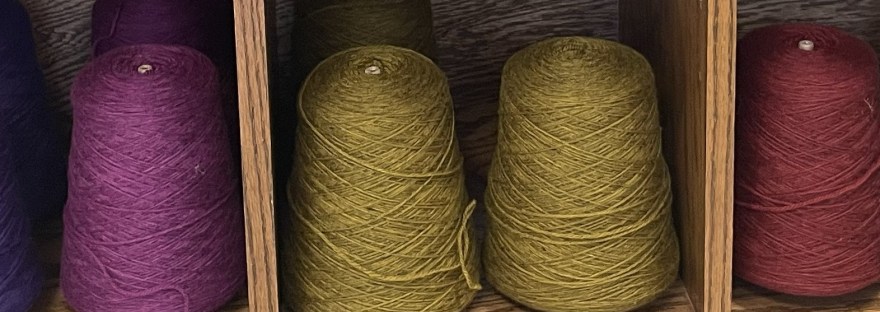
Put UpCone
Hand WashYes
Machine WashNO
Flat DryYes
Machine DryNO
MSRP$55.80
Price Per Yard$0.03

Additional Info
โ€ขThis yarn will felt if you do not follow proper care instructions.
โ€ขNatureSpun is treated with a moth proofing agent at the time of dyeing that makes the wool “unpalatable to the wool moth larvae.” (See their FAQ page for more details.)
โ€ขThe main wool breeds used are Corriedale, Rambouillet, and Columbian.
โ€ขThis construction is available in fingering, sport, worsted, and chunky yarn weights.
โ€ขSport and Fingering are the only options that come in cones.


mid-work on a standard gauge knitting machine

Machine compatibility

4.5mm StandardYes
6.5mm Mid-GaugeYes
8mm / 9mm BulkyYes

Mid to high tensions felt best on a standard gauge machine. Low-mid tensions felt appropriate for the mid-gauge machine. Low tensions are appropriate on a bulky machine unless you plan on using specific techniques that require looser gauge.

(If you’re wondering, I knitted the pictured sweater at Tension 5/5 for the ribbing and Tension 10 for the colorwork.)


What I’m Looking For

I’ve laid out what I’m looking for in a book in recent reviews, but I haven’t really talked about what I want in a yarn. The completely unhelpful answer is “It depends.”

It’s about purpose.

Am I indulging myself in a luxurious, expensive specialty garment, or am I making a jacket I am going to wear every single day? Is the item for someone who will take the time to properly wash it, or is it for a busy new mom who barely has time to think, let alone check the care label on some knitting she got from Auntie Em?

I want to say I’m a bit of a yarn snob because the yarns I end up choosing for personal projects tend to be hand dyed from indie dyers that are specific wool breeds. I want that handmade, one-of-a-kind element to be there from start to finish.

But I can also appreciate acrylic and will argue that has its place in your stash alongside your finest, rarest fibers.

My considerations boil down to
โ€ขWill this work on my machine(s)?
โ€ขWhat is its purpose (everyday workhorse vs luxury) and does it meet it?
โ€ขHow does it feel on my skin?
โ€ขIs it easy to care for as a gift?
โ€ขWhat are the color options?
โ€ขIs it sustainable/renewable? (This can be difficult to answer depending on the amount of information available)
โ€ขHow does it block?
โ€ขDoes it match the claims it makes? (i.e,. “just like silk!”)
โ€ขIs this going to be discontinued just because I like it?

I’m kind of kidding with that last one, but I’ll admit I’ve started to stay away from brands that are always introducing new yarns and then discontinuing them after a year. If it’s gone by the time I get to knit with it and I can’t find more, why bother even trying it? That’s a major yarn peeve!

Speaking of yarn peeves, you may not mind these things, but I sure do!

โ€ขKnots in low yardage skeins
โ€ขKnots in general
โ€ขDonut put-up
โ€ขQuickly discontinued
โ€ขSplitty construction
โ€ขLoose/easily lost labels (especially those wrapped but unsecured labels on those dang donuts)


sweater on a wildflower bed of saltmarsh asters

Knitting It Up

I bought this yarn to knit the Sweet and Simple Block Jumper by Kandy Diamond from her new book, Discovering Machine Knitting. (Check out my review here!)

Nature Spun has a great selection of colors. The two colors I used, Autumn Leaves, an olivey chartreuse, and Pomegranate, an autumn red, had very nice depth of color due to a tiny bit of added black. It really made the colors pop.

With more than eighty vibrant colors spun in four different weights, the possibilities are unlimited for creating something beautiful with Nature Spun.

BrownSheep.com

When I think of 100% wool yarns, I think “scratchy,” but that isn’t the case with Nature Spun. It is a bit more textured than a chemically treated superwash wool yarn version, but that is normal.

Nature Spun is pleasantly soft and squishy with a bit of a size bloom in the twist as it comes off of the cone. Brown Sheep Company classifies Nature Spun Sport as a CYC 2 yarn weight, but I wouldn’t call you wrong if you said it was a light DK or CYC 3 weight, as it is on the heavier end of “fingering” weight yarns.

This yarn flowed very nicely through my machines. I didn’t encounter any breakage or splitting, and when I needed to un-knit a few rows due to a punch card mispatterning, it didn’t cling to itself or create fiber halos around the strand of yarn as I unraveled it. It did shed a slight bit of fuzz as it went through the knit carriage, but others wools I have worked with shed the same amount.

having a soak


I lightly steam blocked the sweater pieces before putting the sweater together. After a bath in some Eucalan, I wet blocked the finished sweater.

The yarn bloomed a tiny bit more after a steam and a soak, but the stitch definition is still nice and clear.

This wool is WARM. Much too warm for Oklahoma in general, but I had to try it on even if it was 82F outside when I finished. If you’re at higher latitudes, this should keep you very warm in the winter.

If you’re picky about your yarn’s sourcing, Brown Sheep Company says it sources its wool from local growers, and the entire process save wool scouring, carding, and combing is done at their Nebraska location. Plus, they are family owned.


Final Thoughts

This yarn is much nicer than I expected it to be, especially as a nonspecific wool blend at $0.03 per yard. Brown Sheep Company’s product listing claims “breathability, resilience, vibrancy, and warmth,” and I haven’t experienced anything to contradict that.

I joked with my husband that we needed to buy a building downtown and open up a yarn shop just so I can get a wholesale account with Brown Sheep Company. I really enjoyed working with this yarn, and I plan to purchase more of it. I personally don’t mind its care requirements, but if you plan to gift an item made from this, make sure your recipient knows how to wash it. It’s basically a one-season/winter only garment yarn in Oklahoma, but I think it’s worth it. I give it a solid

Rating: 4.5 out of 5.

Brown Sheep Nature Spun Sport on Cones is a workhorse yarn you’ll want to add to your stash.

Thanks for joining me on my machine knitting journey! I hope you’ve enjoyed my review. What factors do you consider when judging yarns? What do you want to see next on the blog? Let me know in the comments or contact me through my site form.


Disclaimer
I purchased this yarn myself. All opinions are honest and my own.
Amazon product links may be affiliate links. As an affiliate, I may earn a small commission at no cost to you if you choose to use my link. If you don’t have a local place to support, please consider supporting the site and using my link.


yarn review

Yarn Review: Lion Brand Touch of Yak

I bought this yarn in 2020 to review, and, well, 2020 (and now most of 2021) happened. Now it’s on clearance, but if this yarn seems like it’s for you, you might find a good deal on

Lion Brand Touch of Yak

Touch of Yak in Water Lily

All opinions are honest and my own. I am not affiliated with any company or individual mentioned or linked unless otherwise noted. I purchased this yarn myself and did not receive compensation for this review.


About

Fiber Content90-% Acrylic / 10 % Yak
Yardage/Meterage219 / 200
Ounces / Grams3.5 / 100
Yarn Weight4 / Medium / Worsted
Made inChina
AvailabilityLocal Yarn Store, Online
Put upSkein

This yarn is on clearance for $6.99 at the time of this post, so if it’s something you’re interested in, grab it while you can. The clearance price brings the price per yard down from $0.06 per yard to $0.03 per yard.

Originally retailing for 13.99, Touch of Yak is part of Lion Brand’s “Touch of Luxe” collection. The listing mentions “Yak fiber is as soft and warm as cashmere, with wonderful drape,” but with 90% of this yarn being acrylic, any drape you achieve will be from steam blocking or “killing” the acrylic.

Colors are soft, muted, and generally neutral. Now that it’s on clearance, three colorways remain.


Care Guide

Hand WashYes
Machine WashYes
Flat DryYes
Machine DryNo

I machine washed and dried this yarn with no problems. To be honest, I couldn’t tell any difference made by the minimal presence of yak fibers compared to any other decent machine washable and dry-able acrylic.


Knitting Machine Compatibility

4.5mm Standard GaugeNo
6.5mm Mid-GaugeYes
8mm / 9mm Bulky GaugeYes

This is a worsted weight yarn. I wouldn’t put it through any standard gauge machine, but it worked fine on other gauges.


Touch of Yak in Waterlily in a warm light
Pattern: Mirror Cable Mitts on ravelry

Performance

This yarn knitted up fine. It wasn’t anything special, but it wasn’t terrible to work with. When I transferred stitches to form cables, the yarn was annoyingly splitty, but plain knitting was fine. The stitch definition was fine for cables and the finished project looked nice.

There’s really nothing to point out if you treat this like any decent acrylic. The yak is nowhere to be found, especially if you’ve worked with 100% yak fiber before. If you haven’t, you might be able to convince yourself this yarn is softer than another mid-range acrylic, but really, it’s not anything special. There is a slight halo of potential yak fiber if you squint. Maybe?


Blocking

This yarn is 90% acrylic, so block it as such. Too much heat will “kill” the acrylic and freeze it in place. “Killing” acrylic is literally melting the plastic it is made of. You’ll achieve a great drape with this but lose any other properties acrylic might offer.

Careful steam blocking is my blocking method of choice for all yarns, even acrylics, but you should make sure you do not leave your steamer in one location for too long.


Touch of Yak in Water Lily wound into a cake

Final Thoughts

This yarn is fine. That’s it. It’s fine. The “touch” of yak is barely noticeable. It feels like almost any other mid-range acrylic. It’s soft, it works, it’s machine washable, and even though it says not to, it really is machine dry-able. The color range is limited, and the yarn is now on clearance. If you like a slightly softer than normal acrylic and you snatch it up, this could be a good yarn for you provided you aren’t picky about colors. Just don’t expect anything that actually touched a yak when you purchase this.

I give Lion Brand LB Collection Touch of Yak a 2 out of 5 score.


Have you used Lion Brand Touch of Yak before in your machine knitting? What about in your hand knitting? What kind of projects did you use it for, and what did you think of its performance?

Are there other properties you think I should include in my yarn reviews? What yarn should I review next? Let me know in the comments!


Uncategorized, yarn review

Complete Yarn Review: Jody Long Coastline

It’s time for another yarn review! I’ve been sitting on this one a while and really testing how it washes and wears, so I hope you enjoy all of the yarn data I’ve collected for you.

Like past yarn reviews, I’m covering fiber content, color options, ease of care, knitting machine compatibility, wear, and much more. If there’s a category you don’t see covered, let me know! I’ll add it to my list.

If you’re interested in learning more about the UK-based designer Jody Long, his designs, and the other yarn in his line, check out his website.

Today, we’re focusing on his fun fiber blend of

Jody Long Coastline


All opinions are honest and my own. I am not affiliated with any company or individual mentioned or linked unless otherwise noted. I purchased this yarn myself and did not receive compensation for this review.


About

Fiber Content33% Cotton / 28% Viscose / 27% Nylon Polyamide / 12% Linen
Yardage/Meterage218 yd / 200
Ounces / Grams3.5 / 100 g
Yarn Weight4 / Medium / Worsted
Made inItaly
AvailabilityLocal Yarn Store, Online
Put upDonut

Although retail listings might state Jody Long Coastline is a worsted weight yarn, its ravelry page and recommended needle/hook size place it closer to a heavy worsted or Aran weight yarn.

Coastline is distributed by Knitting Fever and has 18 colorways. The core of the yarn is made of natural fibers while the other fibers, which contain the dye, create a spiral chain around it.

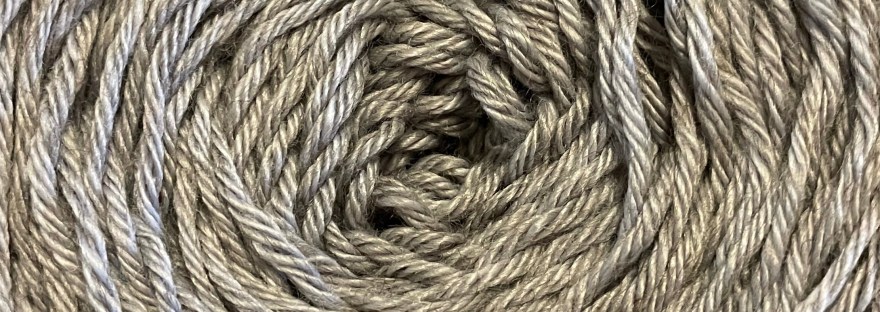
The chain surrounding the core of the yarn occasionally allows the natural-colored core to show through, giving the yarn a heathered or marled look.

I untwisted the yarn in the image below to give you a better look at the chain and core construction.

Because Coastline is a heavy worsted/Aran weight, its low yardage count isn’t too much of a surprise. Coastline checks in at around $0.08 a yard.

Coastline retails for about $16.49 a ball at your Local Yarn Store but can be found at slightly lower prices online at WEBS yarn store.

I will always recommend shopping at your LYS since you won’t have to pay shipping and you’ll benefit from their years of experience at the shop. Feeling the yarn and seeing the colors in person is well worth it considering you’d only save a couple bucks by buying online.

As for how this yarn is presented, the donut put up is my least favorite way to obtain yarn. Yes, they look tiny and tidy on the shelves at the LYS, but once you use 50-60% of the ball, the donut starts to fall apart and tangle. It is one of the worst ways to present yarn in my opinion. It’s just asking for added headache, especially in slippery plant fiber yarns.


Care Guide

Hand WashYes
Machine WashYes, Warm
Flat DryYes
Machine DryOfficially: No. Unofficially: Maybe

Coastline handles a washing machine cycle with ease. If you’d like to be extra cautious, wash your project in a mesh bag or in a cycle of only knits to avoid snagging.

Don’t plan on washing your Coastline project one day and wearing it the next, though. Coastline takes a long time to dry.

The front of my Coastline tank top can be nearly dry while the back underneath it is still very damp. I recommend flipping any project after a few hours to assist in the drying process.

I believe this is due to the natural fibers at the core of Coastline. The cotton really soaks up moisture and doesn’t seem to want to let go of it easily.

While it isn’t recommended by the care label, I did send one of my swatches through a machine drying cycle. It was still damp after one cycle on low. The low heat of the dryer did not seem to affect any of the synthetic fibers, as the swatch held its shape but was not permanently melted into that shape.

That said, machine dry at your own risk.


Knitting Machine Compatibility

4.5mm Standard GaugeNo
6.5mm Mid-GaugeYes
8mm / 9mm Bulky GaugeYes

Coastline is too large to try on a standard gauge machine, even if you were to attempt using every other needle. The small chained threads around the core would catch on the small needles of the standard gauge machine. I do not recommend this yarn for a 4.5mm machine.

Mid-gauge machines can handle this yarn at medium and upper tension numbers with ease. You might run into some difficulty if you attempted to use this yarn at a lower tension, though, as it is on the stiffer side as far as yarns go.

Bulky machines should handle Coastline well.


Swatches and Performance

If youโ€™re interested in how I swatch yarn, please check out this post.

This yarn knits into a lovely but slightly heavy-feeling fabric at medium to high tensions on the SilverReed LK 150 mid gauge machine. Lower tensions produce a stiff, dense fabric that might work for a bag or utility project but would be uncomfortable in a garment.

Jody Long Coastline in Deep Ocean

This swatch was washed on warm, dried flat, and gently steam blocked. I did not stretch it or force it, merely smoothed it out flat.

There wasn’t any discernible shrinking in the swatch since it was dried flat. To add to that, the Desert Queen tank top that I knitted with Coastline still measures true to gauge after over a year of wear and washes.

SilverReed LK-150 Tension 7

BeforeAfter
20 stitches4.25″4.25″
30 rows4.25″4.25″

When I machine dried a swatch, however, I did notice some shrinkage.

SilverReed LK-150 Tension 5

BeforeAfter
20 stitches4″3.875″
30 rows4.125″3.5″

Stitch gauge shrank about 3% and row gauge shrank about 15%.

*The row gauge shrink could be due to the number of weights on my swatch as I knitted them. I formerly used two claw small weights on my cast-on comb, but now I use one.


Blocking

Since just over half of Coastline’s fiber content is synthetic, be careful when steam blocking this yarn. That being said, the natural core structure will hold the yarn’s shape well, so gentle steam blocking is not out of the question with this yarn. In fact, that’s my go-to blocking method, and I used it with this yarn just like I do with other yarns. I was just a little more cautious about than I normally would be until I learned how it blocked with steam.

That’s another reason it’s important to swatch! Practice your blocking method on your swatch and you won’t be surprised when you’re blocking your finished project.

If you are unfamiliar with steam blocking, wet blocking any project is still a great choice for this yarn, but be aware of lengthy drying times.


Projects

Back in February and March of 2020, I used Jody Long Coastline to make the Desert Queen tank top by Meghan Kelly.

I had to adjust the DK weight pattern to fit the larger Aran weight Coastline yarn, but it knit up beautifully.

I wear my Desert Queen tank top about two times a month, so at this point the garment has been through around 30 wash cycles.

close-up of the Desert Queen top neckline after 30+ washes

And it still looks wonderful!

The stitch definition is still as strong as it can be with the heathered effect, and harder use areas like the underarm are strong with no signs of pilling whatsoever. The denim-like look of the fabric has not faded, and the eyelet elements at the neckline and bust of the top are still well-defined.


I’ll admit, I initially HATED working with this yarn. Amid all the stress of March 2020, this yarn presented my ULTIMATE yarn pet peeve: knots in low-yardage skeins. And I purchased six skeins to treat myself to this top that I had fallen in love with.

Here are my initial thoughts from my ravelry project page

Iโ€™m NOT happy with this yarn. It looks good, but EVERY SKEIN had MULTIPLE knots in it. For a low-yardage, cotton/linen NYLON/VISCOSE blend, that is unacceptable. This yarn retails for $16.99 a skein. Yes, itโ€™s machine washable and looks very nice once knitted up, but you can find similar blends at Hobby Lobby or Michaelโ€™s for under $5.00 that perform just as well or better.

I even wrote comments in my swatch binder about the knots. “Hated” was underlined twice.

Hmm.

Desert Queen by Meghan Kelly in Jody Long Coastline Deep Ocean

Final Thoughts

I’m still a bit torn when I remember the knots. Each skein had a knot joining the last 50 yards to the rest of the ball. Some skeins had knots every 50-75 yards.

I had six skeins of this yarn.

Considering the cost-per-ball and only 218 yards in a knot-filled ball, I felt really ripped off, especially as this was supposed to be me treating myself to a fancy yarn. Jody Long is a prolific designer, and it felt a bit like I was paying a premium for his name while getting an entirely mediocre product.

But after living with this gorgeous tank top that has held up beautifully through one of the most stressful times any of us may live through, I have to think my initial reaction could have been a little harsh. After all, a knot just means another end to weave in, and that’s not as bad as I make it out to be, even if I hate doing it.

I don’t know if I just got a bad batch or if the knot issue is persistent throughout all Coastline colors. I’ll admit, it has made me reluctant to try another yarn from Jody Long’s yarn lines, and I’ve seen some lovely cottons that really tempt me.

The durability after over a year and a half of wearing and washing is nothing short of impressive, and without the knot issue, I’d give Jody Long Coastline a 4.5 out of 5, but because of it, I’m only giving it a 3 of 5.

It’s a good yarn, but buyers shouldn’t have to fight knots when the skeins are so small.


Have you used Jody Long Coastline before in your machine knitting? What about in your hand knitting? What kind of projects did you use it for, and what did you think of its performance?

What’s your yarny pet peeve?

Are there other properties you think I should include in my yarn reviews? What yarn should I review next? Let me know in the comments!


Thanks for coming along with me in my knitting machine journey! See you next time!


Uncategorized

Yarn Review: Universal Cotton Supreme DK

Universal Yarn has been offering up yarn of all kinds for more than a decade. I first experienced their yarns in 2012 when looking for washcloth cotton at my old Local Yarn Shop. Their Universal Cotton Supreme worsted weight yarn was just too nice for a dishrag, so I ended up using it for a baby gift.

Today’s review focuses on Cotton Supreme DK but is also applicable to Cotton Supreme (worsted) and Cotton Supreme DK Seaspray.

“Knit, Relax, Smile, Repeat!”


All opinions are honest and my own. I am not affiliated with any company or individual mentioned or linked unless otherwise noted. I purchased this yarn myself and did not receive compensation for this review.


About Universal Cotton Supreme DK

Fiber Content100% Cotton
Yardage230
Ounces3.5
Yarn Weight3 / Light / DK
Made inTurkey
AvailabilityLocal Yarn Shops, Online
Put upHank

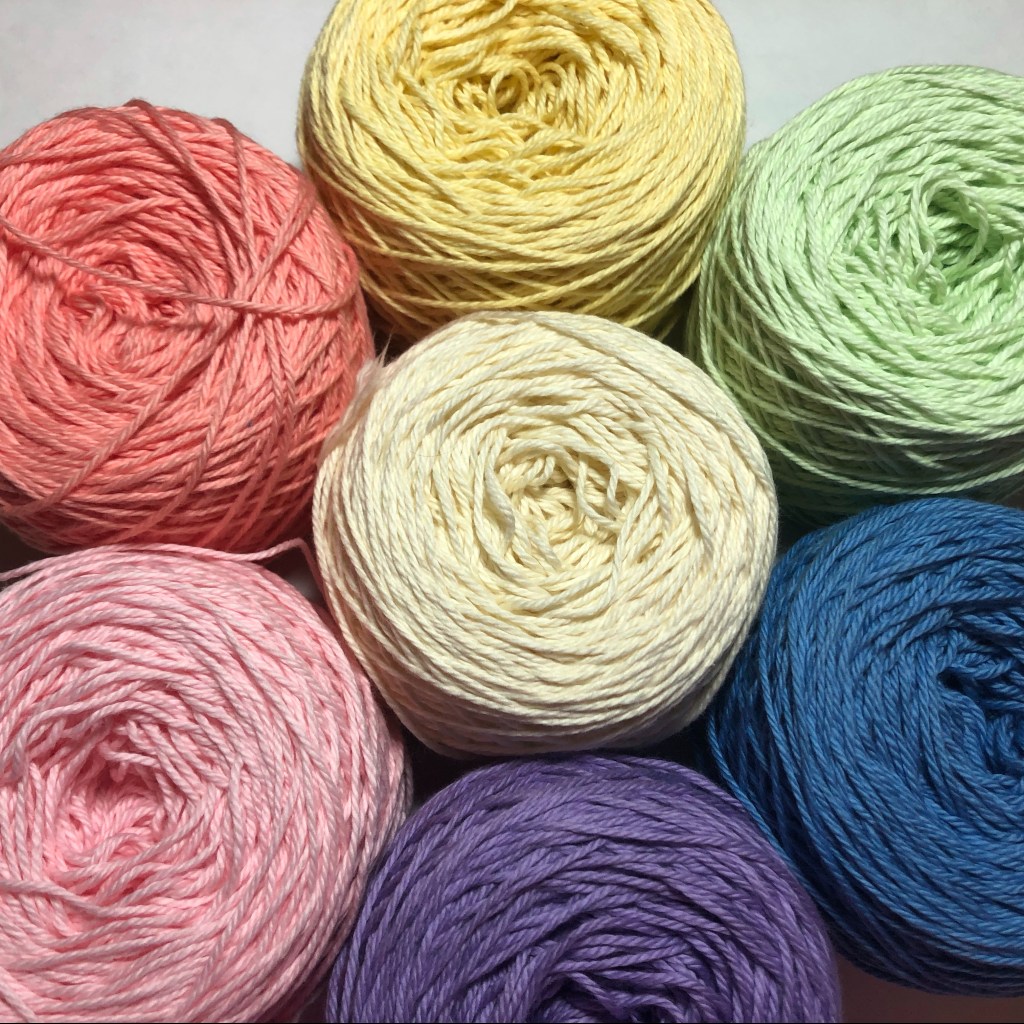
Universal Cotton Supreme original/worsted weight comes in 45 solid colors, Supreme DK in 32 solid colors, and Supreme DK Seaspray in 13 marled/ombre color options.

Cotton Supreme DK solid colors wound into yarn cakes

MSRP is $10.50 per hank, but it is easy to find this yarn on sale online for as low as $5.49 per hank depending on colorway. Many LYS offer deals on bulk purchases like online stores will do, so be sure to contact your LYS and support your local area’s businesses when you can!

Care Guide

Hand WashYes
Machine WashYes
Flat DryYes
Machine DryYes

Cotton is an easy-care material, and Cotton Supreme DK follows that. It may be washed warm and tumble dried on low heat. You can iron and steam this material safely. Expect some shrinkage in the wash, as with all cotton yarns and fabrics in general.

Even after washing and drying, Cotton Supreme still has good stitch definition.

This gentle cotton is a good choice for individuals with allergies or other sensitivities.


Knitting Machine Compatibility

4.5mm Standard GaugeNo
6.5mm Mid-GaugeYes
8mm / 9mm Bulky GaugeYes

As a plant-based fiber, cotton yarn has much less give or stretch to it than animal fibers or synthetic options. While some standard gauge machines function just fine with DK weight yarn, I did not want to risk bent needles or other problems due to using a less forgiving yarn at the thicker end of yarn sizes that might work.

I do not recommend this yarn for standard gauge machines.

This yarn functions wonderfully at mid-gauge and above. My machine did not struggle with this yarn at lower tensions on the SilverReed LK-150, but I did notice a slightly harder push due to less elasticity in this yarn than animal-based fibers. This is normal and not unexpected with cotton yarns.

Don’t be surprised if pushing your carriage feels different to pushing a wool or acrylic yarn, but remember never to force the carriage across the needles if it is struggling. That is not the type of resistance I am referring to in this instance.

Cotton yarn also sounds different on the machine to me, producing a slightly deeper rasp as the needles fly through the carriage.


Swatches, Performance, and Blocking

This yarn is wonderfully soft and gentle to the touch. I spent a bit of time rubbing it against my face. Purely for review purposes, of course. This yarn would make a wonderful washcloth in a spa-themed gift basket.

I have hand-knitted with Universal Cotton Supreme before and noticed it tends to shed a bit of fluff as you go. Initially I believed Supreme DK to shed almost double its worsted weight sister, but now I believe that is due to moving through the machine at a much faster rate than it will ever fly through someone’s fingers as they hand knit.

You should dust and maintenance your machine after each project (and I will guiltily admit to not doing this as often as I should), but you definitely want to make sure to brush out the carriage and needle bed after using this yarn. Fluff and yarn shed from any yarn can gunk up a carriage, so it’s best to perform frequent cleaning.


If youโ€™re curious about how I swatch yarn, please read this post.


Mid-gauge SilverReed LK-150 swatch at Tension 5

BeforeAfter
20 stitches4″4.0625″
30 rows4.5′4.0625″

Cotton generally shrinks in the wash, but as long as you are working from the gauge of a โ€œfinishedโ€ or washed and dried swatch, you should not run into problems. (I cannot stress the importance of working from a finished swatch enough!)

I experienced about 10% shrinkage in row-gauge, so I know how much shrinkage I can expect in projects as I wash and dry them.


Pattern Ideas

This yarn is a great choice for spa gift basket washcloths, baby items, and spring or fall sweaters. I think it’d make great tops for summer wear, as well.

This yarn could make lovely kitchen sets for housewarming gifts, but the cotton is so soft that I kind of dislike the idea of using it for dishes when it could be something soft and sweet on the skin.

I’m currently working on Crux by Kindred Red from the Spring 2021 issue of pompom magazine. This is a hand-knitting pattern that translates to the machine with very few modifications.

Crux in progress

Final Thoughts

I’m a cotton kind of girl. Most of my favorite yarns turn out to contain at least some cotton, so I’ll get that bias right out in the open. Cotton is a really nice fabric to wear year-round here in Oklahoma.

I appreciate the color options available to Cotton Supreme DK. It would be nicer if it had all the solid colors its worsted weight sister offered, but since the weights are so close, if you are desperate to use a color offered in worsted weight and not DK, you could probably fudge your way along just fine.

The fluff shedding during actual knitting can be a bit annoying, especially if you breathe one into your nose. Sneezing fits aside, it’s hard to find much wrong with this yarn. It’s a good staple cotton to have in your stash, and its easy care makes it a great choice for knitted gifts.

At just under $0.05 a yard, project costs aren’t too bad. You can find a similar cotton in Hobby Lobby’s I Love This Cotton Yarn, a lighter weight worsted yarn that costs around $0.01 per yard when it rotates through their 30% off sale cycle. ILTC doesn’t have the color availability in stores or come anywhere close to Cotton Supreme’s softness, but Hobby Lobby’s version is the closest comparable yarn I’ve used.

If you’re looking for a quality cotton yarn, you’ll find it in Universal Yarn’s Cotton Supreme line. I give this super soft but stable cotton a 4.7/5.


Have you used Universal Cotton Supreme DK before in your machine knitting? What about in your hand knitting or crochet? What kind of projects did you use it for, and what did you think of its performance?

Are there other properties or categories you think I should include in my yarn reviews? What yarn should I review next?

Let me know in the comments!

Uncategorized

Yarn Review: Lion Brand Ice Cream

Lion Brand Yarns are commonly found at big box general stores and big box craft stores. You can easily browse their selection on their website, which also features free patterns. The price you see on Lion Brand’s website might not be what you pay in stores, especially since big craft stores like Michael’s and JoAnn regularly run yarn specials and feature coupons with up to 40% off.

I used five or six different Lion Brand yarns over a decade ago as a beginning hand knitter and didn’t really care for them, so I moved on. Recently, Lion Brand bought luxury coned yarn company Silk City Fibers (see my review of their Cotton Bambu yarn in this post), so I decided to order a variety of yarns from the Lion Brand website to give them another try.

They now have many different fiber types and blends from wool to yak fiber along with recycled fibers and an eco-friendly cotton version. Their selection has really widened and diversified compared to what they had when I considered them just a cheap yarn company back as a beginner.

Acrylic yarn is what I think of when I think of Lion Brand, so I decided to give one of their acrylic multicolor yarns a try first. Here’s the scoop on

Lion Brand Ice Cream


All opinions are honest and my own. I am not affiliated with any company or individual mentioned or linked unless otherwise noted. I purchased this yarn myself and did not receive compensation for this review.


Lion Brand Ice Cream Big Scoop in Tutti Frutti

About Lion Brand Ice Cream

Fiber Content100% Acrylic
Yardage394 or 1117
Ounces3.5 or 10
Yarn Weight3 / Light / DK
Made inTurkey
AvailabilityOnline, Big box craft stores
Put upskein

Lion Brand Ice Cream comes in two skein sizes, 394 yards for $4.99 MSRP and “Big Scoop” at 1117 yards for $13.49. The smaller size comes in 20 multicolor varieties while Big Scoop comes in 22. The colorways remind me of Dippin’ Dots flavors, and reading the names while hungry is not a good idea!

If you don’t feel like doing the math, that’s about $0.01 per yard at MSRP, and you can frequently find skeins for less at stores like Walmart and JoAnn. If you’re looking for an inexpensive and colorful project, this could be the yarn for you.


Care Guide

Hand WashYes
Machine WashYes
Flat DryYes
Machine DryYes

When it comes to ease of care, it’s hard to beat this yarn. Throw it in the wash with whatever you happen to be washing that time, and the yarn can take it, but don’t iron it or steam it excessively unless you mean to kill the acrylic.

The yarn really softens up in the wash and achieves a bit of drape. I have not used this yarn enough to comment extensively on longer-term wear, but I could see pills forming readily by the fuzz it gained in the wash along with the pills already present in the skein when I wound it into a cake to work with it.


Lion Brand Ice Cream in Tutti Frutti wound into yarn cakes

Knitting Machine Compatibility

4.5mm Standard GaugeYes, But*
6.5mm Mid-GaugeYes
8mm / 9mm Bulky GaugeYes

This yarn can work at upper tensions on standard gauge machines, but they may not be happy about it. It is much more appropriate for mid-gauge machines or bulky gauge at lower tensions.


Swatches, Performance, and Blocking

If youโ€™re curious about how I swatch yarn, please read this post.

It was not a pleasant experience to use Lion Brand Ice Cream on my standard gauge Brother KH-890. My machine didn’t struggle, but knitting with this yarn did not flow like a nicer, smoother yarn would have. My machine did not behave itself at all when I started trying to knit a tuck stitch with a punch card, and after troubleshooting weights, yarn feed, sponge bar, bent needles, and everything else I could think of, I think I have to blame the yarn.

Ice Cream is slightly fuzzy, and my skein came with pre-made pills that liked to catch on the needles. The yarn is not slick, yet it is not scratchy like acrylic “grandma yarns” from years ago or extremely cheap Red Heart acrylic yarn you can find at Walmart. It sits somewhere in the middle that you can be pleased with when you consider its affordability.

All those standard gauge issues aside, Ice Cream worked just fine on the mid-gauge SilverReed LK-150 and Bulky KH-260. I did experience issues with pills catching things occasionally, but for the most part, I didn’t notice any substantial issues.


Lion Brand Ice Cream in Tutti Frutti

Standard-gauge Brother KH-890 stockinette stitch swatch at Tension 10, washed cold on gentle, dried on low*, and gently steamed:


BeforeAfter
40 stitches6.25″6.5″
60 rows7.25″6.75″

*This yarn can be washed and dried at much hotter temperatures, but I throw my swatches in with whatever loads need to be done unless they have special care requirements.

I noticed about an half inch of vertical/row shrinkage on my swatch, but I did have some growth stitch-wise/horizontally. Since many of my test yarns and swatches shrink vertically in the wash, I suspect it could have something to do with how I set my stitches after knitting them, so I’ll be sure to test that at a future date.

Ice Cream makes a pleasant fabric. My swatch had a decent amount of drape in it from washing and drying alone.


Pattern Ideas

The gentle colors of this yarn and the easy care scream “baby gifts” to me. I think this yarn is a great choice when making items to gift to busy parents-to-be. Who wants to read a care label when the baby is crying?

I originally planned to feature a tuck baby blanket in this post, but since my standard gauge machine does NOT like this yarn when patterning, I’ll feature the problem swatch, oddly flat honeycomb bubble rows and all, and save the blanket for a future pattern post when repair parts for a bulky gauge machine I’m restoring arrive next month.

tuck stitch test swatch

If you want to make something similar, use Brother Card 2M, knit tuck for four rows and then knit plain stockinette for two rows.


Comparable Yarn

The Bernat Baby Sport line features another DK weight yarn at the same $0.01 per yard cost. Bernat Baby Sport is about as equally available at big box stores, and you’ll find more colors overall with solids, ombres, and sparkles. Bernat Baby Sport is another “just throw it in the wash and forget it” yarn, and it is slightly smoother with less fuzz than Lion Brand Ice Cream.

Final Thoughts

When it comes to Lion Brand, this yarn is almost exactly what my past self expected from them: cheap acrylic yarn. However, this is a pretty decent cheap acrylic yarn with a collection of adorable colorways. The ice cream themed names and colors are very satisfying.

If you’re making a baby gift, I think this is a good choice. As far as budget baby yarns go, this one ranks high up on my list.

I’m at the age where my friends are having kids, and when I ask them what they’d like, “something easy to take care of” is always the answer, even friends who have been more than willing to hand wash an item in the past. There are a few singletons and a set of twins in family friends’ futures, and one of them will receive a gift crafted from this adorably dyed yarn.

As a (former?) yarn snob, I don’t know if any more Lion Brand Ice Cream is in my future. I just don’t seek out budget yarns like I used to as a poor college student, and I like to search for unusual or uncommon fiber content. I really like to work with my standard gauge machine, and she did not care for this yarn. When you get down to it, Ice Cream is still a cheap budget yarn.

Overall, I give Lion Brand Ice Cream a middle of the road 2.5/5. It’s a good value with cute colorways.


Have you used Lion Brand Ice Cream before in your machine knitting? What about in your hand knitting or crochet? What kind of projects did you use it for, and what did you think of its performance?

Are there other properties or categories you think I should include in my yarn reviews? What yarn should I review next? Let me know in the comments!

Uncategorized

Yarn Review: Silk City Fibers Cotton Bambu

Silk City Fibers is a wholesale coned yarn retailer that boasts more than 50 types of luxury yarn for knitting and weaving. Known in the past for their 100% rayon chenille yarn, they became part of Orchard Yarn & Thread Company, Inc., better known as Lion Brand Yarn Company in 2019. Perhaps due to the pandemic, in 2020, they opened up their online store and no longer require a wholesale account to purchase their yarns.

Cone put-up allows for much more yardage per item, and though the price per cone may seem daunting at first, remember to consider price per yard and the amount needed for your project. If you’re really buying in bulk, Silk City Fibers offers a discount after 7 cones and even more after 15 cones.

I remember hearing and feeling some concern about Silk City Fiber’s “luxury” yarn status when learning of their purchase by Lion Brand, but instead of seeing much of a change in Silk City Fibers, I have noticed a positive trend in Lion Brand Yarn’s lines with nicer, softer acrylics and new, sustainable and/or recycled yarn blends.

As a former yarn boutique employee, I’ll admit to some yarn snobbery. I’ll also admit that I wrote off Lion Brand Yarns very soon after I started knitting because I did not like what they offered, but my, have things changed for the better since then.

I’ll be reviewing more Lion Brand Yarns and Silk City Fibers offerings in the future, so stay tuned, but for now, here’s one of my Silk City favorites:

Cotton Bambu


All opinions are honest and my own. I am not affiliated with any company or individual mentioned or linked unless otherwise noted. I purchased this yarn myself and did not receive compensation for this review.


Silk City Fibers Cotton Bambu Color 016 Orangeade in different lighting to demonstrate slight sheen from rayon-bamboo

About Silk City Fibers Cotton Bambu

Fiber Content51% Cotton, 49% Bamboo-based Rayon
Yardage/Meterage1,050 yards per pound
Ounces / Grams1.2 lbs
Yarn Weight*3 / Light / DK
Made in**
AvailabilityOnline, some LYS or Weaving shops
Put upCone

*There is not a yarn weight listed for this yarn. Instead, you can estimate its yarn weight by “wraps per inch” around a standard No. 2 pencil or comparing it to yarns with known sizing.

**I was unable to find an exact location where this yarn is made, but many Silk City Fiber and Lion Brand products are made in China or in America with source fibers from varying countries.

Cotton Bambu comes in a very limited color palette of 12 solid colors. There is a slight sheen in the yarn due to the bamboo-rayon, as seen on the right in the picture comparison above. Allergy sufferers or those who are averse to animal fibers will enjoy the smooth cotton and bamboo-based rayon fiber content.

At 1,050 yards per pound and 1.2 lbs per cone, you’re looking at just over 1,200 yards per cone and around $0.25 per yard.

You can purchase Cotton Bambu from both the Silk City Fibers and Lion Brand Yarns websites. Your local yarn or weaving shops might carry Silk City Fibers yarns, but stockists are not listed on either brands’ website. You may be able to find old colorways or fiber combinations through Etsy or eBay sellers.


Care Guide

Hand WashYes
Machine WashYes
Flat DryYes
Machine DryYes

When I first purchased color cards and then cones, this yarn was recommended dry clean only, so I’m glad to see its updated care status listed online.

Cotton Bambu machine washes and dries very well, but it is important to always work from measurements from a washed and dried swatch to account for any changes or shrinkage that could possibly occur in the wash.

If you decide to lay it flat to dry, know that it will take quite a while to dry fully and you may need to flip it so the underside is not damp. I noticed after steaming garments, so they were not soaked as they would be in a wash cycle. This is not unusual for cotton yarns as they are very absorbant.


Knitting Machine Compatibility

4.5mm Standard GaugeYes
6.5mm Mid-GaugeYes
8mm / 9mm Bulky GaugeYes

This yarn works well at upper tensions on the 4.5mm standard gauge machine and works well with the ribber attachment. I most frequently use it on my mid-gauge SilverReed LK-150. I have not used it on a bulky machine, but it is an appropriate weight and would likely work well on any bulky depending on what fabric you are looking to create.


Swatches, Performance, and Blocking


If youโ€™re curious about how I swatch yarn, please read this post.


Stripes of various Cotton Bambu colors from a work-in-progress

Cotton Bambu runs smoothly through the machine and patterns well using a punch card. It makes a nice rib using the ribber attachment. If you need to rip out work due to a mistake, it loses a bit of its twist. Loose ends will un-twist and fray due to being a smooth, plant-based fiber, so be sure to securely weave in ends before washing.

If your cat decides to claw up a cone, the individual threads that make up the yarn will run and pull for a bit, so be sure to keep your yarn safe from predators when photographing and storing! I assume catching this yarn on needle hooks might have similar results with individual threads of the yarn pulling.


Mid-gauge SilverReed LK-150 swatch at Tension 4, washed cold on gentle and dried on low:

BeforeAfter
20 stitches4″3.875″
30 rows4.5″4″

Cotton generally shrinks some in the wash, but as long as you are working from the gauge of a “finished” or washed and dried swatch, you should not run into problems. (I cannot stress the importance of this enough!)

Though there was some shrinkage, there was minimal to no fuzzing or haloing of the yarn in the wash and no loss of stitch definition whatsoever in my swatches.

Using the above numbers, my swatch shrank about 3% horizontally/stitch-wise and about 11% vertically/row-wise.

If you’re worried about shrinkage, the rayon-bamboo content does more than simply add to a garment’s drape. Cotton Bambu blocks very well and gives you quite a bit of flexibility when it comes to any surprises you might find in your finished garment. I’ve been quite thankful for its blocking ability before when I miscalculated a stitch conversion factor and wound up with a garment that was just a bit too short for my liking.


Standard-gauge Brother KH-890 swatch at Tension 10, washed cold on gentle, dried on low, and gently steamed:

BeforeAfter
40 stitches6.5″6.75″
60 rows6.5″7″

When I say “gently steamed,” I mean that I passed the steamer head above the yarn swatch and used it to iron out wrinkles and unroll the sides of the stockinette stitch swatch. I did not pin or mark desired dimensions and pull or push the fabric to create stretch, I merely used the steam to relax the swatch to see where it would go without coaxing.

You cannot “kill” cotton as you can acrylic, and bamboo-rayon doesn’t quite “kill” like a normal acrylic will and lose all of its elasticity, but steaming Cotton Bambu does increase the drape. The cotton content prevents and protects the rayon-bamboo from behaving as a fully acrylic yarn will.

Using the above numbers for my standard swatch, my steam blocking was able to increase the horizontal/stitch gauge by around 4% and the vertical/row gauge by around 8%. Over something like the 15″ body of a garment, that is an increase of over an inch of length.

Blocking can make a significant difference, and if you need more give than a gentle block, Cotton Bambu will be able to stretch more than I demonstrated, but it does have limits due to the cotton content. I suggest double-checking your math instead of relying on the yarn to save you as I had to do!


Pattern Ideas

I’ve used Cotton Bambu in many projects and have plans for many more for both customers and myself. Click the pattern name for a link to the download page of each pattern.


Left: Kelso by Meghan Kelly (hand-knitting pattern) in Silk City Fibers Cotton Bambu Color 116 Grass. $8.00 USD on Ravelry. Sample knitted on SilverReed LK-150

Right: Mid-Gauge Ladies Lace Yoke Top by Irene Woods (machine knitting pattern). Free from Clearwater Knits. Size XL on a Size L dress form. Sample knitted on SilverReed LK-150

Both of these patterns involve hand-transferred lace. Irene Woods’s pattern includes very detailed information on the lace in a circular yoke for those who have not tried it before.


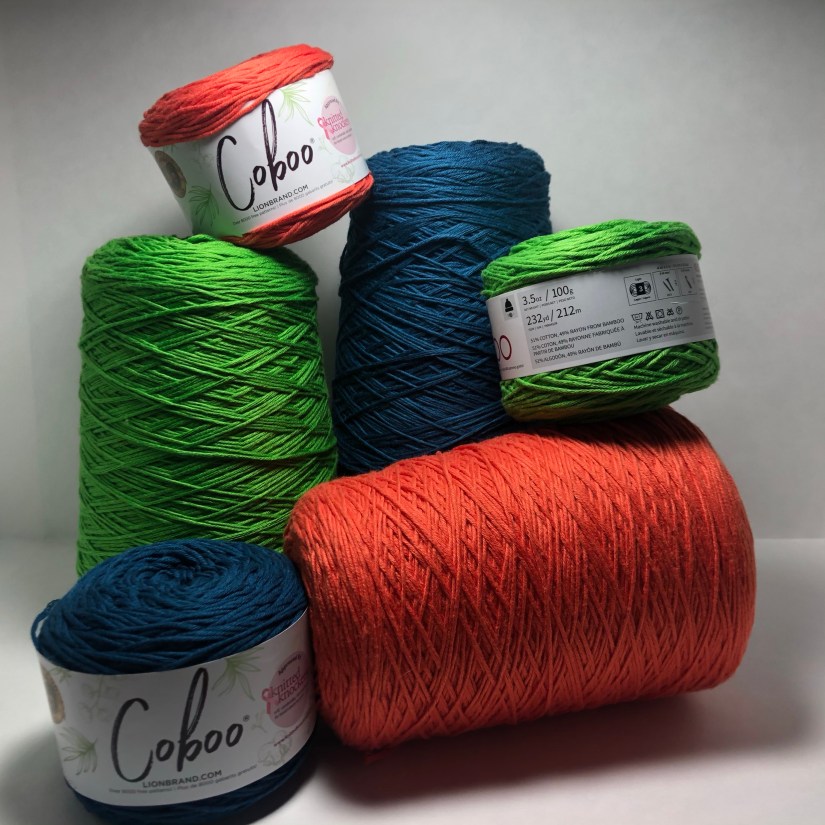
Lion Brand CoBoo

I have not been able to officially confirm this, but I believe Lion Brand’s CoBoo yarn is Silk City Fiber’s Cotton Bambu yarn.


Silk City Fibers Cotton Bambu and matches in Lion Brand CoBoo

Lion Brand CoBoo comes in 3.5 ounce, 232 yard cakes, is 51% cotton and 49% rayon-bamboo, and has the same care instructions. (The online listing description states 50/50 content, but the actual ball band label reflects the 51/49 ratio.)

While CoBoo comes in 20 colors, it features many exact matches to Cotton Bambu right down to color names (Grass, Steel Blue, and Orangeade are pictured above). It also has the same number of plies and the same twist.

Lion Brand’s website list price is $5.99 per cake, which puts price per yard around the same $0.25 as Cotton Bambu, but you can find it on sale for as low as $2.99 per cake on JoAnn’s website depending on their sale of the week.


Final Thoughts

Silk City Fibers Cotton Bambu is a wonderful yarn, and at $30.99 a cone, it feels pricy. Silk City Fibers touts themselves as a luxury brand, after all, and I feel they live up to it with Cotton Bambu. At around a DK weight, Cotton Bambu makes substantial but not heavy garments appropriate for spring, summer, and fall or year-round wear in warmer climates. Its drape adds to the luxurious and smooth feeling of this yarn against the skin.

For a similar drape and smooth feeling and the same ~1200 yard amount in Berroco Comfort DK, a 50/50 Nylon Acrylic blend with 178 yards per skein at $3.75 per skein, you’d pay around $27.00 (about $0.23 per yard). I think a cotton blend costing about the same as a nice, quality acrylic yarn is a very good deal. (For a review of Berroco Comfort in Worsted weight, check out this post.)

With only 12 colors to choose from, Cotton Bambu has work to do in the color department. Three of the twelve Cotton Bambu colors were added very recently, so I am hopeful for more colorways in the future. Lion Brand’s CoBoo version it better at 20 colors. If you’ll be working with a smaller amount of yardage or you want to do colorwork, I’d opt for the CoBoo version.

In fact, if you simply want to try this yarn before you invest in an entire cone, I recommend choosing the CoBoo version first.

Cotton Bambu is a wonderful yarn and one of my absolute favorites overall for any type of knitting, but price and limited color palette affect its rating when I look at it more objectively. The fact that a more colorful and widespread/readily available through big box craft store version is around detracts a bit from its rating, for me. Combining all of that with great drape, a smooth and sleek feel, and a decent price, I give Silk City Fibers Cotton Bambu a 3/5.


Have you used Silk City Fibers Cotton Bamboo before in your machine knitting? What about in your hand knitting or weaving? What kind of projects did you use it for, and what did you think of its performance?

Are there other properties or categories you think I should include in my yarn reviews? What yarn should I review next? Let me know in the comments!

Uncategorized

Yarn Review: Berroco Comfort

Welcome to the first of many yarn reviews! In this series, I’m going to analyze each yarn for its compatibility with knitting machines, ease of use, ease of care, affordability, and much more. I’ll include pictures of my swatches along with notes on how the yarn performed, thoughts about available color choices, and updates on long-term wear.

Let’s get started!


All opinions are honest and my own. I am not affiliated with any company or individual mentioned or linked unless otherwise noted. I purchased this yarn myself and did not receive compensation for this review.


Berroco Comfort in Color 9747 Cadet

About Berroco Comfort

Fiber Content50% Nylon 50% Acrylic
Yardage/Meterage210 yds / 193 m
Ounces / Grams3.5 oz / 100 g
Yarn Weight4 / Medium / Worsted
Made inTurkey
AvailabilityLocal Yarn Store, Online
Put upSkein

Care Guide

Hand WashYes
Machine WashYes
Flat DryYes
Machine DryYes

Berroco Comfort is a hardworking acrylic blend worsted weight yarn that comes in over 60 colors. Available at your Local Yarn Store (LYS), it usually retails for around $6.50 a skein. This acrylic is NOT your grandma’s scratchy acrylic yarn. Soft and with a very slight metallic sheen, it can be easily blocked with steam to produce a fantastic drape in a fabric. It comes put up in a center pull skein, but if you’re planning to use it with your machine, I advise winding it into a cake to avoid yarn tangles.

Comfort also comes in Sock, DK and Chunky weights with slightly less color availability in the larger sizes and mostly variegated options available in sock weight. With the exception of the Comfort Sock, the Comfort line of yarn sticks to solid colors the majority of the time.

The wide variety of colors makes this yarn a good choice for colorwork. Comfort has a pleasing stitch definition and does not tend to lose itself as it wears in my experience.

Since it is machine washable and dryable, a gifted item with this is “safe” for any recipient as far as care instructions go. If you’re worried about your garment, you can still hand wash it and lay it flat to dry, but know that it will be just fine in your laundry machines.

In addition, those with wool allergies will enjoy this yarn, as will those who live in areas with warmer climates or milder winters.


Knitting Machine Compatibility

4.5mm Standard GaugeYes, But*
6.5mm Mid-GaugeYes
8mm / 9mm Bulky GaugeYes

*This yarn will knit at upper tensions on the Brother KH-890, but it produces a stiffer fabric that is not as pleasant as one it will make on a mid-gauge or bulky machine. Color, as in dye lot and the chemicals used to achieve different colors, can affect how yarns perform. Always swatch your yarn before starting a project!


Swatches and Performance

If you’re interested in learning about how I swatch yarn, please check out this post.

This yarn knits like a dream on the mid-gauge and bulky machines. The yarn glides smoothly through the tension mast and carriage once the skeins have been rewound into yarn cakes and does not catch on itself. I’ve used over 10 skeins of Berroco Comfort over the years in both hand knitting and machine knitting, and I have never experienced a knot in any of them.

I found Tension 3 on the SilverReed LK-150 was a bit too tight of a fabric for my liking, but I enjoyed T4 and T5 and found that their fabrics offered a nice mix of drape and coverage/lack of excessive light showing through between the stitches when held up.

The same ideal knitting experience can’t be said for Comfort on the standard gauge. My machine did not struggle, but it wasn’t happy with me for using this yarn on it. The fabric produced was stiff and more appropriate for a purse or bag than any wearable garment. If you’d like to try out this yarn on your standard gauge machine, I recommend trying Comfort DK or Comfort Sock instead.

Berroco Comfort Color 9747 “Cadet” knitted at Tension 5 on the SilverReed LK-150 mid-gauge machine

The above swatch was washed on warm, dried on low, and gently steam blocked, not killed, so that there is still some elasticity left in the fabric. Some stitches did catch and pull a bit on other items in my washer, so you should be sure to wash your knits in their own load or in a mesh bag or pillowcase for protection.

Though it is not visible in the picture, some very minor halo or fluffing of the yarn occurred. It has not changed the stitch definition, only added to the softness of the yarn. Garments in this yarn could possibly halo or fuzz more over time, but I have not noticed this in my experience. I have not noticed any pilling whatsoever in my swatches or garments, and my mother tells me she has not had issues with a gifted tank top made from this yarn that she has worn and machine washed for over two years, and she has experienced no fuzzing, pilling, or garment stretching. It should be noted that she does dry the top flat.

Berroco Comfort Color 9747 “Cadet” knitted at Tension 5 on the Brother KH-890 standard gauge machine

This swatch was also washed on warm, dried on low, and gently steam blocked. I did not stretch it or force it, merely smooth it out from the shape it dried in in my dryer.
Note: Because the LK-150 swatch is an older one from before my current swatch records system, I do not have its before wash measurements to calculate any shrinkage.

Here are the before and after measurements for the standard gauge swatch:

Before After
40 stitches5.875″6″
60 rows6.1875″6″

With only 3% row gauge shrinkage and an actual increase in stitch gauge of around 2%, this yarn does not change much in the wash, but you should always work from your finished swatch measurements in any case.


Blocking

Comfort blocks well with a steam block. I do not “kill” the acrylic with the steam heat, only lightly run the steamer head over the fabric as I move it to the desired dimensions. I do not think this yarn needs to be “killed” to achieve drape or a desirable fabric, especially as the “kill” process slightly melts the yarn, and, I believe, can affect the integrity of the garment. If you do desire or need a more aggressive blocking experience than what I prefer, Comfort can and will meet your blocking desires for the most part without killing the yarn.


Final Thoughts

Comfort performs well no matter what yarn weight you choose. At around $0.03 a yard for worsted weight, you’re looking at a nice, quality acrylic for a good price. A sweater quantity (1000-2000 yards) of this yarn retails for around $35.00 to $75.00, and some shops will give you a bulk buy discount. It’s not exactly a “budget” yarn when you compare it to what you can find at big box stores, but it is definitely worth the price when you consider the quality of what you’ll be running through your machine or your hands and then wearing next to your skin. Plus, when you buy from your local yarn shop, you’re supporting smaller, local businesses, and I don’t think you can go wrong there!

As a sucker for hand-dyed yarns in all kinds of gradients, I usually find myself wishing for rainbow magic colorways in whatever yarn I’m using at the moment, but that isn’t necessary here, and that isn’t what Comfort is trying to do. If you’re looking for a go-to acrylic yarn, Comfort is a great choice.

I’ve used Comfort in tunics, dog sweaters, and scarves, and I’ve seen customers and students use it in baby items, hats, and blankets. If you have a project, you can usually find a Berroco Comfort line yarn that will fit.

I give Berroco Comfort Worsted a solid 4.5 out of 5 score.


Have you used Berroco Comfort before in your machine knitting? What about in your hand knitting? What kind of projects did you use it for, and what did you think of its performance?

Are there other properties you think I should include in my yarn reviews? What yarn should I review next? Let me know in the comments!