Uncategorized, yarn review

Complete Yarn Review: Jody Long Coastline

It’s time for another yarn review! I’ve been sitting on this one a while and really testing how it washes and wears, so I hope you enjoy all of the yarn data I’ve collected for you.

Like past yarn reviews, I’m covering fiber content, color options, ease of care, knitting machine compatibility, wear, and much more. If there’s a category you don’t see covered, let me know! I’ll add it to my list.

If you’re interested in learning more about the UK-based designer Jody Long, his designs, and the other yarn in his line, check out his website.

Today, we’re focusing on his fun fiber blend of

Jody Long Coastline


All opinions are honest and my own. I am not affiliated with any company or individual mentioned or linked unless otherwise noted. I purchased this yarn myself and did not receive compensation for this review.


About

Fiber Content33% Cotton / 28% Viscose / 27% Nylon Polyamide / 12% Linen
Yardage/Meterage218 yd / 200
Ounces / Grams3.5 / 100 g
Yarn Weight4 / Medium / Worsted
Made inItaly
AvailabilityLocal Yarn Store, Online
Put upDonut

Although retail listings might state Jody Long Coastline is a worsted weight yarn, its ravelry page and recommended needle/hook size place it closer to a heavy worsted or Aran weight yarn.

Coastline is distributed by Knitting Fever and has 18 colorways. The core of the yarn is made of natural fibers while the other fibers, which contain the dye, create a spiral chain around it.

The chain surrounding the core of the yarn occasionally allows the natural-colored core to show through, giving the yarn a heathered or marled look.

I untwisted the yarn in the image below to give you a better look at the chain and core construction.

Because Coastline is a heavy worsted/Aran weight, its low yardage count isn’t too much of a surprise. Coastline checks in at around $0.08 a yard.

Coastline retails for about $16.49 a ball at your Local Yarn Store but can be found at slightly lower prices online at WEBS yarn store.

I will always recommend shopping at your LYS since you won’t have to pay shipping and you’ll benefit from their years of experience at the shop. Feeling the yarn and seeing the colors in person is well worth it considering you’d only save a couple bucks by buying online.

As for how this yarn is presented, the donut put up is my least favorite way to obtain yarn. Yes, they look tiny and tidy on the shelves at the LYS, but once you use 50-60% of the ball, the donut starts to fall apart and tangle. It is one of the worst ways to present yarn in my opinion. It’s just asking for added headache, especially in slippery plant fiber yarns.


Care Guide

Hand WashYes
Machine WashYes, Warm
Flat DryYes
Machine DryOfficially: No. Unofficially: Maybe

Coastline handles a washing machine cycle with ease. If you’d like to be extra cautious, wash your project in a mesh bag or in a cycle of only knits to avoid snagging.

Don’t plan on washing your Coastline project one day and wearing it the next, though. Coastline takes a long time to dry.

The front of my Coastline tank top can be nearly dry while the back underneath it is still very damp. I recommend flipping any project after a few hours to assist in the drying process.

I believe this is due to the natural fibers at the core of Coastline. The cotton really soaks up moisture and doesn’t seem to want to let go of it easily.

While it isn’t recommended by the care label, I did send one of my swatches through a machine drying cycle. It was still damp after one cycle on low. The low heat of the dryer did not seem to affect any of the synthetic fibers, as the swatch held its shape but was not permanently melted into that shape.

That said, machine dry at your own risk.


Knitting Machine Compatibility

4.5mm Standard GaugeNo
6.5mm Mid-GaugeYes
8mm / 9mm Bulky GaugeYes

Coastline is too large to try on a standard gauge machine, even if you were to attempt using every other needle. The small chained threads around the core would catch on the small needles of the standard gauge machine. I do not recommend this yarn for a 4.5mm machine.

Mid-gauge machines can handle this yarn at medium and upper tension numbers with ease. You might run into some difficulty if you attempted to use this yarn at a lower tension, though, as it is on the stiffer side as far as yarns go.

Bulky machines should handle Coastline well.


Swatches and Performance

If youโ€™re interested in how I swatch yarn, please check out this post.

This yarn knits into a lovely but slightly heavy-feeling fabric at medium to high tensions on the SilverReed LK 150 mid gauge machine. Lower tensions produce a stiff, dense fabric that might work for a bag or utility project but would be uncomfortable in a garment.

Jody Long Coastline in Deep Ocean

This swatch was washed on warm, dried flat, and gently steam blocked. I did not stretch it or force it, merely smoothed it out flat.

There wasn’t any discernible shrinking in the swatch since it was dried flat. To add to that, the Desert Queen tank top that I knitted with Coastline still measures true to gauge after over a year of wear and washes.

SilverReed LK-150 Tension 7

BeforeAfter
20 stitches4.25″4.25″
30 rows4.25″4.25″

When I machine dried a swatch, however, I did notice some shrinkage.

SilverReed LK-150 Tension 5

BeforeAfter
20 stitches4″3.875″
30 rows4.125″3.5″

Stitch gauge shrank about 3% and row gauge shrank about 15%.

*The row gauge shrink could be due to the number of weights on my swatch as I knitted them. I formerly used two claw small weights on my cast-on comb, but now I use one.


Blocking

Since just over half of Coastline’s fiber content is synthetic, be careful when steam blocking this yarn. That being said, the natural core structure will hold the yarn’s shape well, so gentle steam blocking is not out of the question with this yarn. In fact, that’s my go-to blocking method, and I used it with this yarn just like I do with other yarns. I was just a little more cautious about than I normally would be until I learned how it blocked with steam.

That’s another reason it’s important to swatch! Practice your blocking method on your swatch and you won’t be surprised when you’re blocking your finished project.

If you are unfamiliar with steam blocking, wet blocking any project is still a great choice for this yarn, but be aware of lengthy drying times.


Projects

Back in February and March of 2020, I used Jody Long Coastline to make the Desert Queen tank top by Meghan Kelly.

I had to adjust the DK weight pattern to fit the larger Aran weight Coastline yarn, but it knit up beautifully.

I wear my Desert Queen tank top about two times a month, so at this point the garment has been through around 30 wash cycles.

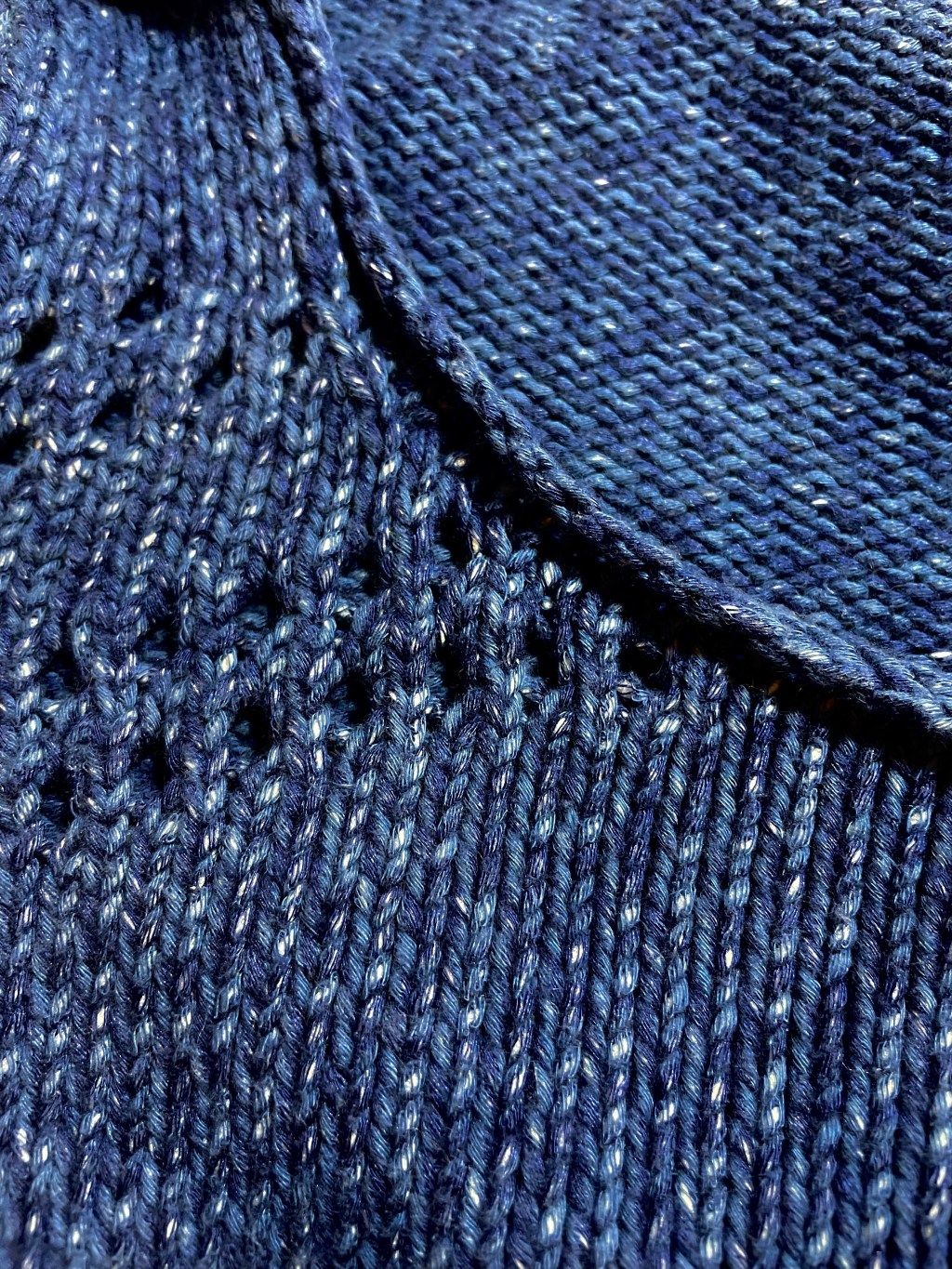
close-up of the Desert Queen top neckline after 30+ washes

And it still looks wonderful!

The stitch definition is still as strong as it can be with the heathered effect, and harder use areas like the underarm are strong with no signs of pilling whatsoever. The denim-like look of the fabric has not faded, and the eyelet elements at the neckline and bust of the top are still well-defined.


I’ll admit, I initially HATED working with this yarn. Amid all the stress of March 2020, this yarn presented my ULTIMATE yarn pet peeve: knots in low-yardage skeins. And I purchased six skeins to treat myself to this top that I had fallen in love with.

Here are my initial thoughts from my ravelry project page

Iโ€™m NOT happy with this yarn. It looks good, but EVERY SKEIN had MULTIPLE knots in it. For a low-yardage, cotton/linen NYLON/VISCOSE blend, that is unacceptable. This yarn retails for $16.99 a skein. Yes, itโ€™s machine washable and looks very nice once knitted up, but you can find similar blends at Hobby Lobby or Michaelโ€™s for under $5.00 that perform just as well or better.

I even wrote comments in my swatch binder about the knots. “Hated” was underlined twice.

Hmm.

Desert Queen by Meghan Kelly in Jody Long Coastline Deep Ocean

Final Thoughts

I’m still a bit torn when I remember the knots. Each skein had a knot joining the last 50 yards to the rest of the ball. Some skeins had knots every 50-75 yards.

I had six skeins of this yarn.

Considering the cost-per-ball and only 218 yards in a knot-filled ball, I felt really ripped off, especially as this was supposed to be me treating myself to a fancy yarn. Jody Long is a prolific designer, and it felt a bit like I was paying a premium for his name while getting an entirely mediocre product.

But after living with this gorgeous tank top that has held up beautifully through one of the most stressful times any of us may live through, I have to think my initial reaction could have been a little harsh. After all, a knot just means another end to weave in, and that’s not as bad as I make it out to be, even if I hate doing it.

I don’t know if I just got a bad batch or if the knot issue is persistent throughout all Coastline colors. I’ll admit, it has made me reluctant to try another yarn from Jody Long’s yarn lines, and I’ve seen some lovely cottons that really tempt me.

The durability after over a year and a half of wearing and washing is nothing short of impressive, and without the knot issue, I’d give Jody Long Coastline a 4.5 out of 5, but because of it, I’m only giving it a 3 of 5.

It’s a good yarn, but buyers shouldn’t have to fight knots when the skeins are so small.


Have you used Jody Long Coastline before in your machine knitting? What about in your hand knitting? What kind of projects did you use it for, and what did you think of its performance?

What’s your yarny pet peeve?

Are there other properties you think I should include in my yarn reviews? What yarn should I review next? Let me know in the comments!


Thanks for coming along with me in my knitting machine journey! See you next time!


Uncategorized

Fiber Christmas in July – Fifteen Years of Oklahoma’s Fiber Festival

Happy Friday, everyone!

I’m thinking about changing the posting schedule up, so if you have a favorite day to read posts, please vote in the poll or let me know down in the comments.

As always, if you have a yarn review or post suggestion, you can send it to me via the contact me page or just write it in the comments below.

Now back to your regularly scheduled post.


Last weekend, July 30-31, 2021, was the Fiber Christmas in July festival’s FIFTEENTH year!


I first visited the festival in 2019, so I’m still a bit of a baby Christmas in July attendee, but they’ve already moved into a new, bigger building since my first visit and even used the old building for classes this year!

Classes included spinning, weaving, felting, and dyeing, so you’re sure to find an educational fiber fix if you’re not just attending to shop.

(And now that you know it’s educational, you can plan next year’s visit guilt-free!)

On their Facebook page, Fiber Christmas calls their vendors “Fiber Enablers,” and I’m happy to support my favorites and find new enablers each year at their festival. It’s less than an hour’s drive from Tulsa out to their Creek County Fairground location, so it makes a great Fiber Friends trip.

Fiber Christmas’s Fiber Enabler Vendors came from across Oklahoma and neighboring states–Kansas, Texas, Arkansas, Missouri, Illinois, and there was even a vendor from Mexico!

I highly recommend browsing their vendor list and visiting each vendor’s site. The skill and creativity of each artist never fail to amaze and inspire me.


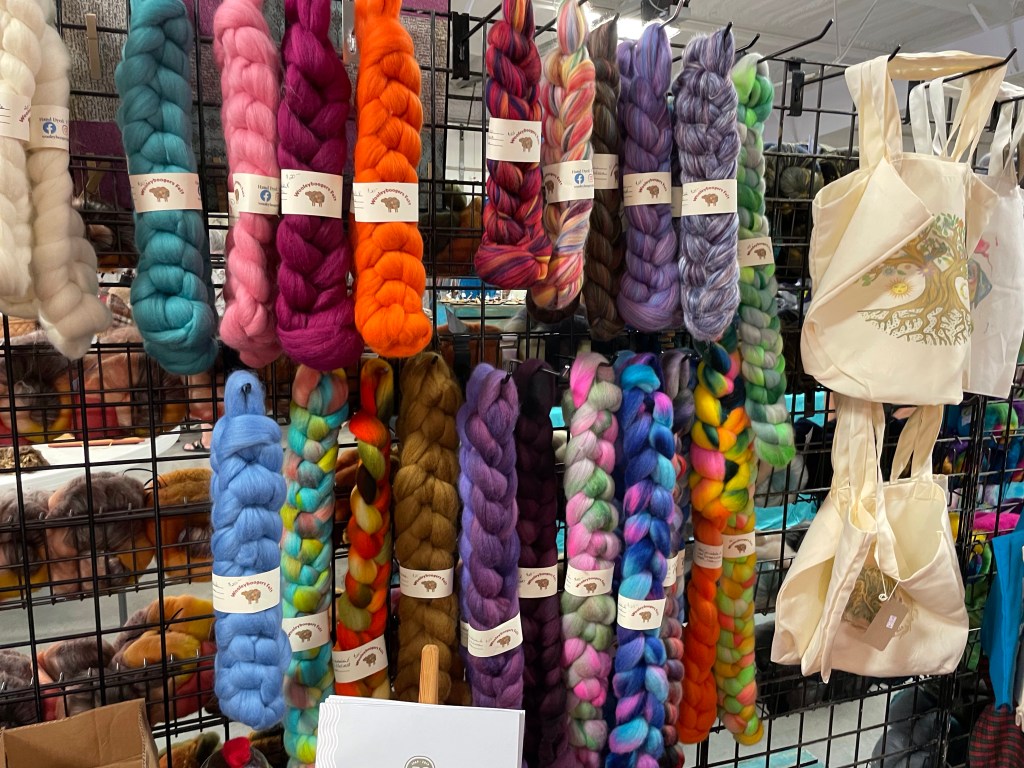
I started out taking pictures of booths (with permission) but quickly lost myself in the wonderful textures and colors each vendor offered.

OK, fun fiber words aside, full disclosure, I got overexcited and completely forgot I wanted to write a post about the festival. I was having so much fun petting and choosing yarns and roving that I just plain forgot to take care of business! Shame on me!

I promise to do better for next year’s Fiber Christmas in July write-up, so hold me to it.


As an apology for skimping on the booth pics and write-ups, here’s my Fiber Christmas 2021 project.

Just don’t ask about 2020’s project. It’s still stuck on the needles…


Have you ever attended a fiber festival before?

What festivals are in your region?

Are you planning your trip to Fiber Christmas 2022 yet?


Uncategorized

Free Machine Knitting Pattern: Sarah in Lace

Hello all, and here’s to another happy day of knitting!

Did you see last month’s free hand-knitting pattern, the Sarah in Lace cowl? I am so grateful for all of the wonderful feedback I’ve received about this piece.

Thank you all for your support!

This month, it’s the machine knitting version’s turn!

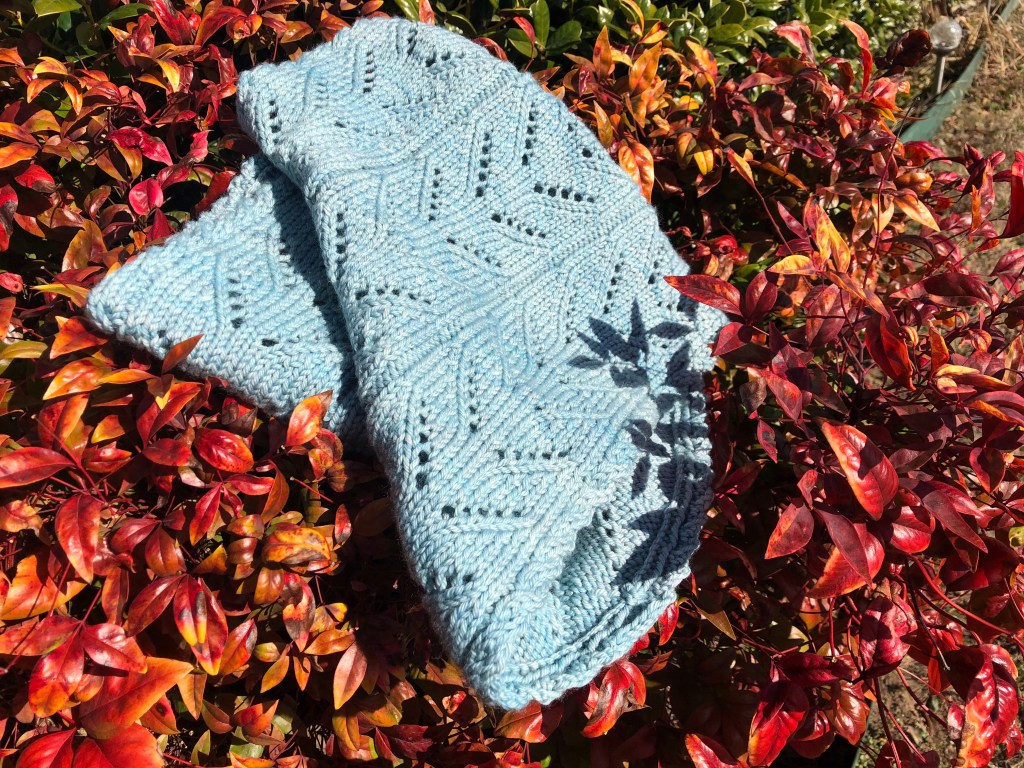
Sarah in LaceMachine Knitting Version

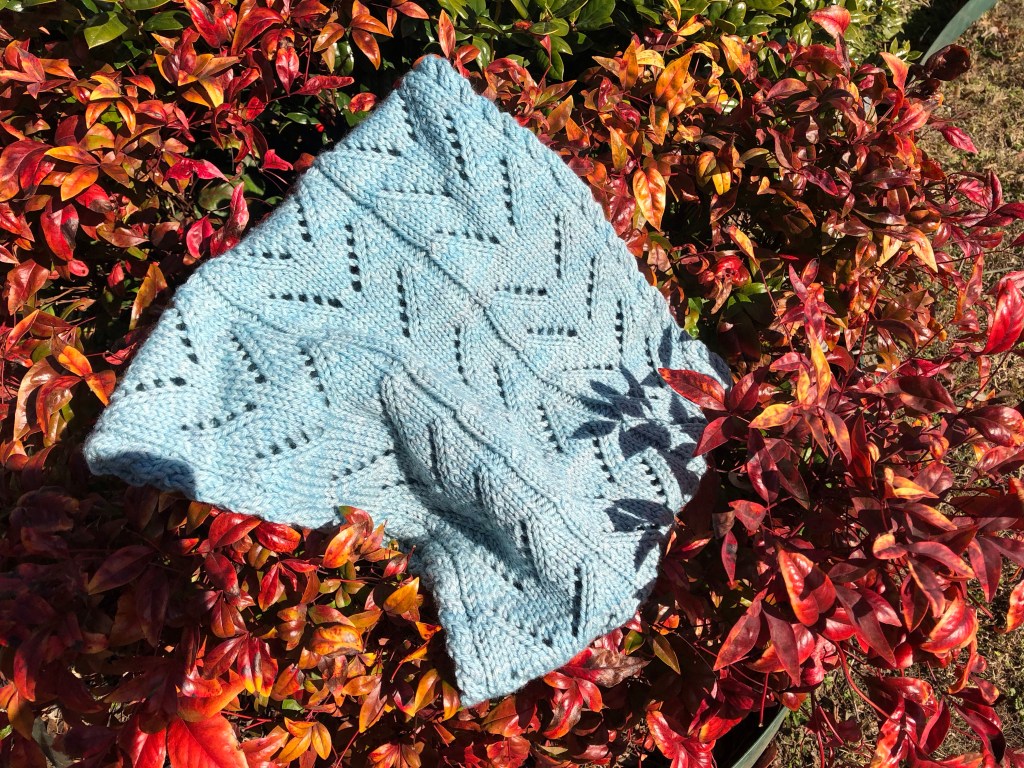
Ideal for hand dyed or natural yarns with slight color gradient, this cowl will let the yarn speak for itself. Cables on each side create a scalloped, slightly rolling edge without allowing the normal roll of stockinette stitch.

The simple lace repeat is suitable for beginners familiar with the latch tool and transfer tools.

The length and width are easy to modifyโ€“just add lace repeats to achieve your desired size, but note that adding repeats will require more yarn.

Gauge is not vital to this project, but you do not want a tight fabric.


This is the machine knitting version of this pattern.

Visit this post if you’re looking for the hand-knitting version.


Written and Charted Instructions

The lace chart and simplified instructions are on one page (page 5) to be printer-friendly for more experienced knitters, and detailed written instructions for newer knitters follow.

In the written instructions section, I take you step-by-step through the first lace row and the first cable row. The other lace and cable rows build off of those techniques, but are not explained in detail, needle number by needle number.


Decrease Choices

Like its hand-knitting sister, this PDF pattern contains modification tips to help you really make this piece your own.

There are different choices of decreases with instructions for each.

On the left, you’ll see the original decrease intended for the pattern. The detailed row instructions in this pattern assume you are using this decrease.

The yellow sample pictured on the right shows two other decrease options-one on the left of the sample and one on the right. Instructions are provided for this decrease in the pattern notes but not the detailed row instructions like the original decrease.


Pattern Repeat Tip

Mark it up!

Use a set of wet erase markers like Expoโ€™s Vis-ร -Vis markers (non affiliate link) to denote cabled stitches, purl stitches, or central stitches of the lace pattern repeat on the bed of your knitting machine. This can help you remember where to start each lace repeat, which stitches to ladder down to latch up as purl, and which direction cable crosses should go.

In this picture, I’ve used an “X” across two needles to denote the center of the lace pattern repeat’s “V” shape. A bullet marks the needle that I need to ladder down and latch up purl stitches on, and diagonal arrows and “CC” for “cable cross” remind me which direction the four-stitch cable over those needles needs to go.

Wet erase markers work great for any project with pattern repeats and are easy to remove once you’ve finished. Have you given them a try yet?


You can find this pattern in my Ravelry Store as a Free Ravelry Download.

This pattern is available to non-Ravelers, too, so donโ€™t worry about signing up unless you want to. download now


As always, please contact me if you find anything missing or notice an error in my patterns. I will correct them ASAP.


Thanks for coming on this machine knitting journey with me! If you like what you see and want to help me bring more machine knitting content, please consider supporting me on Ko-fi.

Uncategorized

Stuck without a Ravel Cord? Try this!

Ravel cord is a strong and slippery-smooth braided nylon that machine knitters use to connect scrap yarn pieces knitted from the cast-on up with the main yarn of the garment in a way that can be easily removed.

After the hem has been hung and the main yarn stitches have been secured, you simply pull on the ravel cord and away the scrap yarn falls to reveal a beautiful hung hem or finished graft.

Coming from a hand-knitter who adores the look of a provisional cast on grafted to live stitches to create a seamless look but is too lazy to actually do it a decent amount of the time, the scrap yarn and ravel cord combo is a dream come true.


“Scrap’n’Ravel” is one of my favorite ways to cast on to the machine, so I use my ravel cord a lot.

To “Scrap’n’Ravel” on, I like to use the Automatic Cast On from my knitting machine manual. (That’s simply because it’s faster, so you can cast on whatever way you like. Scrap yarn is a great opportunity to practice new techniques, after all!)

After I’ve knitted at least 6 rows, it’s time to reach for the ravel cord before the real fun of the project starts.

But recently, that’s where I’ve been running into problems…

“problems” aka the Yarn Inspektor

We adopted a cat back towards the end of 2020. She is a lovely, talkative calico, and she loves yarn.

She loves sitting on yarn. She loves staring at yarn. She loves sprawling across yarn. She loves flossing with yarn. (That one I haven’t tried yet.)

But she also loves stealing my yarn!

I stopped her from chomping the cones, and I stopped her from sprinkling the skeins with wee, but I can’t seem to stop her from batting the bobbins.

These kumihimo bobbins, sometimes sold as Bryson EZ Bobs, are just too tempting for her! They’re primo cat toy size, after all, AND they have a “tail!”

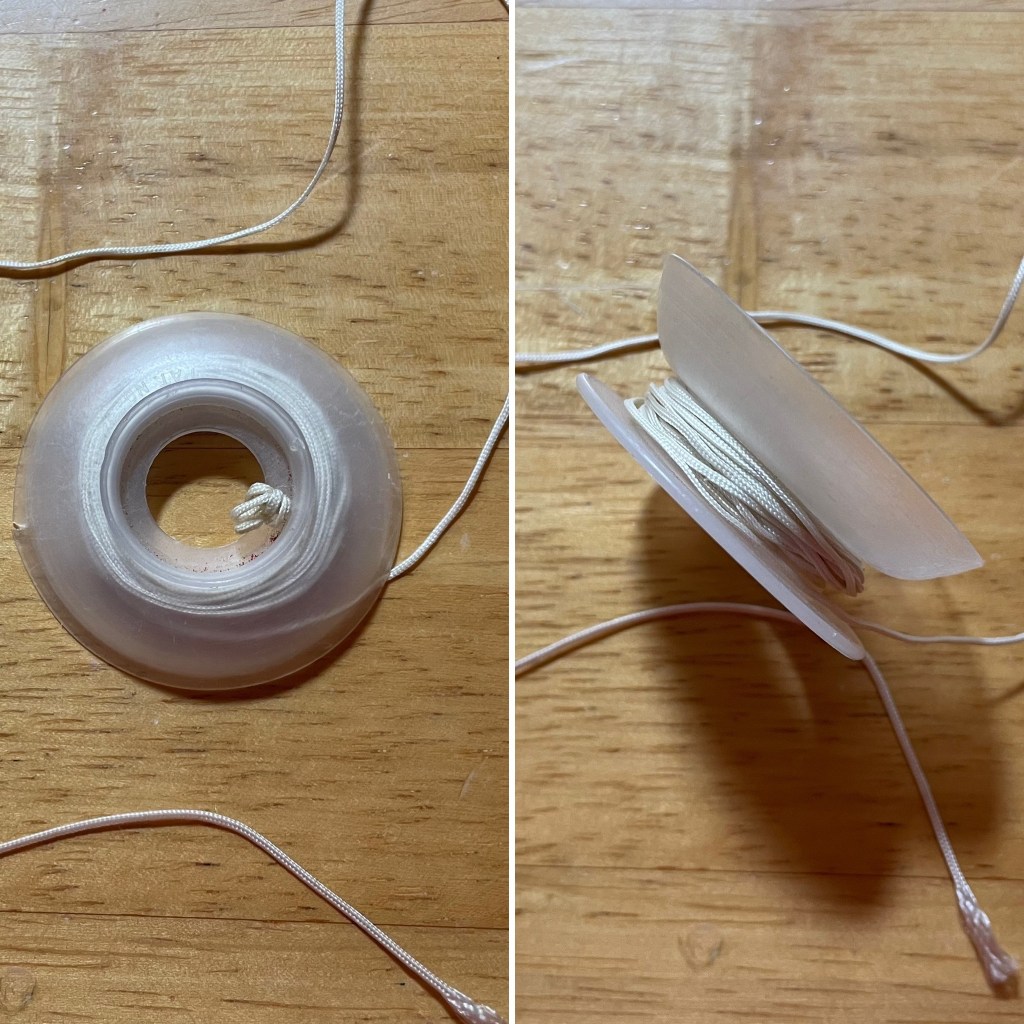
kumihimo bobbins with ravel cord in closed and open positions

I have a stash of these things. Or, I suppose, had a stash. Now the Yarn Inspektor has a stash somewhere.


If things were going as they should, I’d knit a row using ravel cord. It would look like this…

… and I’d be ready to knit with my main yarn!

But since the Yarn Inspektor has decided my ravel cord is her ravel cord, sometimes I’ve had to make do.

Thanks to this trick I learned from my mentor, Pamela Carrico of CMO Designer Knits, I don’t have to spend hours searching for my bobbins of ravel cord.

I can use the scrap yarn I was knitting with as ravel cord!

(Is your mind blown like mine was?!)


This trick works best with smooth, strong yarns. A crispy acrylic or toothy wool is not a good idea. Removing the scrap-yarn-as-ravel-cord strip is not as smooth as working with ravel cord. I wouldn’t recommend this trick over using ravel cord.

But it will save you if “problems” meow your way.

When you’re ready to knit what would normally be your single row of ravel cord, use your fingers to grab onto the scrap yarn just under the carriage where the yarn is loaded into the feeder and pull a bit down, like so:

Without moving your hand, knit one row across. You’re left with a loop of scrap yarn at the edge of your work like this:

Now you’re ready to cut your scrap yarn and move on to the main event, just like you would be if you had knitted the row with ravel cord!

When it’s time to remove your scrap-cord, tug on the top half of the loop you made. It takes a bit more force than pulling ravel cord does.

As you can see in this clip, it is a bit of a tug, but it does the job! Just make sure to tug the top half.


What do you think? Is this a trick you think you’ll try in your knitting? Do you have any tips or tricks of your own to share?

Leave me a message in the comments below!


Thank you for joining me on my machine knitting journey!

Uncategorized

Free Hand-Knitting Pattern: Sarah in Lace

Hello all, and happy Friday!

Today I’m sharing the first of many patterns on the new site! Meet

Sarah in Lace

Ideal for hand dyed or natural yarns with slight color gradient, this cowl will let the yarn speak for itself.

The simple lace repeat is suitable for confident beginners familiar with yarn overs, decreases, and simple cables.

Cables on each side create a scalloped, slightly rolling edge in place of the standard garter stitch edging. The length and width are easy to modify–just add lace repeats to achieve your desired size.

Gauge is not vital to this project, but you do not want a tight fabric.

This pattern includes tips on how to modify the edging cables as well as how to adjust both length and width, but please note adding repeats will require more yardage.

This is the hand knitting version of this pattern. (But don’t worry, if you don’t want to translate it to the machine yourself, the machine knitting version will be out soon!)


You can find this pattern in my Ravelry Store as a Free Ravelry Download right here!

It’s available to non-Ravelers, too, so don’t worry about signing up unless you want to. All the pattern details and updates are on the Ravelry page along with extra pictures.

You can also click this link to download now.


A little about the design…

I designed this cowl for my lovely friend Sarah of DoubleDutchYarn back in the fall of 2019 for a juried craft show she was featured in. A lot of life has happened since then, and I’ve learned to take better and more numerous photos.

Here is the only one I have of the original Sarah in Lace cowl!

This creamy alpaca goodness was so soft. It draped like a dream. I just couldn’t help rubbing my face on it, which was a bad idea since I’m allergic to alpaca! The temptation of that delicate yarn halo was just too much.

Poor Sarah felt so bad when I told her about my eyes watering while I wore a bandana over my face to knit this up, but she didn’t know about my allergy, and my fellow allergy sufferers know some things are just worth it.

Sarah offers small batch, locally curated yarns. When you shop with her, you’re supporting local farmers, millers, dyers, and of course, designers like me.

And be sure to stay tuned! This isn’t the only time Sarah and I have collaborated with yarn!

Uncategorized

Knitting Machine Restoration: Part One

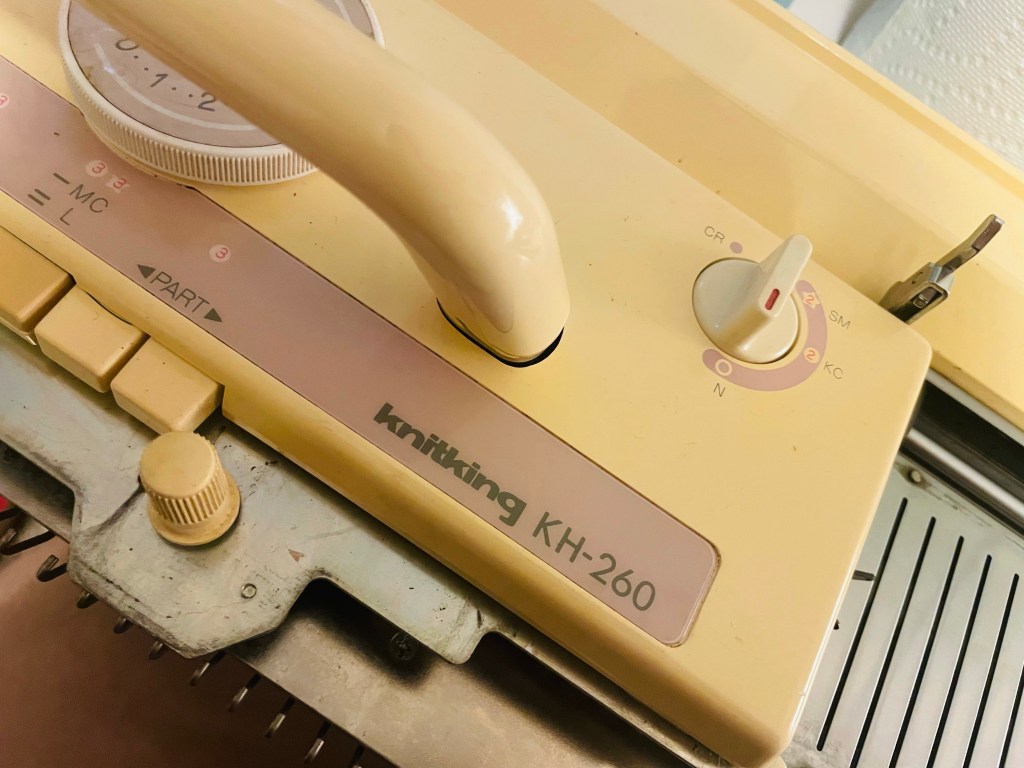
Meet one of my newest machines, the Brother/KnitKing KH-260. It’s a 9mm bulky gauge metal bed machine with punchcard capabilities that can do fair isle, punch lace, tuck, slip stitches, and more. With the right attachments, you can knit intarsia colorwork and ribbing.

This machine was definitely on my WANT list, and my mentor saved it for me when it came to her after its owner passed away.

I don’t know much of this machine’s history other than it was said to be well used and loved. I don’t know how long it sat in storage or where its missing bits are, but I’m happy to have it in my growing (although don’t tell that part to my family) machine collection.

This series isn’t really a tutorial, more of a progress log, but I’ll include links to resources I’ve used along with descriptions of my process and things I’ve learned along the way. Things might be a bit jumbled since this is my first true restoration and I don’t know some of what I’ll need to know yet, but I hope you enjoy it, and I hope you learn something fun and interesting along the way.

Welcome to my first restoration project!


Before I began cataloguing what I had, I went to MachineKnittingEtc.com to find PDFs of the instruction manual, the parts list, and the service manual for this model. (The site is an amazing resource, so be sure to take some time to browse it. It isn’t just instruction manuals, as you can see in this brief overview post.)

This lovely machine doesn’t look much different than what she did out of the box other than her yellowed color. ABS plastic normally yellows due to time, UV exposure, and bromine in the plastic’s composition. That’s just cosmetic, and it’s to be expected for a machine around 30 years old. There are ways to bleach the plastic, but it will re-yellow with time, and the plastic bleaching process could potentially weaken it. There’s nothing wrong with yellowing.

This baby is missing a few parts, though. The rod of the tension mast is missing along with the take-up spring (the antennae-like part) of the mast. The yarn-holder part of the tension mast seems to be part of a color changer with four yarn hole options and not the two-holed part that came standard with the machine. The needle bed number-marking sheet is present but not attached, and most of the accessories are missing.

Fortunately, those parts are generally inexpensive and fairly easy to find and replace on eBay or Etsy. For the accessories, I can just borrow them from my other bulky machine, the Brother KH-230.


With parts catalogued and manuals in hand, it was time for a clean.

This poor girl was dusty. I used LPS-1 wipes to remove most of the dust and grime from the needle bed and used a can of the same chemical to spray down the carriage after carefully removing the plastic casing. I used tweezers to remove what dust bunnies I could and waited for the LPS-1 to reveal more.

You can definitely use the LPS-1 from the spray can with a non-lint cloth to wipe dust and grime away, but I bought a few wipes to try them out and to reach the free shipping threshold. (We Millennials do love our free shipping, after all.) I bought mine from EMI Supply (non-affiliate link).

If there’s one thing I’ve learned so far about knitting machine cleaning, there is always more dust or grease somewhere. Once you spray a machine down with LPS-1, the buildup just starts seeping out of every crevice.

The carriage tuck button was stuck due to gunk and grime, so I used a few drops of Marvel Mystery Oil to help that get moving. That stuff works miracles.

I learned how to clean knitting machine carriages from this Answer Lady Ask Jack video. I recommend watching all of their videos if you have an interest in machine knitting maintenance and repair!

After replacing the sponge bar with a new one and borrowing the tension mast and accessories from my Brother KH-230, I set up the KH-260 for plain knitting.

Things were going well until I attempted patterning with a punch card.

As you can see from my Instagram clip, there’s something pretty wrong with my punchcard unit!

One pass of the carriage resulted in way too many row advances of the punchcard.

And the needle selection? That was a mess, too. Some needles in the center of the 24 stitch pattern never selected.

Let me back up a bit.

Since plain knitting was fine, I went straight to patterning with tuck stitch with plans to go to skipstitch afterwards because I saw on someone’s Instagram post (I’ll update with a link if I can find it again!) that tuck and/or skip stitches really show what a machine can do and point out any faults in its performance.

I removed the test knitting from the needle bed and took the sinker plate off of the carriage so I could see the movement of the needles clearly. (You can do this to find the center of a pattern or where the repeat starts when your machine is working normally if you want to be precise about pattern placement.)

After that, I took off the card stop lever knob and panel covering the card reader unit on the right side of the machine.

I used a small screwdriver that came with a nail polish display rack kit, so I’m not sure what size it was other than perfect for knitting machine maintenance. I will figure out the screwdriver size and update later with details.

As seen in the picture below, the card reader has cracks in the rotary cam (the ivory colored barrel-shaped part). These cracks are likely due to expansion and shrinkage from being stored in a hot attic or garage. There are also cracks along the opposite side.

The plastic direction indicator piece that shows which direction the carriage goes was broken and had disappeared into the void of the machine. The timing belt guide plate to the right of the rotary cam is very loose (as you’ll see in the second video embedded above with my Instagram post). I’m not sure if it’s supposed to be that loose, but I did end up removing it and replacing it as one of the screws holding it was barely in its designated hole.

I used long tweezers from my nail art kit to help me position the screws. Definitely add a pair of these to your machine knitting kit when you can. They’ve been incredibly handy in fishing for dropped parts or reaching into tight spaces.


According to the maintenance manual and Ask Jack videos, the timing belt seems to be timed correctly, so that is a bit of a relief, but I’m not quite sure what to do next. The looseness of the timing belt guide plate seems to be a problem. Placing my hand on it so that it can stop the turning of the punch card clutch gear seems to solve the issue of the card reader turning too many times, but only in one direction.

The carriage also makes a loud CLUNK as it passes across the needle bed when it is in patterning mode. That’s not right, either.


At this point, I don’t know enough about knitting machine maintenance to fix the patterning issue, so I’m actively reading through parts and service manuals, Ask Jack articles, and old forum posts to learn more.

My standard gauge Brother KH-890 machine also has a punchcard unit, so I plan to remove the panel and watch how that machine works in hopes they are similar enough for me to find a clue on how the KH-260 should behave. The loose timing belt guide plate might not actually be an issue.

While I’m figuring out what to do about the punchcard unit, I’ve removed all of the needles from the needle bed for a quick wipe down with LPS-1, and I’ll use needle-nose pliers to straighten any that are bent. I’ll also straighten a couple crooked gate pegs at the end of the needle beds.

I keep all of the needles, screws, and miscellaneous pieces in the same glass jar so nothing will be lost. Now all I have to do is keep my cat away from the jar and we’ll be in a good place regarding loose pieces!


Progress So Far

ProblemActionCompleted
Missing Accessories/Tension Mast PartsBuy on eBay or Etsy
Dirty CarriageLPS-1 and Marvel Mystery Oil cleaningCheck mark, Wingdings font, character code 252 decimal.
Dirty Needle BedLPS-1 Wipe DownCheck mark, Wingdings font, character code 252 decimal.
Dead Sponge BarInstall replacementCheck mark, Wingdings font, character code 252 decimal.
Missing Punchcard Indicator PieceBuy Replacement/InstallCheck mark, Wingdings font, character code 252 decimal./ X
Cracked Rotary CamDetermine if it works as is or needs to be replaced
Loose Timing Belt Guide PlateDetermine if it’s a problem- Watch KH-890
Needles Not Patterning CorrectlyInspect Card Feeding Unit and Needle Selecting Units, then ???
Punchcard Reader Turning too muchInspect Card Feeding Unit and Needle Selecting Units, then ???
Carriage CLUNKNo. Idea. Blame the Punchcard Unit?
Crooked NeedlesRemove and straighten with pliers
Crooked Gate PegsStraighten with pliers

I have a lot left to learn, but there are still things I can do at my current skill level. In between internet sleuthing sessions, I’ll be straightening needles and hunting dust bunnies.

And despite that list of problems, this machine still works. I can still do those fancy skip and tuck stitches, but I’ll have to do the needle selection myself. Being a bit of a lazy knitter, that is less than ideal, but I can still use this wonderful machine.


Thanks for coming on this knitting machine repair journey with me! I’m so excited to learn more about knitting machines through restoration. If you have any tips, tricks, or experience to share, be sure to leave a comment below or email me through the contact page!

Uncategorized

Resource Roundup #2: Machine Knitting Etc

There are so many wonderful machine knitting resources floating around on the internet, but theyโ€™re not always easy to find. Theย Resource Roundupย series goes through the links on theย Helpful Links and Resourcesย page in more detail to help you discover new places to learn more about machine knitting.


What is Machine Knitting Etc?

Machine Knitting Etc is the best place to find FREE knitting machine manuals and other PDF resources. If your machine didn’t come with a manual or yours is damaged, you’ll likely be able to find a copy here, even if it isn’t one of the more well-known brands like Brother or Passap.

For the DIY knitting machine mechanic, you can often find parts and service manuals.

If you’re looking for a punchcard pattern, you’ll find copies of standard punchcard sets, such as the “M” series that came with the Brother KH-890, along with sets from other brands and models.

And that’s still not all! You can find various stitch dictionaries, tip and technique articles, and …

Vintage magazines!

Some of the color choices may seem questionable now, but the vintage magazines Machine Knitting Etc host on their site are wonderful sources of patterns and inspiration.

Those 80s and 90s magazines sure boast some familiar looks to what some stores are hanging on their racks now. Classic shapes are classic for a reason, after all!

Many patterns offer schematics so you don’t need to worry about anything being written for a long-discontinued yarn. Simply fit your yarn’s gauge to the pattern, and you’re ready to go after a little math.


I could drone on and on about this wonderful site, but I hope you’ll take some time for yourself to explore it. These manuals and magazines are snippets of machine knitting history, and you never know where your next project might come from!

Please consider adding Machine Knitting Etc. to your ad-blocking software’s white-list so we can support this valuable resource to our craft!


Do you have a resource to share? Comment below or send it to me via the contact me page!

Uncategorized

Yarn Review: Universal Cotton Supreme DK

Universal Yarn has been offering up yarn of all kinds for more than a decade. I first experienced their yarns in 2012 when looking for washcloth cotton at my old Local Yarn Shop. Their Universal Cotton Supreme worsted weight yarn was just too nice for a dishrag, so I ended up using it for a baby gift.

Today’s review focuses on Cotton Supreme DK but is also applicable to Cotton Supreme (worsted) and Cotton Supreme DK Seaspray.

“Knit, Relax, Smile, Repeat!”


All opinions are honest and my own. I am not affiliated with any company or individual mentioned or linked unless otherwise noted. I purchased this yarn myself and did not receive compensation for this review.


About Universal Cotton Supreme DK

Fiber Content100% Cotton
Yardage230
Ounces3.5
Yarn Weight3 / Light / DK
Made inTurkey
AvailabilityLocal Yarn Shops, Online
Put upHank

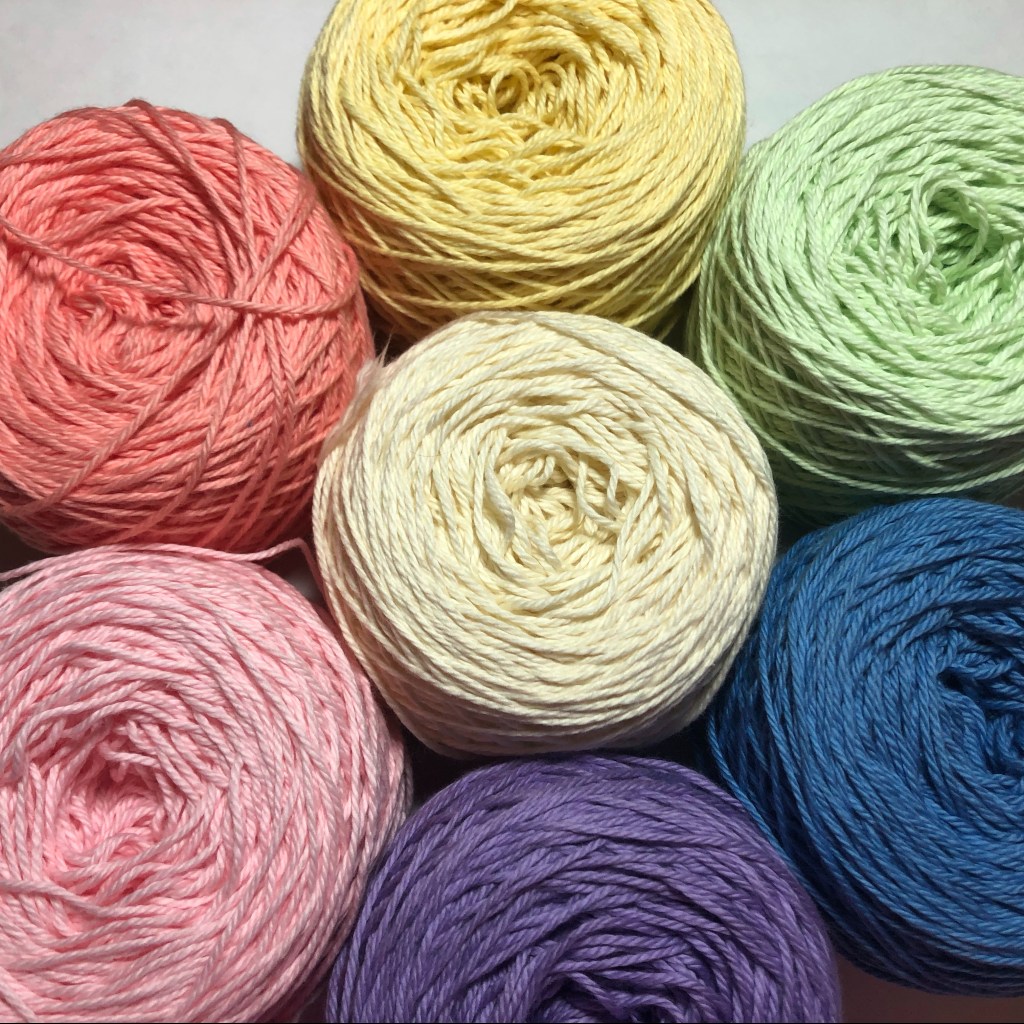
Universal Cotton Supreme original/worsted weight comes in 45 solid colors, Supreme DK in 32 solid colors, and Supreme DK Seaspray in 13 marled/ombre color options.

Cotton Supreme DK solid colors wound into yarn cakes

MSRP is $10.50 per hank, but it is easy to find this yarn on sale online for as low as $5.49 per hank depending on colorway. Many LYS offer deals on bulk purchases like online stores will do, so be sure to contact your LYS and support your local area’s businesses when you can!

Care Guide

Hand WashYes
Machine WashYes
Flat DryYes
Machine DryYes

Cotton is an easy-care material, and Cotton Supreme DK follows that. It may be washed warm and tumble dried on low heat. You can iron and steam this material safely. Expect some shrinkage in the wash, as with all cotton yarns and fabrics in general.

Even after washing and drying, Cotton Supreme still has good stitch definition.

This gentle cotton is a good choice for individuals with allergies or other sensitivities.


Knitting Machine Compatibility

4.5mm Standard GaugeNo
6.5mm Mid-GaugeYes
8mm / 9mm Bulky GaugeYes

As a plant-based fiber, cotton yarn has much less give or stretch to it than animal fibers or synthetic options. While some standard gauge machines function just fine with DK weight yarn, I did not want to risk bent needles or other problems due to using a less forgiving yarn at the thicker end of yarn sizes that might work.

I do not recommend this yarn for standard gauge machines.

This yarn functions wonderfully at mid-gauge and above. My machine did not struggle with this yarn at lower tensions on the SilverReed LK-150, but I did notice a slightly harder push due to less elasticity in this yarn than animal-based fibers. This is normal and not unexpected with cotton yarns.

Don’t be surprised if pushing your carriage feels different to pushing a wool or acrylic yarn, but remember never to force the carriage across the needles if it is struggling. That is not the type of resistance I am referring to in this instance.

Cotton yarn also sounds different on the machine to me, producing a slightly deeper rasp as the needles fly through the carriage.


Swatches, Performance, and Blocking

This yarn is wonderfully soft and gentle to the touch. I spent a bit of time rubbing it against my face. Purely for review purposes, of course. This yarn would make a wonderful washcloth in a spa-themed gift basket.

I have hand-knitted with Universal Cotton Supreme before and noticed it tends to shed a bit of fluff as you go. Initially I believed Supreme DK to shed almost double its worsted weight sister, but now I believe that is due to moving through the machine at a much faster rate than it will ever fly through someone’s fingers as they hand knit.

You should dust and maintenance your machine after each project (and I will guiltily admit to not doing this as often as I should), but you definitely want to make sure to brush out the carriage and needle bed after using this yarn. Fluff and yarn shed from any yarn can gunk up a carriage, so it’s best to perform frequent cleaning.


If youโ€™re curious about how I swatch yarn, please read this post.


Mid-gauge SilverReed LK-150 swatch at Tension 5

BeforeAfter
20 stitches4″4.0625″
30 rows4.5′4.0625″

Cotton generally shrinks in the wash, but as long as you are working from the gauge of a โ€œfinishedโ€ or washed and dried swatch, you should not run into problems. (I cannot stress the importance of working from a finished swatch enough!)

I experienced about 10% shrinkage in row-gauge, so I know how much shrinkage I can expect in projects as I wash and dry them.


Pattern Ideas

This yarn is a great choice for spa gift basket washcloths, baby items, and spring or fall sweaters. I think it’d make great tops for summer wear, as well.

This yarn could make lovely kitchen sets for housewarming gifts, but the cotton is so soft that I kind of dislike the idea of using it for dishes when it could be something soft and sweet on the skin.

I’m currently working on Crux by Kindred Red from the Spring 2021 issue of pompom magazine. This is a hand-knitting pattern that translates to the machine with very few modifications.

Crux in progress

Final Thoughts

I’m a cotton kind of girl. Most of my favorite yarns turn out to contain at least some cotton, so I’ll get that bias right out in the open. Cotton is a really nice fabric to wear year-round here in Oklahoma.

I appreciate the color options available to Cotton Supreme DK. It would be nicer if it had all the solid colors its worsted weight sister offered, but since the weights are so close, if you are desperate to use a color offered in worsted weight and not DK, you could probably fudge your way along just fine.

The fluff shedding during actual knitting can be a bit annoying, especially if you breathe one into your nose. Sneezing fits aside, it’s hard to find much wrong with this yarn. It’s a good staple cotton to have in your stash, and its easy care makes it a great choice for knitted gifts.

At just under $0.05 a yard, project costs aren’t too bad. You can find a similar cotton in Hobby Lobby’s I Love This Cotton Yarn, a lighter weight worsted yarn that costs around $0.01 per yard when it rotates through their 30% off sale cycle. ILTC doesn’t have the color availability in stores or come anywhere close to Cotton Supreme’s softness, but Hobby Lobby’s version is the closest comparable yarn I’ve used.

If you’re looking for a quality cotton yarn, you’ll find it in Universal Yarn’s Cotton Supreme line. I give this super soft but stable cotton a 4.7/5.


Have you used Universal Cotton Supreme DK before in your machine knitting? What about in your hand knitting or crochet? What kind of projects did you use it for, and what did you think of its performance?

Are there other properties or categories you think I should include in my yarn reviews? What yarn should I review next?

Let me know in the comments!

Uncategorized

The Basket of Shame

It started out with good intentions as “the finishing basket” when I was working on inventory before a craft show.

I’d knit a few washcloths then finish out the day with a cowl or shawl. I’d put them in the finishing basket and weave in the ends later as I watched the news. Then they’d go off to the wash and eventually be blocked and inventoried away.

It was a good system.

Then that cute little cardigan needed some buttons, but USPS was delayed, so it went to the basket.

Then I didn’t feel like finishing the fringe on a self-fringing shawl, so it went into the basket.

Then something interrupted me as I was weaving in ends, so that project went into the basket. Just for a little bit.

Then the craft show was cancelled and other shows followed suit.

The finishing basket was moved to the completely easy-to-see-and-not-forget corner of the yarn closet, and there weren’t any shows coming up anyway….

It was fine, right?

Here I am, a year later, with an overflowing finishing basket. The Basket of Shame.

Oops?

Is it too late for “oops?”


the Basket of Shame Overfloweth

I want to call myself as a professional knitter.

And professionals finish their work, right?

So what am I doing with this pile of stuff?

I’m honestly more than a little embarrassed about it.

How did I let it get this bad? I was home all the time for over a year. There was time to get this done!

That’s not to say that I didn’t finish some things, because I did. But that basket pile still grew….


If you’re like me and some of your works-in-progress have transformed into UFO’s (un-finished objects), I’m here to tell you that it’s OK. It happens. You’re not alone here.

It’s OK to put things down for good reasons, silly reasons, or even no reason at all.

But.

It is important to pick them back up again.

Try not to be too hard on yourself. The UFOs were put away. It happened. Can’t change it.

Now, what I can do, what you can do, is pick up one of those UFOs and work on it.

Little by little, it’ll get done.


If you have some WIPs-turned-UFOs, why don’t you join me in finishing things up? Accountability helps, you know. ๐Ÿ™‚


UFO sighting! Nearly finished curly-fringed shawl and Kelso tank top

I’ll go first.

Here’s my UFO list and what each one needs to join my list of finished works.

  • Teal Gradient Shawl – 25% left of curly fringe, final block
  • Flame Gradient Shawl – initial block, straight fringe, final block
  • Turquoise Socks – mattress stitch ribbing of 2nd sock, weave in ends
  • Green Baby Surprise Sweater – edging, ends, buttons, final
  • Grey Baby Surprise Sweater – ends, buttons, final block
  • Grey Tank Top – armhole ribbing, side seams, ends, final block
  • Black and Pink Scarflette – ends, final block
  • Yellow and Orange Ear-flap hat – felting
  • Coral skirt – elastic waistband
  • Clapotis Scarf – blocking
  • Washcloth 1 – ends
  • Washcloth 2 – ends
  • Orange Mittens – seaming, ends of second mitten
  • Lavender Mittens – seaming, ends, actually make the second mitten
  • Faux ‘Fair Isle’ Socks – make second sock, seaming, ends
  • Fingerless Mitts – second thumb gusset, ends

Whoa. Sixteen projects with varying degrees of completion. A couple of them go more than a year back. Yikes. Others are SO close to the finish line it’s silly to think I stopped where I did.

On top of that, I found four completed projects in that basket! I don’t remember even making them!

I’m not proud that these projects ended up this way, but this is do-able. The Basket of Shame kept growing because I felt overwhelmed and anxious, and I just froze and tried to ignore it.

But that’s OK! Because I’m here now doing and improving, and I’m not going to stop. Now that basket can go back to just being a basket.

nearly finished UFO – Baby Surprise cardigan, machine knit version


What UFOs are floating around your house? Why don’t you join me in taking care of them?

Thanks for reading. See you next time!

Uncategorized

Resource Roundup: The Answer Lady and Ask Jack

There are so many wonderful machine knitting resources floating around on the internet, but they’re not always easy to find. The Resource Roundup series will go through the links on the Helpful Links and Resources page in more detail to help you discover new places to learn more about machine knitting.


What is “The Answer Lady” all about?

The Answer Lady, Kathryn Doubrley, not only has a website full of books, patterns, and articles, she also has a YouTube channel featuring machine knitting videos and repair advice from her husband Jack.

To be blunt, the website looks outdated and visually unappealing, but don’t let that keep you from exploring it. You will miss out on a wealth of knowledge.

Doubrley has filled the site with her designs featuring different techniques, such as “cables” that do not use crossed stitches or circle sweaters with fun construction and lots of drape. Just clicking through her book offerings and seeing the pictures could have you thinking, “I didn’t know you could do that with a machine!”

Doubrley’s books are offered as PDF downloads through Ravelry’s store system, and she even advertises Zoom lessons on some book pages. Even if her website design doesn’t keep up with the times, her pattern delivery and accessibility sure do. I believe her pricing is very reasonable, and she also offers some freebies on her site.

There is a new Answer Lady & Friends app for Android devices, but I am an iOS user, so I can’t try it out. If you’ve tried it, let me know what you think!


Ask Jack on YouTube

If you have a knitting machine, you need to know how to maintenance it! Unfortunately, shops and dealers who maintenance machines are few and far between, and shipping a machine to and from the shop is fairly expensive on top of repair costs.

Doubrley’s husband Jack, a former mechanic, used to accept machines for repair work, but he is currently on a break. You can still benefit from his knowledge with The Answer Lady’s YouTube Ask Jack series.

This Ask Jack & Machine Maintenance playlist on YouTube is a priceless resource for any machine knitter, especially those of us without someone who can repair machines in our state or even our country. There is also a topical video index on their website.

Watching Jack repair and explain his process will help you maintenance your machine, and it will also teach you more about how your machine actually works.

I have used these videos to learn to clean carriages, and I’m currently restoring and repairing a Brother/Knit-King KH-260 bulky machine using Ask Jack and parts manuals as my guides.

If you decide to maintenance your machine yourself, I advise watching the relevant Ask Jack video a couple times before you start working on your machine and having it pulled up as reference while you are working.


Do you have a resource to share? Comment below or send it to me via the contact me page!