Knitting Machines, News, Seminar

Spring Machine Knitting Seminar

It’s been a while, everyone!

I hope you’ve been doing well!

If you follow me on Instagram (@ely.knits), you’ll know that I recently hosted my first machine knitting seminar in Tulsa at Get Stitchin’!

“Fit, Fabric, and Finishing” was our theme on October 15. Pamela Carrico of CMO Designer Knits showed us ways to tailor knits to be truly custom, well-finished items and reminded us that we make fabric and can make so much more than just sweaters on our machines.*

Things went so well that we decided to schedule the Spring Seminar already!

**Important Date Change!**

Updated February 2023

Join us Saturday, April 1, 2023 from 10AM-4PM for a machine knitting seminar featuring Oklahoma’s own fiber artist Pamela Carrico!

Pamela has over 44 years of experience in fiber arts and creates one-of-a-kind handmade pieces that have traveled the world. 

The spring machine knitting seminar is brought to you and sponsored by ELY Knits. (Me!)

Click the date above or this link to go to Get Stitchin’s website and sign up! We’ll be teasing out more info as we get closer to seminar, so stay tuned!

First sneak peek:

Do you know what a body block is?

*If you missed it and would like to purchase a copy of the patterns we learned, check Pamela’s Etsy store, where PDF downloads will be available for purchase soon.

If you were wondering where in the world I’ve been and why there haven’t been any posts in ages, here’s the personal stuff:

We moved!

Before, I had the smallest bedroom in the house stuffed full of my knitting, but now we’re on an acreage and I HAVE A STUDIO! I’m so excited!!

It’s still a huge mess even though it’s been six plus months since we moved… but things are beginning to shape up.

I have shelving for my vintage magazine and book collection and a wall of pegboard for my cones and hanks. My to-be-cleaned-and-restored machines have their own shelf in a workroom so I can keep any chemicals separate from the yarn.

It still seems unreal to have a studio, but I have one with two rooms now! And running water! (If this place had a bathroom I’d get a mini fridge and a cooking burner and just live here. Sorry husband…)

Eventually I’ll teach private lessons in the studio, but for now, I’m keeping things at Get Stitchin’ in Tulsa.


I’ve had two surgeries since the move, and recovery has taken a while.

One of the surgeries fixed a tendon issue in my thumb and wrist, but I still have numbness in my hand from the nerve being moved to reach the problem. That should continue to fade as time passes. (See this post for some background on my hands.)

While I’m pretty much recovered from my surgeries, I still have some specialists left to see for a more systemic health issue, so it may be a while before I return to my previous schedule. Even though I hate to, I don’t feel like I can 100% commit to regular posts yet.

But I will still do my best!


You can keep up with things I think are interesting but perhaps not blog post worthy on my Instagram @ely.knits.

Thanks for reading, and I’ll see you soon!

Accessories, Knitting Machines

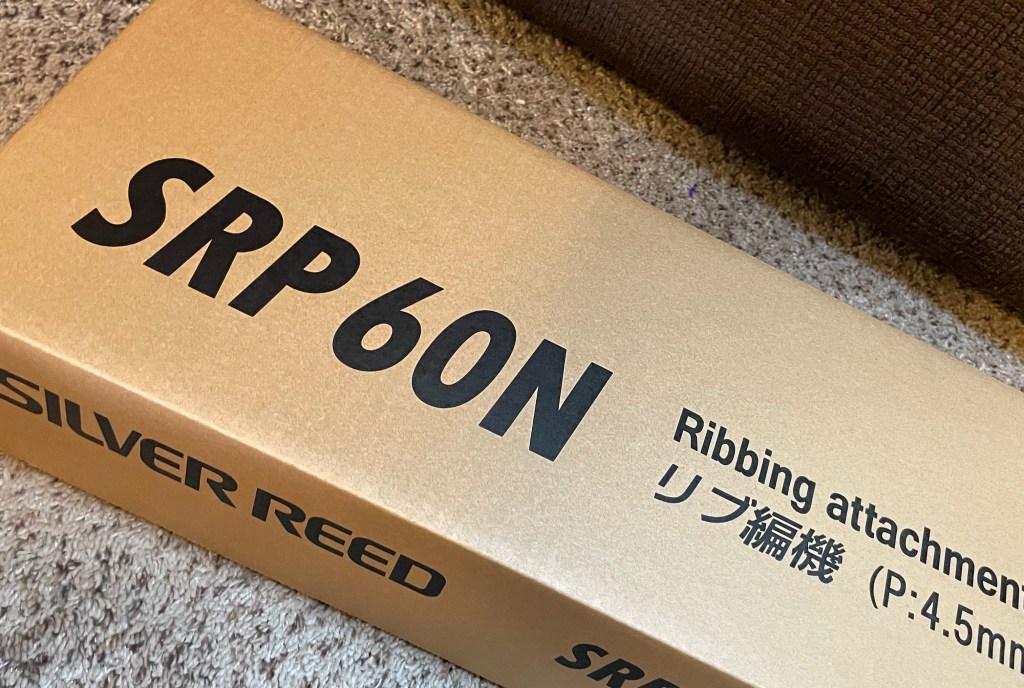
Silver Reed SRP 60N Ribber Attachment Unboxing and Assembly

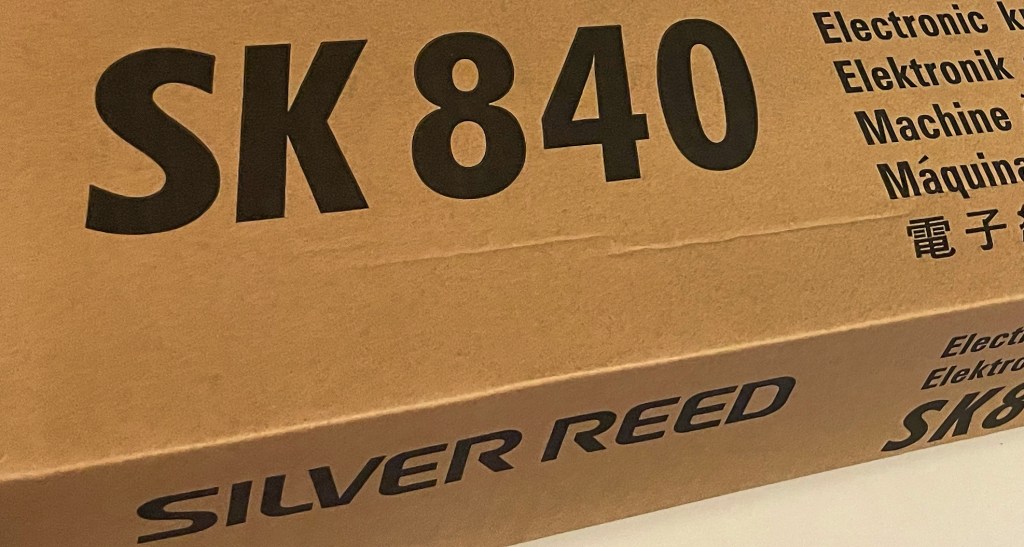
Last time, we unboxed and assembled the Silver Reed SK 840 standard gauge 4.5mm knitting machine. Now it’s time to learn what comes standard with the Silver Reed SRP60N 4.5mm ribbing attachment, often referred to as a ribber bed or simply a ribber.

Let’s see just how adding a second needle bed expands your machine knitting repertoire!


Compatibility

The Silver Reed SK 840 standard 4.5mm gauge knitting machine is the only current model the SRP60N bed fits. The SRP60N will not knit on its own and must be used with a main bed.

This attachment also fits older, discontinued models SK 210, SK 500, SK 580, SK 700, and SK 740. These could be labeled with Singer, Studio, Knitmaster, or Empisal brands, which were also produced by Silver Reed. This bed works with both punchcard and electronic machines.


Unboxing

Just like the main bed, the SRP60N ribbing attachment is securely packed in a shipping box and another box contains the actual ribber bed unit. The attachment and its accessories weigh in at around 30 pounds.


“helping” with accessories

The accessories come in a long, specially molded styrofoam block that slides in over the needle bed.

The styrofoam holds ribber-specific cast-on combs, a needle pusher, punch cards, a handle, a plating guide, and weights.

Instead of claw weights, the weights are cylindrical with a hook at the top. The smaller weigh about half a pound, and the larger weigh about a pound.

Mind your feet with these weights! It does NOT feel good if one falls on your bare feet!
(Learn from me and wear shoes when you machine knit.)


Be careful with this part of the unit!

The ends of the needle bed are held up with the help of two more molded styrofoam pieces and a flat spacer. These keep the back of the ribber bed safe during shipping and storage.

Each back side of the bed hosts a joiner point where the ribber slides into the main bed. These can be easily bent and damaged if the ribber bed rests on them, so the bed is packed needle-side down.

The ribber is not built into its own carrying case like the main bed and needs to be stored in a way that does not damage the attachment plates on the back, so I strongly recommend keeping the box and foam it came in.

If you uninstall the ribber from the main bed for transport or storage, put it back in the box with its special foam pieces, even if it’s temporary. Otherwise, gently place it needle side down in an out of the way place, or needle side up on a chair and allow the attachment points to hang down without touching anything.


auxiliary pieces to the main bed

Important note: the SRP60N comes with two “auxiliary pieces” that screw into the main bed on each side front that are required to attach to the main bed. The ribber will not fit properly unless you install these, so don’t lose them!


What does adding a ribber let you do?

Ribbed Stitches

As you’ve probably guessed by its name, the SRP60N ribber bed allows you to knit rib stitch patterns without manually reforming the stitches with a latch hook tool. If you knit ribbed edgings often, this attachment will save you a lot of time.

The main bed (the SK 840, sold separately) creates knit stitches while the ribber bed (the SRP60N) creates purls. You can use needles from each bed in combination to create simple rib stitch patterns like 1×1 or 2×2 ribbing, but that’s just the beginning.

Using punch cards or design software like Design A Knit 9, you can create special stitch combinations for endless fabric design opportunities. New combinations include tuck stitch ribbing and fisherman’s rib (think brioche, hand knitters! That’s actually a type of tuck stitch), as well as lace, cables with defining purl stitch patterns, and a special type of colorwork called double bed jacquard.

Circular Knitting

One bed means everything is made flat, but two beds means a tube!

Because the SRP60N has 200 needles just like the main bed, circular knitting with up to 400 stitches is possible simply by adding a ribber.

One round of knitting will take two passes of the carriage—one pass for the main bed and one pass for the ribber bed.

I love being able to knit in the round on my flatbed machines. Socks are my current circular knitted favorite, but you’re not limited to small items like you are with circular sock knitting machines that generally have around 70 stitches. Remember, you have 400 needles now!


Assembly

“Read the manual!” sounds like a cop-out on an unboxing and assembly post, but the manual should always be your first stop, especially if you are installing the ribber on a different model than the SK 840 I’m using.

There are diagrams, instructions, part names, and troubleshooting sections.

If you lose your manual, you can download a PDF copy at Machine Knitting Etc.

Table or Stand

Whatever you use to set up your machine needs to be able to withstand some torque. I prefer using a metal tilt/A-frame stand when I work with two machine beds since I don’t have a sturdy table that fits the clamps.


The first step in installing your ribber is to take down the main bed.

Take the tension unit out and set it aside.

The ribber needs to sit at a specific angle on the table/stand for the beds to knit properly, so taller, angled clamps are included with the attachment.

left: ready to install
right: installed

Remove the main bed’s original clamps and install the clamps that came with the ribber. Make sure the clamp slides to the smaller side of the hole and securely tighten it. Reattach the main bed to your table/stand.

Screw the auxiliary pieces (pictured earlier in the unboxing and seen in use below right) into the main bed and then insert the ribber attachment points into the slot of the auxiliary pieces. Secure the ribber to the table/stand with the main bed’s clamps.

left: angled clamp securing main bed
right: original main bed clamp securing ribber bed

Stand users: Your stand may have come with a part that sits around and under the tall clamps (as seen above on the left). This piece did not come with the ribber. I personally haven’t noticed a difference in stability between using it and leaving it out, so don’t worry too much if your stand doesn’t have one.


In addition to four clamps, the needle beds are further stabilized with ribber join supports. You simply flip the pieces up so they touch the main bed.


top: aligned
bottom: offset

The centers of the main bed and ribber bed are each marked with a zero. The alignment of the beds is adjustable depending on which type of knitting you want to do, but when you’re setting things up, you generally want the zeroes to align and then adjust from there according to the manual.

The ribber can be lowered so you can knit using only the main bed without uninstalling the ribber, but it must be fully raised to perform its functions.


The ribber has its own carriage that slides across the needle bed and has a special attachment for the main carriage called the ribber arm. You must use the ribber arm in the main carriage for ribber functions.

To install the ribber arm, remove the main carriage sinker plate by unscrewing the knobs and sliding it out. Put it away in the main bed’s lid. Slide the ribber arm in place where the sinker plate was, and tighten the knobs.

Do not over-tighten. You could strip the knobs. Hand tight is enough to securely hold the ribber plate.

The ribber carriage slides on to the tube-like railing at the bottom of the ribber needle bed. It leans toward you when you install it, but it must be flush with the ribber bed to use. Simply push it toward the needle bed to achieve this.

The main carriage and ribber carriage work in tandem and must be attached to properly function. The ribber carriage will click into place under the main carriage as you slide it along the bed. The two carriages can now move as a unit to knit.

The final step is replacing the tension unit. The tension rod has a bend at the bottom that bends away for use with the main bed alone but needs to bend towards you when the ribber is attached. This puts the rest of the tension unit pieces backwards, so you need to flip them around on the rod.

And there you have it! The Silver Reed SK 840 with the SRP 60N attachment, all set up and waiting for yarn!


If you’re interested in purchasing current Silver Reed knitting machines or accessories, please contact me. I sell Silver Reed knitting machines through Get Stitchin’ in Tulsa, Oklahoma. We’re happy to custom order current Silver Reed machines and parts for you, and we keep the Silver Reed LK 150 plastic hobby machine in stock. Please be aware that we are experiencing some delays in delivery due to supply chain issues like everyone else, but we will keep you informed each step of the way.

And stay tuned! More accessory unboxings and demos are coming to help you learn what each machine can do and what add-ons you might want or need for your favorite stitches.


Thanks for reading! I hope you enjoyed this look at everything that comes standard with the Silver Reed SRP60N ribbing attachment that fits the SK 840 standard gauge metal bed knitting machine.

Did I miss anything? What would you like to see next? Let me know in the comments below!

Knitting Machines

Silver Reed SK 840 Knitting Machine Unboxing and Assembly

If you’re wondering what comes with the Silver Reed SK 840 standard gauge electronic knitting machine right out of the box, this is the post for you!


Unboxing

Unboxing this machine feels a bit like a Christmas box-in-a-box prank at first, but with good reason. The SK 840 is manufactured in China and has to make its way to you safely, after all. The machine ships in a long box that contains the actual box that contains the machine in its built-in case.

The interior box is clearly labeled, and at this point, I accidentally ripped one of the sides off in my excitement to get it open. Be a little bit more careful than I was when you’re removing the shipping box. It’s a tight squeeze, so you may need someone else to pull the other end while you ease it out.

This metal bed machine weighs in at around 35 pounds. In its closed case, it’s 44 inches long, about 8 inches deep, and just under 4 inches tall. The long size and weight make it a bit unwieldy to carry.

Once you open the interior box, you’ll be greeted with two manuals and the machine in its closed case. The extra padding on the ends keeps the machine from moving around too much during shipping.

Both manuals contain basic how to instructions, but the green Operation Manual provides more extensive guidance for using the machine with various (separately purchased) accessories.

sneaky Pete not included

The SK 840 and its accessories are neatly packed inside its case. Paper strips protect the needle bed and gate pegs from scratches while foam keeps the carriage tension dial in place. The carriage itself is locked to the needle bed with a carriage lock, and the tension dial on the carriage is held in place with a rubber band to prevent the buttons and levers from moving.

The padding in the lid is attached, which is oddly one of the things I was most excited to find out. Sometimes putting the sinker plate and tension mast back in a case for storage is confusing, so I’m very glad the foam is there as a guide. Some machines case lids have plastic pieces with drawings on them to indicate where each piece goes, but those are often lost or damaged over the years.


The tools come in their own box as opposed to the storage drawer some machines (especially punch card machines) have built in to the plastic portion of the needle bed.

It’s nice to see that there are three hot pink nylon ravel cords included. (I think their color may vary.) My cat is constantly making off with my ravel cord bobbins, and I end up needing to use scrap yarn as ravel cord most of the time. (See this post if you’re interested in learning how to use scrap yarn as ravel cord in a pinch.)

The manuals detail which accessories you’ll need for different functions, so be sure to read it. Remember, the manual is your best friend!


Everything you see above is what comes standard with the Silver Reed SK 840. To connect to Design A Knit software, you do need to purchase a separate cable or use a separate pattern control unit.


Assembly

To use your machine, you’ll need to place it on a table or machine stand and secure it with the included clamps. Your tabletop should be relatively shallow and straight-edged. The clamps don’t work well on a beveled edge.

I’ve set up the SK 840 on a metal stand I bought from my mentor.

Ready for more pics?

The carriage lock keeps the carriage from sliding about in transit. You should always use it when you pack your machine away for storage or travel.

I recommend keeping the carriage lock in your accessories box when it’s not in use so you don’t lose it.

After removing the carriage lock, you can attach the sinker plate to the carriage. The plate has guides to help you install it securely. Be careful not to over-tighten and strip the knobs.

The yarn tension guide attaches to the back side of the tension rod. There are high and low placement options on the rod with metal nubs that help keep the tension guide secure.

The tension springs are attached to the back of the auto tension unit but are folded back for storage. They will snap into place when you fold them forward.

The smaller end of the tension rod fits into the bottom of the auto tension unit and is different enough in size that you can’t install it incorrectly or upside down. I’ve done that in the past with a couple of Brother machines and wondered why the yarn clip holders didn’t work very well. I like that this unit saves you from that silly mistake.

You can assemble the entire tension unit (rod, guide, springs, and auto tension piece) before placing the rod into the machine, or you can place the rod in the machine first and add the other pieces from there. I don’t think order matters too much as long as you remember which direction the tension unit pieces should face.


Here it is set up and waiting for yarn. Looks pretty great, doesn’t it?


If you’re interested in purchasing a Silver Reed SK 840 knitting machine, feel free to contact me. I sell Silver Reed knitting machines through Get Stitchin’ in Tulsa, Oklahoma. We’re happy to custom order current Silver Reed machines and parts for you, and we keep the Silver Reed LK 150 plastic hobby machine in stock. Please be aware that we are experiencing some delays in delivery due to supply chain issues like everyone else, but we will keep you informed each step of the way.

Still thinking about it? Don’t worry! Accessory unboxings and demos are coming to help you learn what this machine can do and what add-ons you might want or need for your favorite machine functions.


Thanks for reading! I hope you enjoyed this look at everything that comes standard with the Silver Reed SK 840 standard gauge metal bed knitting machine. Also, apologies for the late post! It’s 2022 and it looks like I still can’t count days and weeks correctly. Whoops! I’m sure glad those needle beds are numbered….

hand knitting, Knitting Machines

Knitting with Hand and Wrist Pain: My Journey to Machine Knitting

This post includes my own experiences with pain and hand and machine knitting and should not be considered medical advice. If you have a concern about knitting-related pain, you should seek help from a medical professional.

More Common Than You Think

Over the years I spent working in a yarn shop, I heard a lot of things about customers knitting less or even stopping their hand-based yarn hobbies altogether because of hand pain.

Quite a few of our shop patrons experienced occasional or chronic hand pain, and their responses to it varied as much as their yarn projects.

Some customers swore off small yarns and began knitting with bulky yarns on large needles. Others blamed the bulk of large projects and decided to only work on small, lightweight pieces.

Some knitters swore by compression gloves to remedy their pain. Others relied on copper bracelets and rings to help with blood flow to their fingers. Some made lotions and balms with different oils to soothe and relax tired hands. One customer even suggested certain yoga poses to help release arm and hand tension.

Whether it’s arthritis, carpal tunnel, or tendinitis, knitting is a repetitive motion, so it does carry a bit of a risk of injury or aggravation with too much of it.

But what do you do when the pain gets to be too much and you can’t knit more than a row or two without stopping to rest or reaching for some medical pain relief?

If you’ve ever seen a knitting machine, you may think it could be the answer to keep you knitting.

Pushing a carriage across a needle bed to make a blanket or turning a crank to make a sock seems like such a simple motion compared to the steps you complete to make a stitch in hand knitting.

Knitting that quickly and simply must be super easy, right?


Life with Hand Pain

I’ve had issues with the joints in my hands and arms since I was a child. They gave me trouble with things from learning piano to writing class notes.

I learned to hand knit in college, but I didn’t ever knit long enough in one sitting to notice anything past the usual pain, swelling, and weakness flaring up, and it did that anyway with normal daily activity.

A doctor first noticed a bit of minor arthritis in one finger in my mid-20s, but she wasn’t able to pin down a reason for the rest of the weakness, inflammation, or swelling of my hands and arms.

She told me I should just stop knitting.

That advice came right as I was launching an Etsy shop and beginning to attend craft shows. It was a day ruiner, that’s for sure.

I loved knitting, and I wasn’t about to give it up, so I decided to follow the advice of my fellow knitters and tried stretches and compression gloves along with frequent breaks to alleviate my hand pain. If my hands were swollen and weak that day, I wore my braces and read knitting magazines or browsed ravelry instead.

I tried taking over the counter medicines and went back to the doctor again, but she still said there wasn’t anything wrong with me other than that small spot of arthritis. At this point, I was barely able to hold a pen or a fork, let alone knit.

I randomly saw a machine knitting video on Youtube. I don’t think I knew knitting machines existed before 2017, to be honest, but I finally started considering one a solution that could keep me knitting.


Hand Involvement in Machine Knitting

If you think machine knitting is only pushing a carriage across a needle bed, you’d be incorrect.

True, that is the most basic action in machine knitting, but you use your hands a lot.

If you have a manual machine like the SilverReed LK-150 or Brother KX 350 (click here to read a post about cleaning and testing this machine), you do everything besides knitting the stitches themselves by hand.

Needle selection is by hand. Transferring stitches for increases, decreases, lace, or cables is done by hand with specialized tools. Any decent cast on with a finished edge is done by hand wrapping or using the latch tool. Bind offs? By hand. Seaming? Unless you buy a linking machine, you’re doing it by hand.

And that’s the thing. It is quite easy to remove the majority of the hand manipulated element of machine knitting, but it isn’t cheap. You have to buy specific machines or accessories to lessen your manual involvement.

You can hand select and do things manually on all machines, but punchcard and electronic machines have settings that enable a lot less handwork. Those extra functions come with extra cost. They are more expensive, sometimes double the cost of the manual machines mentioned above, and some require buying even more accessories to accomplish what would otherwise be manual tasks.

Lace and intarsia specialty carriages can be over $100 each. Buying a second bed to knit ribbing can run about $500. Whether you buy used or new, you’re still looking at a range from a few hundred dollars to a couple thousand invested in removing the manual element from your knitting.


Adapting to Painful Hand Knitting with Machine Knitting

I still hand knit. It is what started me down the fiber road, after all. But I cannot knit as much as I used to. I’m down to about a tenth of what I once could do. Moving my hands in certain ways seems to flare things up more than others, so I’ve written off entire stitch patterns if they hurt.

It definitely feels awkward as an instructor to say I physically can’t do that knitting stitch other than showing how it’s done once or twice, but awkward is a better feeling than pain. I tell my students as long as they’re forming the stitches correctly, there’s not really a “wrong” way to knit. But if it hurts, that’s knitting the wrong way.

Some days I wake up and my hands feel fine. Others I can barely hold the spoon to eat my morning oatmeal. Checking how my hands are functioning is a part of my morning routine now.

I modified how I hand knit so that most of the motion comes from my better hand, my left. My right hand is basically a needle stabilizer. I can knit this way with braces on my hands, so I still get a little bit of hand knitting accomplished on painful days.

Moreso than trying to knit wearing my braces, I look for ways to blend hand my hand and machine knitting together. I figure out what parts I can hang on a machine so I can save my hands. Does the pattern call for 12″ of stockinette stitch? That’s going on the machine. Is there a complicated lace repeat on a hem? I’ll do that by hand with plenty of breaks on a good day or I’ll try to find a similar punchcard lace pattern on the machine.

I can operate almost every function of a punchcard machine on all but the worst pain days. I can push a machine carriage and change lever- and button-based settings; I can use transfer tools, the latch tool, and thread the machine’s tension unit. I’m not going to choose something with a lot of hand manipulation like cables or hand transferred lace on a bad pain day, but that’s easy enough to stay away from.


Return to Teaching

I had to pause teaching classes and working at the yarn shop when the pandemic started, and after the shop closed earlier this year, I was unsure if I’d teach hand knitting again.

I’m currently working with Get Stitchin’ in Tulsa, OK to offer classes and SilverReed machine sales through the shop. It’s a dream come true for me to be teaching again and connecting with the fiber community once more, but working around my hands sometimes feels iffy.

When you check the Classes page on Get Stitchin’s site, you’ll see hand knitting classes. With me. I’m not stopping, but I am adjusting.

I have to give myself much more time to compete a project. What would previously have taken me less than a month might now take three. Trying to have a sample done in time for in-store class advertising has been a little rough on my hands. Instead of the larger projects I once wanted to do with multiple-part classes, I’ve chosen smaller things that teach and reinforce skills and concepts but do it in a more compact project.


Worth It

Investing my time and money into knitting machines has enabled me to continue on my fiber journey. I didn’t have to give up my creative passion, and that alone makes machine knitting priceless to me. In addition, I’ve been able to speed up my design process because knitting a piece on the machine takes so much less time than doing it by hand. Making mistakes and ripping them out is not necessarily an uncommon occurrence for me when I’m working on the machine, but making those mistakes has given me more confidence in my ability to create and fix designs.

Knitting machines can’t always produce the exact same fabrics that hand knitting can, but there are analogs and even more stitch options to produce all kinds of wonderful fabrics that would be nearly impossible, or at the very least extremely impractical, to do with hand knitting.

I did manage to get some answers regarding my hands this year with a new doctor, but other than steroid shots, there’s not much that has been able to help. There are a couple surgical options in my future, but one always has to weigh risks and benefits with them. How long will I have to stop knitting to recover, and is it a permanent solution? I’m cautiously optimistic that I may finally be able to eat, write, and hand knit pain free someday.


Have you experienced yarncraft-related hand pain? What did you do to combat it? Did you turn to machine knitting to stay creative? Are you considering a knitting machine to give you more flexibility in your knitting? Let me know in the comments below, and, as always,

Thank you for coming on this knitting journey with me.

Knitting Machines

Cleaning a Brother KX 350 – Start to Finish

There aren’t really many entry level or hobby options for knitting machines in production these days. Your options are the SilverReed LK 150 6.5mm mid-gauge or … nothing. That’s it. The LK 150 is the only hobby plastic machine still in production.

The LK 150 is a great machine, and I love mine, but the $440.00 MSRP is a lot of money for something you might not be certain about.

BUT if you look to the used or vintage market, you might be surprised with what you can find.

The Brother KX 350 is another mid-gauge plastic bed hobby knitting machine. Many are still floating around in good condition. All they need is a little love, and they’ll be knitting for you for years.

The KX 350 was made in Japan and has 130 needles where the SilverReed LK 150 has 150 and is produced in China. The KX 350’s needles are 7mm apart where the LK 150’s are 6.5mm. The KX 350 cannot “officially” plate yarn, but there is a trick to make it work, where the LK 150 has a yarn plating function built into the carriage. Both machines are manual where the user selects all needles, and both machines can use most hand knitting yarns.


a LOT of knitting machines and my little helper, Pete

I recently purchased a lot of Brother and Studio machines from an estate sale. Luckily for me, their former owner was a knitting machine dealer and used and maintained her machines well. They’ve been sitting for a couple years, but the buildup on the machines is much less than what I’ve found on other vintage machines that sat for over a decade before I cleaned them.

Other than the accessories and pieces being stored by type (tension units with tension units, cast on combs with cast on combs), the recent machine lot is in good shape.

This makes the restoration process for the majority of these machines more of a simple cleaning rather than replacing and repairing parts like my on-hold Brother KH 260 restoration with a broken patterning unit. That one has to wait until I can procure parts, which is one of the downfalls of working with out of production machines versus current models.


The Cleaning Process


Inventory the Machine

Before I started cleaning, I downloaded the KX 350’s manual from Machine Knitting Etc. I checked parts and accessories against the manual so I could order any missing items as soon as possible.

The accessories for my newly-acquired machines are scattered throughout machine cases and random boxes, but this KX 350 was only missing a 1×2 transfer tool. That’s not too bad, and it could still pop up somewhere.


Cleaning Supplies

  • LPS 1
  • LPS Food Grade H1
  • Dawn dish soap
  • Lukewarm water
  • Toothbrush
  • Clean paintbrush
  • Old towels
  • Blue paper towels
  • Mineral Spirits
  • Glass jar with lid
  • Sponge with Brillo pad side
  • Washi tape

Cleaning the Needle Bed

I started by removing the needles from the needle bed and storing them in my glass jar.

I attempted to pull the old sponge strip out of the machine in one piece, but it had other ideas.

quite dead sponge strip bits

The old sponge strip had no memory or spring left to it, and the places where the needles rested were clearly visible.

nicely dusted but still a bit dirty needle-free KX 350 needle bed

Once the needles were out of the way, I used my clean paint brush to brush away as much dust and dirt as possible. I was surprised at just how much cleaner the machine was with just a little bit of dusting.

I used a paintbrush because the bristles were long enough to reach into the needle slots where the toothbrush couldn’t. As long as your brush doesn’t shed bristles, you should be fine. You don’t want to have to fish out bristles in addition to the rest of your cleaning.


I filled a bowl with tepid water and a little bit of Dawn dish soap. I used a lightly wetted toothbrush to scrub away the dirt and grime.

Emphasis on the lightly.

The bottom of the needle bet still hosts metal parts, so I was careful not to over-wet the toothbrush and slop water everywhere. I worked in small areas and wiped things dry as I went. I did scrub the metal sections, but I was very careful to thoroughly dry them.

I could have removed the metal support sections and cleaned them separately, but they were not dirty enough to warrant it in my opinion. There was no rust to remove.

bottom view of the KX 350’s needle bed with metal support parts and spring-loaded clamp holder

If you are cleaning a KX 350 and decide to remove the metal support pieces, I recommend taking pictures of each support piece and its screws individually before and after removal and keeping them in labeled bags to ensure you don’t lose screws and parts. You’re always better off safe than sorry when working with vintage machines since parts have iffy availability.


For any remaining grime in the needle slots, I sprayed a tiny bit of LPS 1 and scrubbed it with the toothbrush. According to Ask Jack at The Answer Lady, LPS 1 is safe on plastic bed machines as well as metal machines, but I think it’s best to attempt soap and water first.

needle bed before / after

After I finished the needle bed, I took my toothbrush and soapy water to the carriage and wiped the metal carriage plates and accessories with an LPS 1 wipe. (I ordered my LPS 1 wipes from EMI Supply.)

I placed a strip of washi tape on each accessory and put a matching strip on the needle bed. I have quite a few machines, especially mid-gauge and bulky, with accessories that all look about the same at a glance, so I make sure to give each machine its own washi tape code.


Replacing the Sponge Strip

You should always replace the sponge strip in a new-to-you machine unless the seller explicitly states they have installed a new sponge strip and you have checked that it is new. Trust but verify!

The sponge strip/sponge bar is vital to your machine knitting fabric properly.

All that said, replacing the sponge strip in a plastic hobby machine is for. the. birds. This vital process is tedious at best. Give me a metal machine’s sponge bar any day!

The KX 350 has the added insult of these bars across the sponge strip channel.

Don’t worry, I cleaned the grimy bits out of the sponge strip channel!

I used a transfer tool to help scrunch and inch the sponge strip through the channel and under the bars, but any narrow, blunt-tipped object would probably work. I tried to pull the strip with tweezers initially, but it tore the end of the strip and began to tear at the part under the channel bar. I don’t recommend pulling the sponge strip through.

Sponge strips are longer than the needle bed, so I simply snipped off the ugly end, but it would have been fine to leave it as the ends are not actively supporting any needles during knitting.

freshly inserted sponge strip

Needle Cleaning

Upon closer inspection, quite a few needles from this machine had rust on them. A few latches were rusted in the open position, but the majority of rust was in small patches along the length of the needle between latch and butt and would not affect their functionality in knitting. It seems like these needles had some sort of metal plating on them that had just worn off.

While I worked on cleaning the needle bed, I let the needles soak in some mineral spirits in a sealed glass jar.

bits started to come off the needles as soon as I filled the jar

After I finished the needle bed and carriage, I sat outside on my porch and wiped down each needle with blue towel and checked the latch function. It was another task on the tedious end of machine cleaning, but it’s worth it to do it all at once rather than pulling supplies out again mid-test knitting.

I used the toothbrush and a sponge Brillo pad to remove rusty spots, but I think steel wool might have worked better in hindsight.

A couple needles had rough formerly-rusted parts on the actual hook of the latch that could catch on yarn, so I soaked them again overnight and scrubbed them as best as I could before returning them to the needle bed.

I sprayed the needle bed slots with H1 Food Grade lubricant and made sure to wipe off any excess from the top of the bed before reinstalling the needles. I gave the carriage a spray of H1 as well to prepare it for knitting.


Brother KX 350, cleaned and assembled, mid test knit

Test Knitting

With the bed freshly cleaned and assembled, I started test knitting. I used leftover Piropo, a vintage acrylic Millor yarn.

When testing a machine, I believe you should knit using every single function the machine has available. If your machine has a punch card, you should test the punch card functions. If you have a lace carriage, you should test the lace carriage.

For the KX 350, testing means knitting stitches that use the part and hold levers on the side of the carriage for tuck and skip stitches along with some fair isle colorwork. Testing at different tensions is important, too.


Final Thoughts

I bought this lot of machines intending to clean, refurbish, and resell most of them, but working with this KX 350 has me really tempted to keep it. This sturdy little manual machine has a lot of knitting left in it.

Cleaning was a series of simple, sometimes tedious tasks that ultimately added up to about a day or long afternoon of work if you don’t count the downtime of soaking needles.

Since I’m pretty sure the missing transfer tool is floating around my machine shelf, the only part replacement I needed to complete was changing the sponge strip. And replacing a sponge strip/bar is a part of regular knitting machine maintenance, so I feel like that barely counts.

I hope reading through my cleaning process helped you whether you are looking to revive a used machine or simply storing up tips for the future.

If you’re interested in what working on a metal bed machine looks like, check out this post on a Brother KH 260 restoration in process.

Keep an eye here on the site in the future for the Store tab featuring cleaned, refurbished, and TESTED vintage machines in addition to patterns, finished garments, and machine accessories.

Thanks for coming along this knitting journey with me!