I hope you’re all well and ready to greet the new year with fulfilling yarny goals and intentions.
Here’s where you can help me out–
Please send me links to your favorite Machine Knitting resources!
Whether it’s a forum, a Discord server, a YouTube channel, a designer’s page, or a website, I’d like to know about it! Leave a comment, send me a message on social media, fill out my contact form… look to see if I actually make a post asking for input on r/machineknitting like I’ve been telling myself I will any day now…
With the addition of -AI to searches, and let’s be honest, searches haven’t always had the clearest results when it comes to machine knitting, well…
I’d like to see what everyone else is up to and reconnect with the machine knitting world!
I’ll be adding the links to my Resource page as well as organizing the site a bit differently.
Here’s hoping 2026 is a better year than 2025!
(For the record, I have not and will never knowingly use any sort of -AI to write any of my content. All of this awkward, stilted wording is just me, myself, and an English degree that proves I know the rules but choose to ignore them.
The 2024 Oklahoma Yarn Crawl recently wrapped, and my gosh was it FUN! If you haven’t checked out Part One of my recap, read it first here.
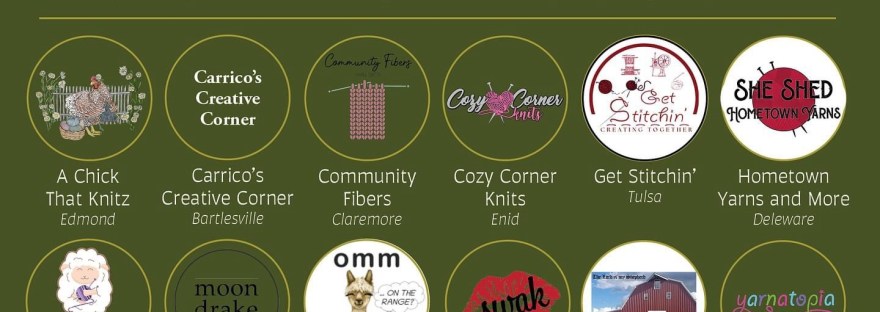
Twelve fiber businesses from across Oklahoma got together to put on the state’s first yarn crawl. Yarn shops, dye works, a working farm, and a mini fiber mill dot the state map, and fiber lovers made the trek to each one during the August 16th to 24th (excluding Sunday) special event.
Each shop had their own special charm and yarns in addition to special events just for the yarn crawl. Some fiber businesses aren’t usually open to the public every day of the week, but they all kept special hours for the crawl.
My friend Susan and I had five of our twelve yarn crawl stops stamped, and set off early in the morning to visit our first shop of the day.
We learned our lesson trying to hit five stores in one day, so we broke up the remaining seven yarn crawl locations into two days— Thursday and Friday,August 22 & 23, 2024.
Each shop we visited was wonderful, and I hope I can convey something special about each one, as they all have their own unique charms and strengths. Oklahoma has a widespread and vibrant fiber community, and the yarn crawl really showcased that.
It was a two and a half hour drive to our first shop of the day, the westernmost in the crawl
Cozy Corner Knits – Enid
I’m fairly familiar with the western part of the state because I have family there. It’s full of farms, oil wells, and wind turbines, but that’s about it. I used to think there wasn’t much else worth visiting in that part of the state.
Cozy Corner Knits is such a welcome addition to that part of the state.
The shop is easy to find if you ignore Google and trust your eyes and common sense while driving. Maps had us take an odd detour through a really cute neighborhood before telling us to turn the opposite direction from the shop we could see right there just across the street.
That wasn’t the shop’s fault at all, so consider calling ahead for directions to any shop if your map app has your route doing silly things.
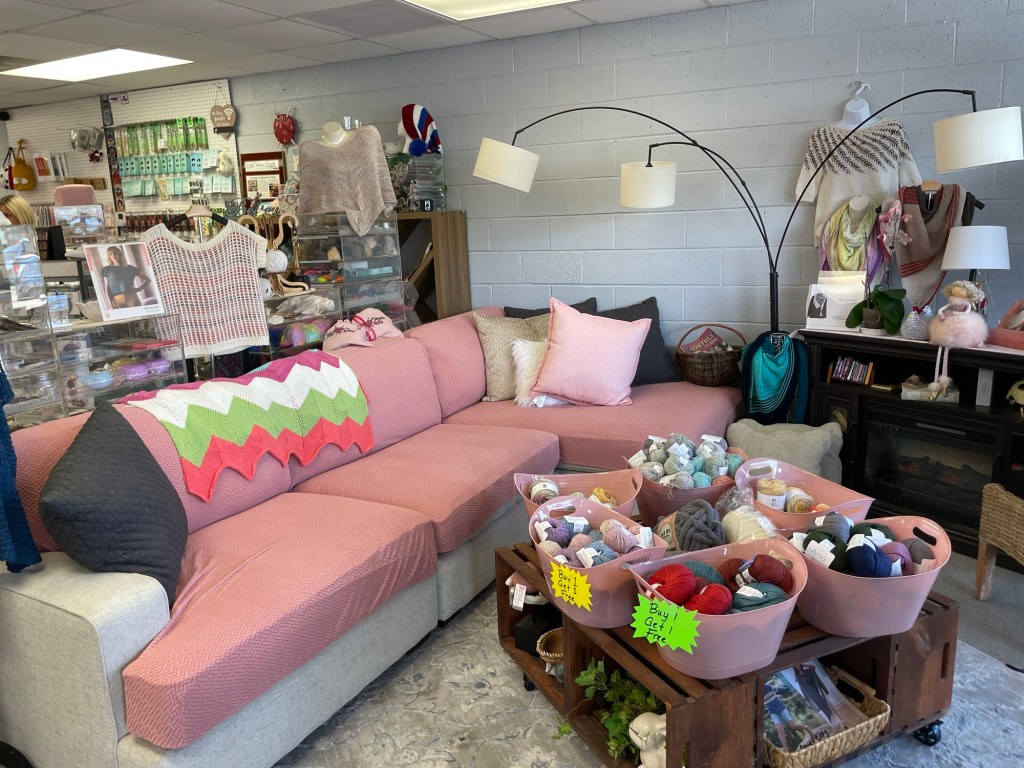
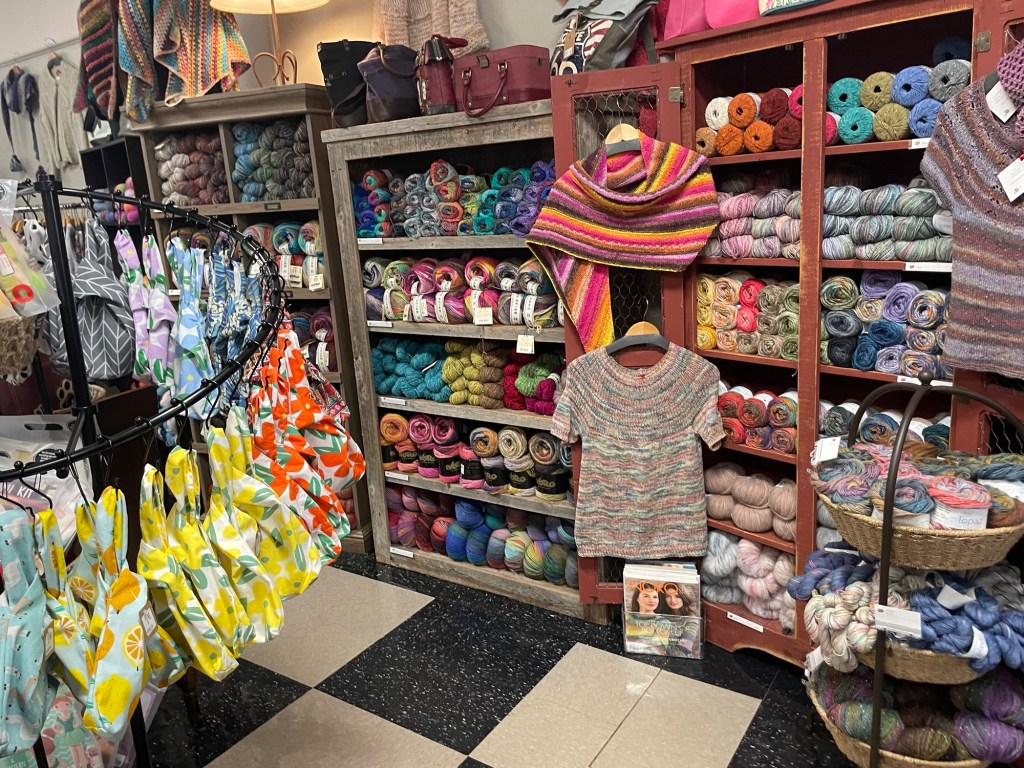
Cozy Corner Knits is very neatly laid out with a knitting area near the front window and nice displays guiding you back to the classroom area at the rear of the shop.
Susan and I had such a fun time chatting with the owner, her husband, and another customer that it was after 1:00 before we knew it, and we needed to move on to our next stop.
I had briefly considered not visiting Cozy Corner Knits because of the drive out to Enid, so I’m glad Susan convinced me that we absolutely needed to see all of the shops to experience our first yarn crawl to the fullest.
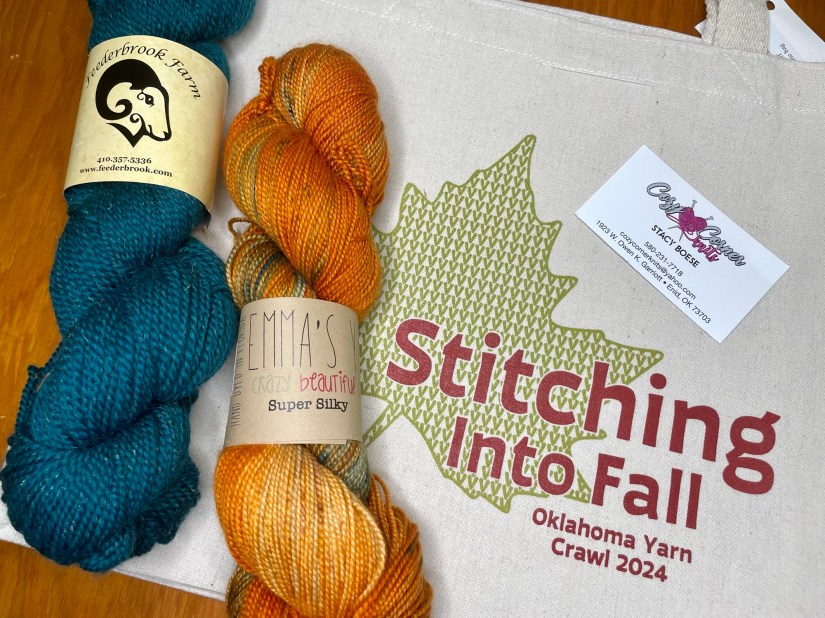
I stuffed some yarn with subtle sparkle from Feederbrook Farm and some gorgeous orange Emma’s Yarn Super Silky into my yarn crawl tote, and we were off to the next one.
You can learn more about Cozy Corner Knits at their Instagram or Facebook pages.
It was about an hour’s drive to our second stop, Susan’s favorite of the trip,
Oklahoma Mini Mill – Guthrie
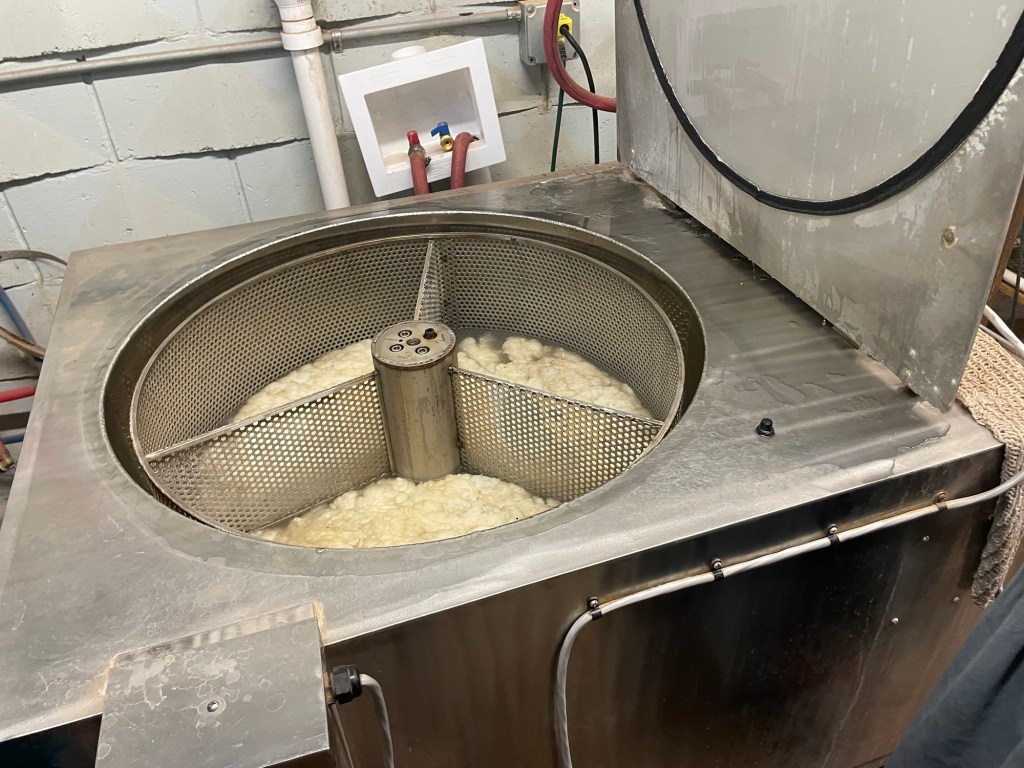
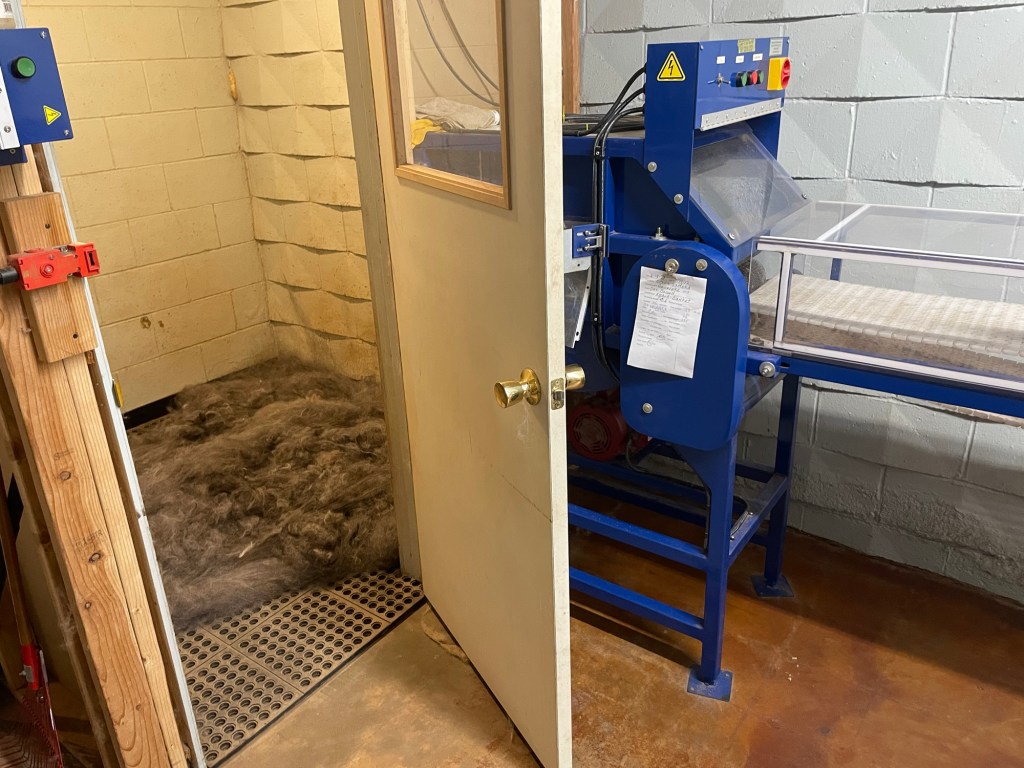
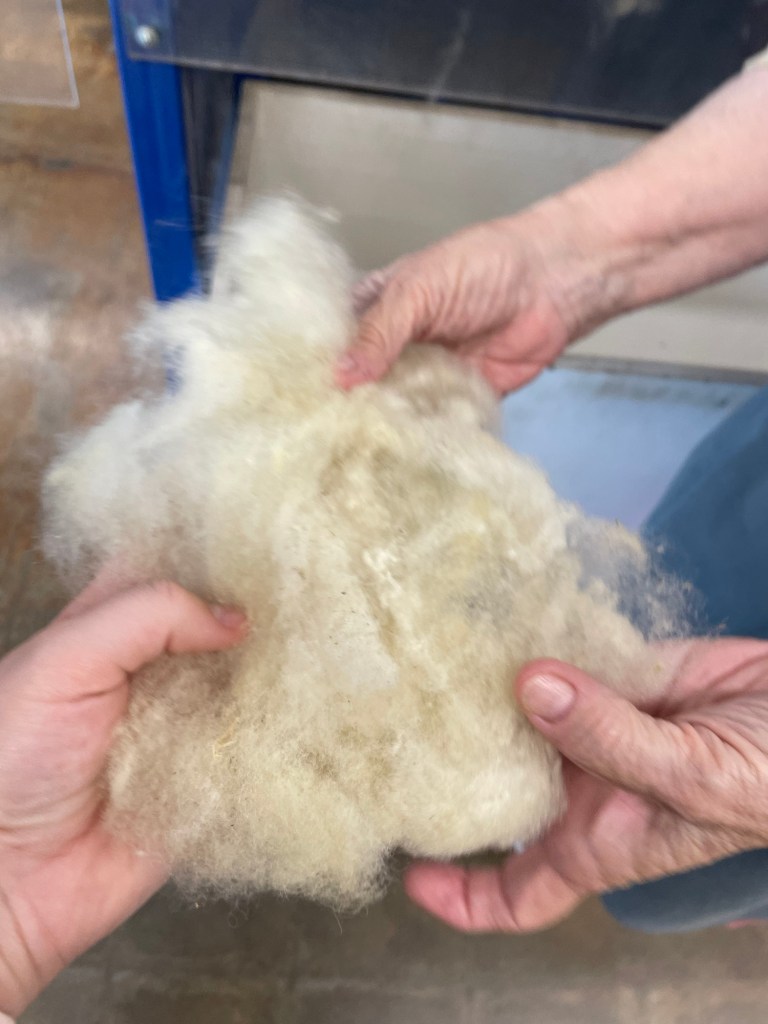
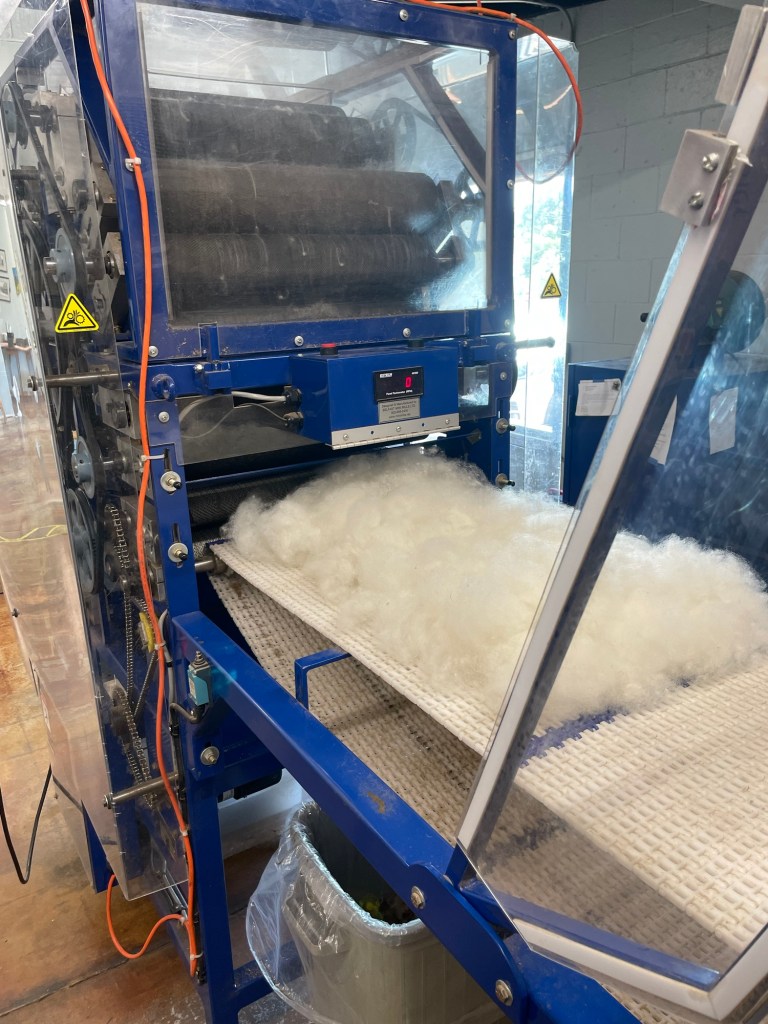
Oklahoma Mini Mill (OMM) isn’t usually open to the public for walk-ins since they’re a working mill and conduct most of their business online, but one of the owners gladly gave us a tour after she stamped our card. We got to feel some amazing fibers at different stages of processing. It was really interesting to be able to feel the different lanolin contents of wool as the cleaning and fluffing (industry standard term, I’m sure) progressed.
I’ve seen a friend hand process llama fiber before but never really paid attention to this part of the yarn process before, so this visit was very educational and interesting. We even got to touch some amazingly soft bison fiber that costs around $30-35 an OUNCE, and I think that’s the cost before processing.
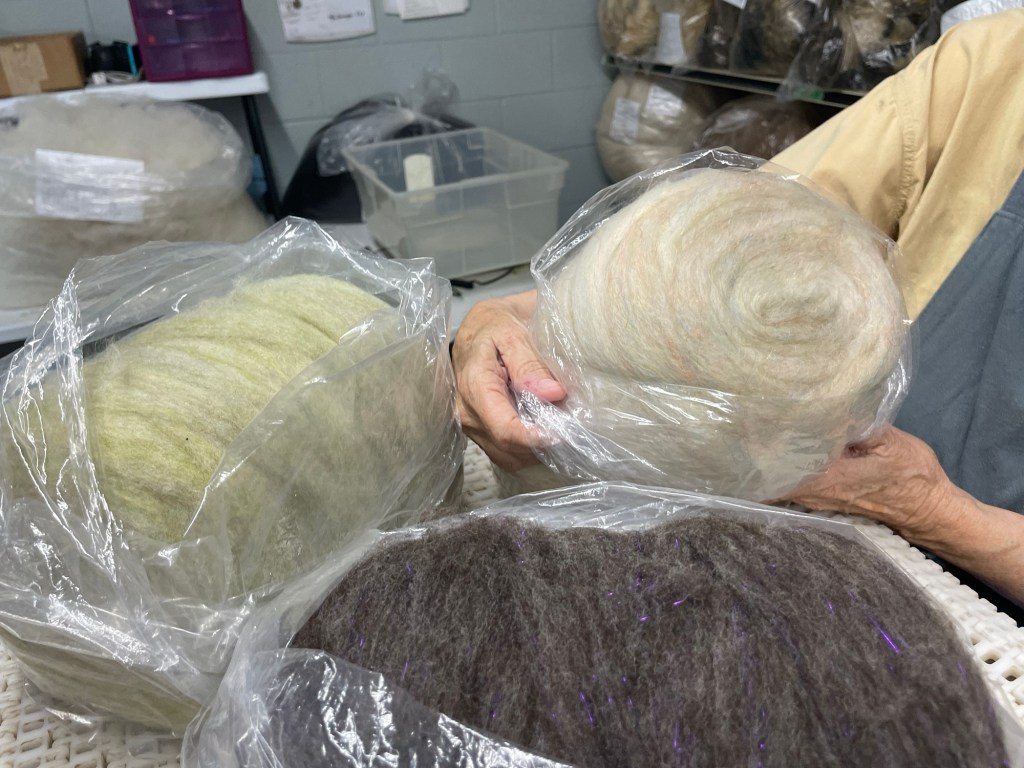
Oklahoma Mini Mill mainly focuses on processing fleeces for hand spinners, so they process fibers until they are ready to be spun but don’t do the actual spinning. Customers send their fibers to be cleaned and blended into fiber batts. They can even add in special things like this angelina sparkle.
Another neat factoid about OMM: They don’t waste any wool! Pieces that aren’t suitable for processing and spinning are saved and used as insulation.
I didn’t purchase anything from OMM while we were there during the yarn crawl. Most of their business is actually online through Etsy, which I’ll link below.
Oklahoma Mini Mill also vends at the Fiber Christmas in July show, so there is yet another incentive to attend Fiber Christmas if you haven’t yet!
You can learn more about Oklahoma Mini Mill at their website, Instagram, Facebook, or Etsy pages.
Guthrie had two stops on the yarn crawl. Next up was in historic downtown Guthrie
Sealed with a Kiss – Guthrie
Sealed with a Kiss brought in trunk shows and debuted HowdyDo, a new locally dyed yarn inspired by the women of the Wild West, during the yarn crawl.
We missed their Lunch in the Loft event by a couple hours because I forgot to check ahead with every yarn crawl stop like I meant to. Learn from my mistakes and check each shop ahead while planning!
Sealed with a Kiss had a really nice selection of knitting accessories as well as bags, fashion accessories, and even some non knit garments. It’s a yarn boutique but not just a yarn boutique.
I bought a wonderfully sparkly shawl pin. I just can’t resist sparkles.
You can learn more about Sealed with a Kiss by visiting their website, Instagram, and Facebook pages.
Susan and I got a hotel in Edmond for the night that ended up being less than 10 minutes from our next stop
Kristy’s Fiber Arts -Edmond
Kristy’s Fiber Arts is a dyeworks that features Kristy’s hand dyed yarns with a few other yarns alongside them.
Susan and I grabbed a coffee and waited in the parking for 10AM, the daily yarn crawl start time, but Kristy saw us and another group in our cars and invited us all in early.
We had a great time browsing and chatting, and Kristy shared a little bit about how she names her colorways. A lot depends on who or what she’s thinking about when she dyes. Mine would all end up being named after my chickens or food!
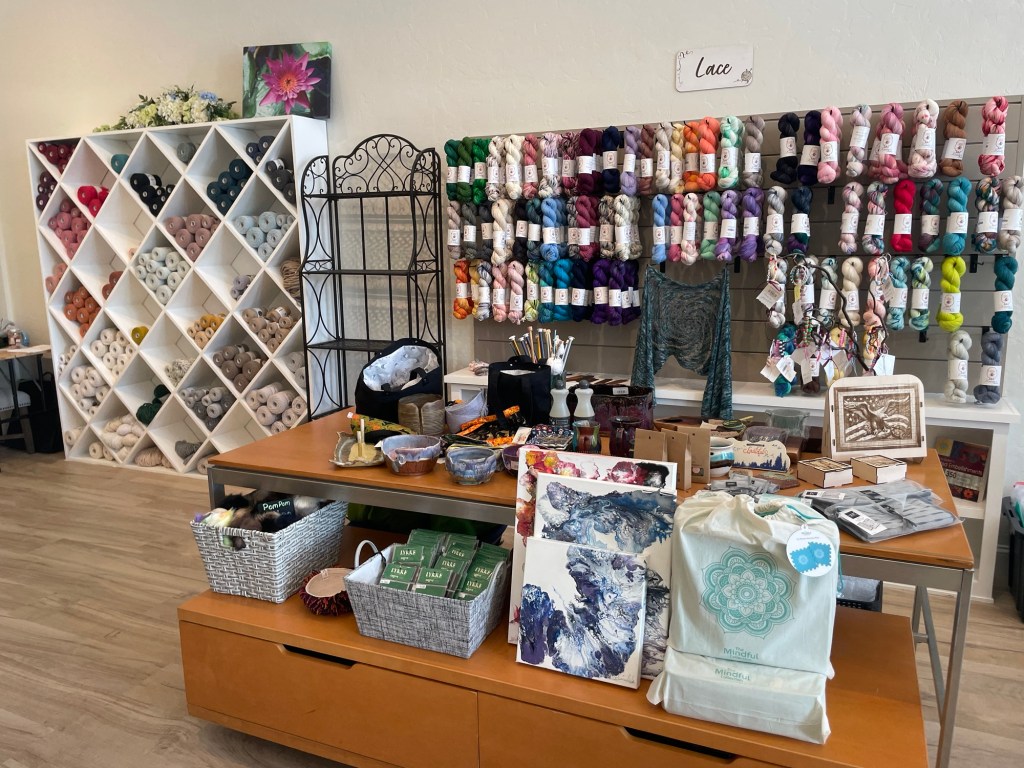
Yarns were organized by weight. I love to see hand dyers working with more than just sock weight yarn. I want those pretty colors and one-of-a-kind skeins in lace and bulky weights, too!
Kristy also stocked pretty macrame cord, so I made note of that for my mom, who does really nice macrame work. It was the most colors of cord I have ever seen in store, so if you like macrame, Kristy’s Fiber Arts is a great stop for it, too!
I bought some orange yarn and a mini skein kit from her at Fiber Christmas in July this year that I really liked, so I was excited to see what I missed that she’d have in store. The green and black yarn made me think of my younger brother, so Merry Christmas to him! I hope he’s not tired of beanies!
The next stop was also in Edmond-another dyeworks.
A Chick That Knitz – Edmond
A Chick That Knitz used to be a “full blown” yarn shop a few years ago, but they weren’t as able to focus on dyeing yarn as much as they wanted, so they took a step back and opened as a dyeworks with exclusively their own yarn and limited days open to the public.
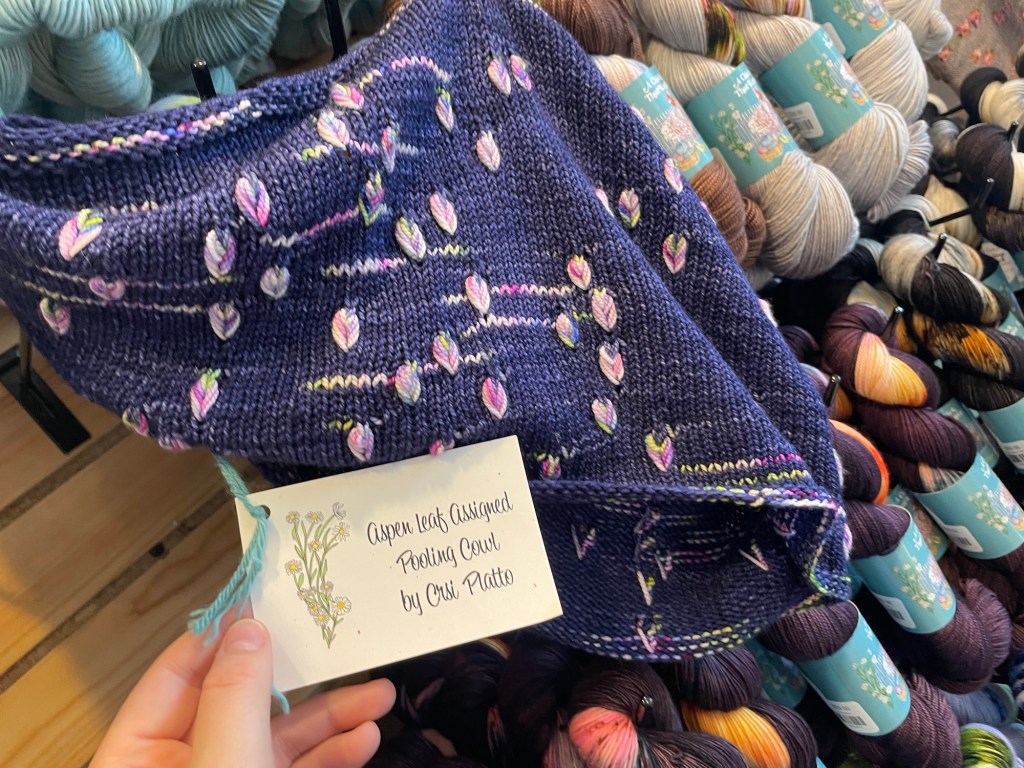
I’ve followed A Chick That Knitz online for quite a while, and I was excited to see their planned pooling yarns in person. The concept is simple— knit in one stitch, perhaps stockinette or garter stitch, for the main color of the yarn until you come across the color pooling bit (this is the section that isn’t the main color) and perform a special stitch.
It’s simple enough, but because each hand dyed skein is unique, it really enables you to create a one-of-a-kind item.
A Chick That Knitz has much more than just planned pooling yarns, but those were something I had been waiting to see for a long time because they’re how I learned about this way of using planned pooling. I’m in their area a few times a year, but the timing never lined up before to be able to see their space, so I’m glad I finally got to experience it during the yarn crawl.
I bought planned pooling yarn from their website after the yarn crawl ended.
You can learn more about A Chick That Knitz at their website, Instagram, and Facebook pages. Also look at their cool chicken logo!
The cloud ate my pictures from our next stop alongside most of my pictures from A Chick That Knitz, so I’ve linked some of their Instagram posts to show you their space.
MoonDrake Co. – Oklahoma City
When we reached MoonDrake Co. dyeworks in Oklahoma City, it started to hit me that our yarn crawl journey was almost over. The public part of the shop is on the small side but is nicely organized. Wool and dye scents wafted from the back room, and I really enjoyed that. Wool and lanolin smell is so comforting to me.
Because the display area was smaller, it was easy to see the many different types of yarn bases MoonDrake uses in their yarn lines.
I went home with a large skein that was actually two skeins —one of a stubby yarn and one of a cashmere/mohair blend— that were meant to be worked together into the same project. I also purchased a really pretty neon tweed yarn that I am looking forward to working with.
I really wish my photos hadn’t been eaten because the display did a really good job of telling the neon tweed line’s color story. They’re gorgeous, vibrant, and fun.
Our final stop on the 2024 Oklahoma Yarn Crawl was
Yarnatopia—Oklahoma City
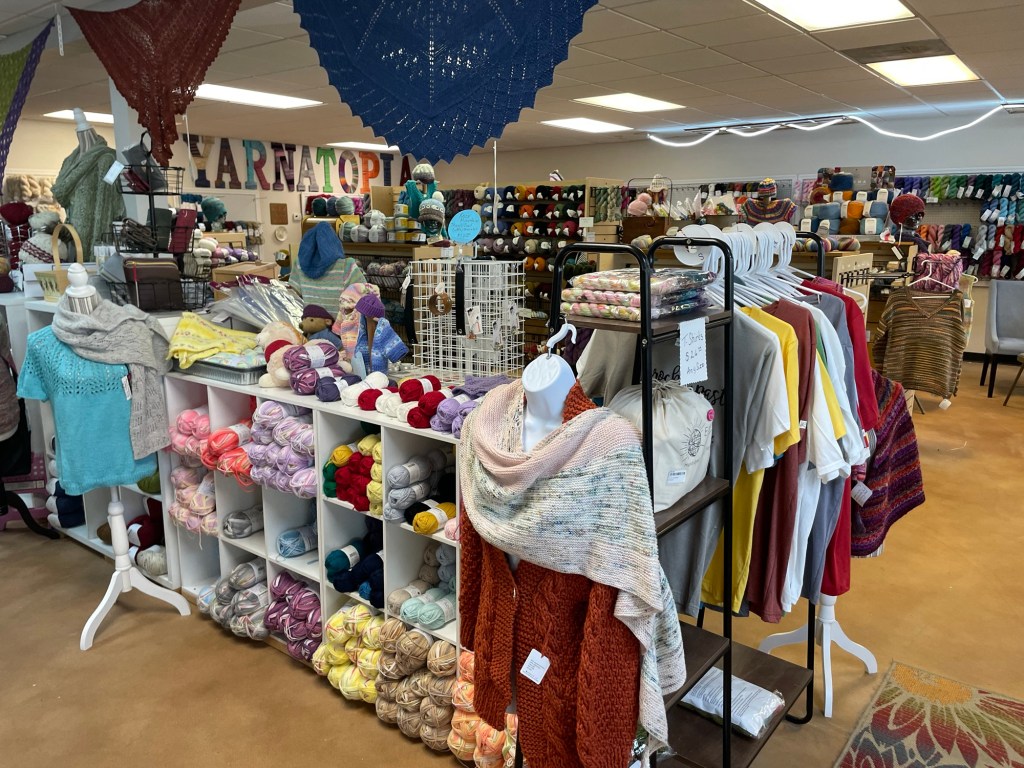
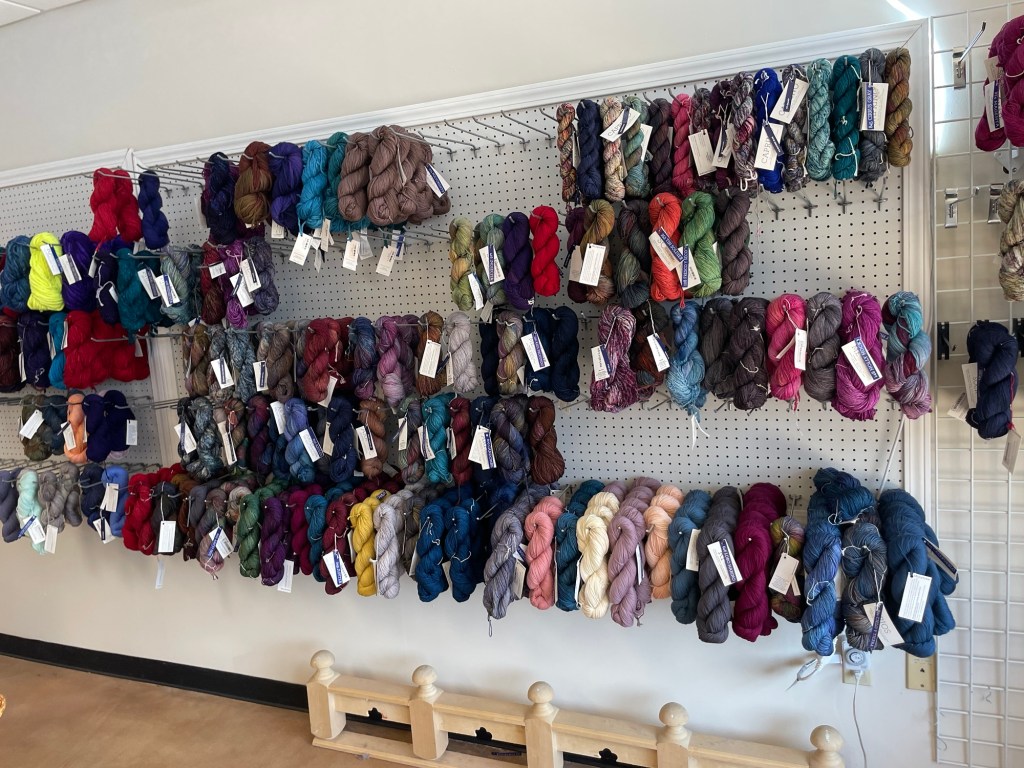
I’ve been to Yarnatopia a few times over the years, having pleaded with Chris to stop by on the way to or from visiting family. I really enjoy stopping by. The shop is a very nice size and has a really nice Malabrigo yarn wall. I know others appreciated it, too, because it had been picked through by the time we got there, and the yarn crawl had two days left!
I found some really nice “hi-viz” yarn to make a hat for my dad (he always requests a hat for Christmas) and a very nice slub yarn by Emma’s Yarn. (I tried to buy from all different brands but didn’t realize the sock yarn I bought from Cozy Corner Knits was also Emma’s Yarn. Guess that means I need to look into that brand more since I really like what I’ve seen so far!)
I really like the “Yarnatopia” yarn-wrapped letters on the wall, but I don’t think Chris would go for that in our house….
We were both pretty tired at the end of the Yarn Crawl and had a two and a half hour drive back to my place. Susan had another hour to go after she dropped me off. I think we’ll attend a few more days of the yarn crawl next year rather than trying to squish everything into three total days. We’ll be able to spend more time at each shop and participate in events that way, too.
Every shop owner I talked to seemed very excited about the results of the yarn crawl for their business, and the crawl still had three days left to go when Susan and I made our way to the central Oklahoma area shops.
Many of the dyers had sold out of colorways and had to tell crawlers when they’d be back in stock. I ended up making some purchases online or through Etsy after the official crawl dates were over to find colors, bases, and fibers I liked the most.
I knew of many of these businesses before the yarn crawl, but I had only managed to visit about half of them before the event. I have family in the western part of the state, and I’m already thinking up alternative routes that would allow me to drop by and see shops again on my way out and back home.
The yarn crawl did a great job showcasing how amazing and varied the Oklahoma fiber community is. I loved seeing each dyer’s different color stories and the variations in each shop’s different brands and specialties.
I had a wonderful time meeting Oklahoma’s fiber talents, and I can’t wait for The Second Annual Oklahoma Yarn Crawl 2025!
Thanks for joining me on this road trip recap of the 2024 Inaugural Oklahoma Yarn Crawl! Have you ever been on a yarn crawl as a customer or as a host? Do you plan your own yarny road trips?
Christmas Covid is the gift that keeps on giving, and recovery has been rough. It’s Fiber Christmas In July time already!
I’ve been through a slew of tests with more to come, but I’m finally able to break through the covid brain fog enough to feel confident writing again.
My yarn rep stopped by a few weeks ago and gave me some yarn samples for inspiration, so I thought I’d share my opinions with you.
Disclaimer: All opinions are honest and my own. I was given this yarn for free with no expectation of review or endorsement.
Jody Long Delish
is a 50/50 extra fine merino wool/mulberry silk blend you will want to pet and squeeze repeatedly the second it gets into your hands. The color palette is well-rounded for a that is newer to the market with a nice blend of neutrals, pastels, and brights in its 16 colorways.
With an MSRP of $19.99 and MACHINE washable and DRYABLE labels on the tab, Delish seems almost too good to be true. Skeins are 50 grams each with 230 yards per skein (that’s about $0.09 per yard), which makes sweater quantities (1200-2200) fall in the $120-200 range. For a luxury yarn, that number feels about right.
Delish is OEKO TEX and Mulesing Free wool certified.
I carried my sample skein in my purse for days and made all of my friends squish it and rub it against their face. It feels amazing.
How It Worked Up
Delish flew through my standard gauge machine at Tensions 10 and 8, and I suspect it would be nice even at Tension 6, although that might produce a fabric that is too tight to show off the yarn’s wonderful drape. According to the label, Delish is a CYC 1 Superfine/Lace weight with a recommended hand knitting needle US3 and crochet hook D. It is a good yarn weight for lace work and could also be treated as a light fingering weight yarn with nice results.
Machine Compatibility
Standard
✔ worked amazingly
Mid-Gauge
✔ lower tensions
Bulky
✔ will work, but not the best choice
My sample skein was only 25 grams (retail version is 50g), so I didn’t test at as many tensions as I ended up wanting to.
I had zero issues with yarn breakage or tangling, but this yarn will stick to itself if you give it the chance. I ran into quite the yarn tangle while winding it into a cake on my yarn swift.
Laundry Care
I was most excited about the machine washable and dryable aspects of this yarn, and while the label is technically correct— you can do it— you shouldn’t.
My swatches did not appreciate being machine washed, and the second I pulled them from my machine, I wished I hadn’t done it.
Delish developed a very nice halo after washing, but it was also pill city. That doesn’t bode well for high-wear areas in garments.
halo and the beginning of pilling
The yarn also lost a lot of its pleasant sheen.
Here’s a refresher on how I treat my swatches when testing yarns:
Fresh off the machine — Set Stitches, Lay Flat, Measure, Record Gauge
Hand Wash, Flat Dry, Measure, Record Gauge
Machine Wash Cold, Flat Dry, Measure, Record Gauge
Machine Wash Cold, Machine Dry, Measure, Record Gauge
I think this method gives me a good feel for how a yarn will wear when worn. If I am concerned about a fabric dropping or I know the garment will be particularly heavier, like a skirt, I will hang the swatch and put a claw weight on it for a few days to simulate the weight and pull of the garment.
Always treat your swatch like you will treat your finished object!
A small part of me knew the machine wash and dry labels were probably too good to be true. I was disappointed, yes, but Delish did maintain its drape and wonderful hand feel after machine wash. It lost a bit of its sheen/vibrance after washing, but the halo was a nice trade off. The pilling wasn’t unexpected since the yarn does like to stick to itself, but I will note that the pilling issue wasn’t as present with hand washing.
Final Thoughts
Jody Long Delish is a really nice, luxury yarn at a decent price. It flows well through a knitting machine and wears fairly well if you treat it like a luxury yarn—which means NO machine washing or drying. (This may be a hot take, but if you put in the time and money for a sweater’s worth of yarn, you should be hand washing it anyway.)
I have to be very picky about what I spend my energy on now with Long Covid, and I’m probably a little more disappointed that I might’ve been in the past about the machine washable and dryable aspect not turning out as well as I’d hoped.
I still plan on buying some of this yarn.
While I originally wanted to make myself a nice cardigan using it, I think making a lacy shawl will show off the yarn’s wonderful drape and feel and take advantage of its lightweight warmth while avoiding the inevitable pilling in the higher wear areas of a cardigan.
Thanks for joining me on my machine knitting journey! I love hearing from you!
Contact me if there’s something you’d like me to cover in future posts, or feel free to leave your thoughts in the comments.
In-person classes are on track to resume at Get Stitchin’ in October. I am in the process of getting internet access in my studio for future Zoom classes and streaming sessions. Hooray rural life!
I don’t know many machine knitters who have just one knitting machine. After all, there are three common gauges (4.5mm standard, 6.5mm, mid-gauge, and 9mm bulky) that knit different yarn sizes. It’s wonderful if you’re fortunate enough to have the space to leave all three sizes of machines set up, but that’s not the reality for everyone.
So what’s the best way to store your knitting machine? Options vary, but there are some definite musts for storage.
Between Projects
If you plan to leave your machine set up while you aren’t using it, you should cover it with a sheet or table cloth to protect it from dust.
simple instructions from a knitting machine manual
Storage Musts
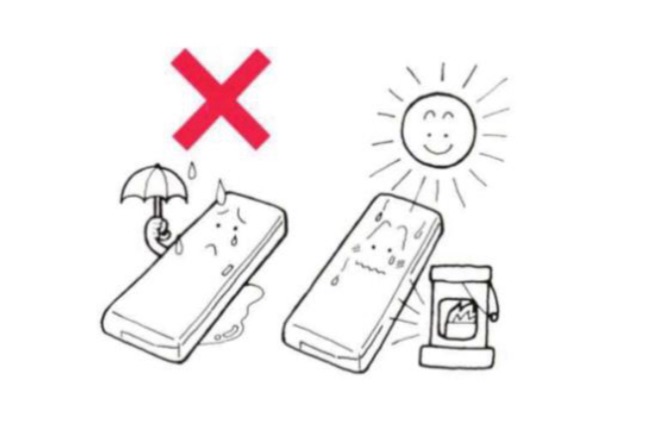
Climate Control is a must. Plastic beds and parts can become brittle if exposed to temperature extremes. Freeze/thaw and extreme heat can also damage the machine’s metal parts. Prevent warping by storing your machine in a climate controlled environment.
storage warning doodle from a manual-Keep away from moisture and heat!
In addition to temperature, you should pay attention to humidity. Metal needles can rust open or shut. Sometimes extensive cleaning can save old needles with superficial rust, but uneven needle surfaces can snag yarn, and it’s generally not worth the time and trouble to try to save them.
Prevent rust and buildup by only storing a clean machine. Excess oils and lubricants can build up and eventually gunk up your machine’s moving parts. They also attract dust.
You should consider removing your sponge bar and running a long cat-tail cleaning brush through the channel to catch and remove fiber buildup from the machine. You should remove needles to make sure the brush doesn’t get stuck in the channel, so you might prefer to do this step for long term storage only. Removing the sponge bar also prevents any degraded sponge from falling apart in the machine, but hopefully you won’t be storing your machine quite that long!
fiber buildup in the sponge bar channel
Keep Your Boxes
If you have the box your machine arrived in, keep it! Even if your machine comes with a lid and is its own case, keeping the box can prevent dust buildup on the case.
I’ve had to scrub some interesting mystery substances off of the outside of knitting machine cases. A little extra protection can’t hurt.
Machines Without a Box
If your machine does not come with a built-in case lid and you do not have a box, you have a few options.
Rifle cases are often long enough to store a knitting machine bed or a ribber. If you choose to go this route, be sure to measure all dimensions of your machine-length, width, height, and depth, before purchasing a case.
If you lack a box and don’t like the idea of a gun case, you can always build your own box. Big box stores that carry large appliances, appliance specialty stores, and furniture shops often have excess boxes and are happy to give them to you at no charge if you call and politely request some. This option can use quite a bit of tape to secure the box’s shape, but your machine will be secure in its custom box.
Where to Store Your Machine
Your machine is clean and safely tucked away in its box, but where do you put it? Many machine knitters store their machines under a bed or in the back of a closet. If you plan to lift and store your machine on a high shelf, be sure to ask for help. Metal bed machines weigh around 40lbs and can be unwieldy to lift because of their length.
If you prefer to build or buy a shelving unit, be sure to check that it can support the weight of your machines. I bought a heavy duty garage shelving unit with wood shelves for my studio that can support up to 400lbs per shelf. Some less expensive, wire rack storage units are the same size but support much less weight, so make sure to check the manufacturer’s specs before hefting your machine onto any old shelving unit.
What’s Wrong With This Picture?
storage examples
My garage shelving unit can hold all of these machines, but there are still a few issues here. Make sure that your machines and accessories aren’t hanging off the shelves when you store them. (Don’t worry, things were safely stored right after this picture.)
Rumor or Warping Hazard?
The bottom shelves in the picture have machines stored with the case handle and latches pointed upward. I’ve read in multiple forums online and seen warnings in social media groups that storing machines latches up as opposed to latches stored facing horizontally can warp the knitting machine bed.
That’s scary! Can you work on a warped bed?
I read through the manuals of many different models from Brother, Toyota, and Silver Reed, but I didn’t see any notes about machine orientation in storage.
I contacted Knitcraft, the importer of Silver Reed knitting machines in the United States who I’m also a Silver Reed dealer through, and they had this to say:
We have not heard of any issues with warping. Maybe if you have a lot of heat with the LK[150] it could possibly bend standing straight up, but we have not had any of that happen here.
We would suggest lightly wiping [the machine] down with oil and keep the lid on the metal bed machines. Do not store in a spot that can get rusty or frozen or exposed to light. Best places to keep them are in a closet away from the elements. For the LK 150 it would be optimal to store it back in the original box it came in. If leaving up on a table, drape a tablecloth over the machine to keep dust off.
Knitcraft
Have you ever had a bed warp from storing it latch side up? Please let me know! I’ve read the warnings but not seen any actual accounts or pictures of warping from side storage.
If you are concerned about any potential warping, store your machine laying flat as if it were in use. I have traveled with my machines with the latch and handle facing up, but I place them flat for long-term storage. That rumor did make me worry even though those at Knitcraft have not heard of any warping actually happening.
What Improper Storage Can Do
I have a Brother KH 260 knitting machine with a warped bed. It was passed along to me in that condition since I’m teaching myself to fix machines, but that is one of many things I don’t yet know how to address in machine repair.
I don’t know what caused that machine to warp, but I do know it was stored in an attic for many years after its original owner passed away. You can see my attempt to clean it in this post from a couple years ago. I ended up deciding to keep the machine for parts instead of continuing with a restoration.
That machine could still knit stockinette stitch, but I do a lot more than that in my knitting. The punch card unit is cracked and doesn’t function, so I couldn’t test how it worked. Hand selected patterning kind of worked, but only after I removed a lot of oil residue from the carriage and reinstalled some missing springs.
So that’s it-a knitting machine might still function fine with a warped bed, but I never got past stockinette due to other damaged parts. It’s a shame to see a once-loved machine become scrap due to storage, especially a vintage machine that isn’t in production anymore. Some vintage machine brands have dupes so you can buy brand new parts that will work, but the parts aren’t necessarily the same quality as the originals. That lovely Brother KH260 is just back up scrap parts due to improper storage.
Protect your vintage knitting machines by storing them properly in a climate controlled place!
How do you store your knitting machine? Let me know in the comments, especially if you have any experience with a bed warping over time!
Thoughts and suggestions for what you’d like to see articles on can go down in the comments or through the contact form!
Thanks for coming on this machine knitting journey with me! If you like what you see and want to help me bring more machine knitting content, please consider supporting me on Ko-fi.
I backed the project on Kickstarter in 2022. I have only backed three or four Kickstarter projects, but I have to say, Dreaming Robots was great about keeping backers in the know about the state of the project and allowing input. I forgot to fill out the address form when it came out, so my winder arrived in December, but that’s all on me! (Facepalm) I paid the Kickstarter backer price of $189 plus shipping. The cone winder now retails at $259 and is in stock as of the time of writing.
each block is ~1 inch for size reference
The winder was packaged securely and nothing was damaged in shipping. I opted for 10 cones with my winder.
The manual is straightforward and comes with a template to show you how to lay out the tension unit and winder unit. I love that. I’m not great at eyeing measurements, and even though my blocking board lays things out by square inches, I can still measure things incorrectly. It’s a skill.
The cones are 27 grams according to my scale, and I like that they come in different colors. It’s fun. They look pretty cool on the inside once they hold yarn, too.
Assembly was straightforward and well laid out in the manual. There are excellent videos and written instructions on how to use the EEW Cone Winder on the Kickstarter page and FAQs on the product page. I avoided watching anything or reading anything but the initial Kickstarter campaign and the user manual before testing the winder for this post.
Initial Test-Winding Yarn from a Hank
I decided to cone up some of my friend Suzy’s yarn, Woolyboogers Felts. She works out of a studio next door to Get Stitchin’ and exclusively sells at craft shows and Get Stitchin’, so she’s just another great reason to stop by if you’re in the Tulsa area. (You can sign up for one of my classes while you’re there! Standing classes the 2nd and 4th Wednesdays and Saturdays of the month!)
I used knitting machine clamps and the included tension unit clamp to hold the units in place on my counter, and I initially had my yarn swift (this thing) on the counter next to the winder. That meant the yarn was coming down from the swift to the counter level tension unit.
Using speeds 1 and 2 with the loosest, straight tension setting, I wound the 438 yards of sparkly goodness onto the cone. Well, the winder did all of the work. I supervised.
“professional” placement! haha
On the lowest settings and loosest tension, it took a few minutes to wind, but I wanted to be cautious learning the winder. I had a couple of issues with feeding into the tension unit from the swift when I had it sitting so much higher than the tension unit intake. It worked much better when I moved the swift to sit on a chair and the yarn intake was more level with the tension unit as it fed yarn in. The yarn winder had plenty of power to wind from the swift, but I found on the lowest tension it had to work a bit harder if the hank on the swift was held too tightly or the yarn was caught underneath itself.
After the slow speed test run with Woolyboogers, I decided to cone up four skeins of Berroco Modern Cotton DK. (I’ll be reviewing it soon, so be on the lookout for that post in the future!)
warm light | cool light
I wound each skein at a higher speed than the last, with the final at speed setting #5. I was catching a breeze from the swift at that point! I used the higher tension winding setup as shown in the manual for this yarn.
It looks great coned up! The cone has two small holes at the top for you to attach the yarn label and then store in the center of the cone.
I prefer a more tightly wound cone of yarn, especially for fibers like cotton. The looser tension setting is probably more ideal for delicate yarns. I didn’t experience any yarn breakage, and I did “jam” the winder a couple times. More on that in a bit.
Turn up your audio to hear what the EEW Cone Winder sounds like at speed #5 in my Instagram video below. My pictured setup isn’t ideal, but what I had worked just fine!
I wouldn’t say the cone winder is loud, but it definitely isn’t silent. You can hear it working rhythmically, but I didn’t find it unpleasant.
If you’ve wound a lot of yarn into cakes before, you’ll appreciate the electric cone winder doing the hard work for you. Your arms can get tired after a thousand yards, but with the winder, you’re just turning a dial after a little yarn threading. Easy peasy!
Experimenting and User Error
Ah, the aforementioned jam.
The only issues I ran into using the electric cone winder stemmed from user error and experimentation with yarn swift placement for intake through the tension unit.
At one point, I was pulling additional yarn lengths from the swift because the winder seemed to struggle with pulling directly from the swift.
I shouldn’t have been pulling additional yarn out. The winder didn’t need my help. It operated fine, albeit slowly, when I stopped feeding it yarn myself at low settings as well as after I increased the speed dial setting.
While I was pulling that additional yarn from the swift, knots and loops developed in the yarn and happened to hook themselves around the metal guide spiral. The winder kept going for a tiny bit (of course, it is set to ON and rotating) BUT then it stopped.
When I read the FAQs on the product page, I found the motor stopping is by design, and I appreciate that it stopped and didn’t break my yarn!
This is by design. It is bad for the motor to continue trying to spin when it is not spinning. At low power this can happen when it’s trying to spin slowly but there isn’t enough motor to actually spin the drum. In this case the motor will turn itself off until it sees no attempts to spin for 3 seconds. To work around this turn the speed dial to off and then wait three seconds and it will resume normal operations.
This is one of the reasons why you don’t set the winder and leave it. If something happens, that delay gives you time to fix things.
I’ll say it again: winder does have enough power to be able to pull yarn off of a swift through the tensioner unit, but at low speed settings with looser tension it seemed more likely to knot up or loop around the metal guide spirals on the tension unit, especially if the yarn wasn’t feeding in quite even with the tension unit (that pesky user messing with it…). It may seem counterintuitive, but I didn’t experience the same looping when I upped the tension and the winder speed (and left well enough alone). Pulling extra yarn from the swift to feed into the tension unit just gave the yarn opportunities to form knots and loops and catch on the tensioner.
Yarn placement is important, and getting it right makes your experience with the cone winder much smoother.
Why Buy a Cone Winder
As someone with hand and arm issues, I am so excited to have a way to wind that doesn’t depend on my arms functioning well that day. And, since cones are the most ideal yarn put-up for machine knitting, I can say goodbye to my awkward cake yarn winder. It served me well, but I’m happy to move on, and I won’t miss the occasional loops across the top and bottom that sent my yarn rolling.
At $259, the electric eel cone winder is not cheap. That’s a chunk of change for anyone, but if you want to use hand knitting yarns by machine and your ball winder isn’t cutting it, I think it’s worth the investment, especially if you have years of knitting in front of you, or if you are like me and have issues with your hands, wrists, and arms in general. Cutting out the winding motion lets me use my body’s limited energy to work on actual knitting.
All opinions are honest and my own. Purchases are made with my own money. Links may be affiliate links. If you choose to purchase something using my Amazon affiliate link, I may earn a small commission at no cost to you. If you don’t have somewhere local to purchase your machine knitting needs, please consider using my links to support the site!
Thank you for joining me on my machine knitting journey! How do you prepare your yarn for machine knitting? Will you invest in a cone winder? Let me know in the comments!
It’s not technically a knitting machine accessory, but it sure does make life easier! If you don’t use one already, consider getting a craft cart to help organize your machine knitting tools and accessories.
I use a three tiered craft cart to keep my weights, carriages, and accessories organized and contained while I work.
I’m a bit scatterbrained on the best of days, so having a system where everything has its place really helps me stick to a task without distractions. I’m much less likely to lose things when I have a system.
This cart used to be organized with one tier for each gauge and a miscellaneous hand knitting tier when I started machine knitting with just a Brother KH890 and a Passap Bulky Eight, but my collections have a tendency to grow, so I plan on setting up one cart per machine gauge–standard, mid, and bulky.
I keep my most frequently used bits in the top drawer of the cart and use small makeup pouches or pencil cases to keep things like scrap yarn, ravel cord, and safety pin style stitch markers separate.
The middle tier holds plating and ribber accessories …
… and so does the bottom tier. If those ribber weights are on a tabletop somewhere, I can guarantee you they’ll find their way to landing on my foot, so those things get corralled!
My cart doesn’t always look this organized. Of course I cleaned it up for pictures! I often use clip boards or binders to keep my patterns and notes contained, so they float between tiers. Post-It notes with ideas and pattern modifications get scribbled and stuck to the nearest surface so I can continue working with fewer distractions.
I use a metal tilt stand for my standard gauge machine, and it has a shelf for the lid that I use to store the cast-on combs. My LK150 sits on a table or a counter, so I’m looking at a cart with a pegboard-style organization system that hangs down the side.
I’m currently using a lop-sided trash can that was slightly crushed in our move to keep my mid-gauge accessories in one place, so whatever system you decide to use, I’m definitely not going to be judging it.
It’s just important to have one!
How do you organize your knitting machine accessories? Do you have any suggestions for my system? Let me know in the comments below or contact me!
Thanks for reading and joining me on my machine knitting journey!
The Crowood Press has released quite the handful of machine knitting books recently, and you won’t want to miss them. Bill King, someone you might recognize from his regular contributions to Machine Knitting Monthly, shares his wealth of knowledge in this Cables edition of Machine Knitting Techniques.
Once a few basic techniques have been mastered, the number of cable designs available is virtually endless.
The Crowood Press
The Details
Published: 2023
Publisher: The Crowood Press
Format: Paperback
Pages: 112
MSRP: $21.99
Canada: $28.99
Chapters
The Basics of Cable Knitting on the Machine
Press Off Relief
One Tool Cables on the Single Bed
Super-sized Grafted Cables
Racked Cables on the Ribber
Cables and Fisherman’s Rib
Deflected or Moved Ribs
3×1 Mock Rib Cables
Partial Knit Cables
Cable Miscellany
Pattern Collection
Overview
Bill King is a freelance knitwear designer and technician who has worked extensively for the knitwear industry in the UK and overseas. His designs have sold to Calvin Klein, DKNY, Anthropology, amongst others. With 40 years of knitting experience, Bill holds regular knit workshops and seminars in the UK and has written the Masterclass feature in Machine Knitting Monthly for the past ten years.
Machine Knitting Techniques: Cables is a skill book and focuses on instruction rather than patterns, though it does offer four patterns with instruction for three sizes each at the end of the book.
Examples are shown on a standard 4.5mm gauge machine, and most use a ribber bed, so you will need a ribber bed to get the most out of the book.
Instead of schematics, it has needle layout diagrams. If you are new to this type of diagram, it might take you a bit to get used it, but they are straightforward. Over a grid where each square represents one needle, a “|” symbol denotes a needle in work while an “o” denotes a needle out of work. You might sometimes encounter this type of diagram without the grid, as well.
Each new skill has an accompanying exercise with step-by-step instructions so you can practice. From intarsia to plating to tuck stitches, almost every type of cable combination you can think of is in this book.
☼ Project Idea! Keep your exercise swatches and make a patchwork sweater! ☼
Bill King Has Me Thinking More Like a Machine Knitter
The vast majority of my yarn friends are hand knitters or crocheters, and Ravelry is still my go-to for pattern browsing and inspiration. I’ve hand knitted so many cabled things and designed a few of my own, so I’d say I’m at least an intermediate cable knitter. Well, hand knitter.
I never thought about things like Press Off Relief or Mock Ribs. I didn’t need to think of things like that in hand knitting since I could simply knit a few stitches a little bit looser or perform a purl stitch to make a rib. The confines of my hand knitting didn’t need that sort of experimentation or modification. If I wanted to experiment with cables and crossing stitches, I just picked up my needles and started knitting.
Bill King doesn’t shy away from the limitations of the knitting machine. I feel like he leans into them. By making sure the reader understands what things that don’t work well, he reminds the knitter that there are possibilities in the workarounds. Because I spent a decade hand knitting before approaching machine knitting, I found myself thinking “that just doesn’t work well on the machine, so I’ll do it by hand.” King has not only proved that notion wrong, but has inspired me to experiment more with what is actually possible on the machine.
⭐⭐⭐⭐⭐
Rating: 5 out of 5.
I appreciate the years of industry knowledge King shares in the Cables technique book. If you’re looking for an extensive look into cabling on the knitting machine, you need to pick up a copy.
Where to Buy
If you don’t have a local shop to support, please consider using my amazon affiliate link to purchase your book. I may earn a small commission at no cost to you, and it helps support the site.
Thank you for joining me on my machine knitting journey! Do you have Machine Knitting Techniques: Cables by Bill King? What is your favorite new cable technique? Let me know in the comments!
It’s fall, y’all! …well, it is autumn according to the calendar.
Sweater weather hasn’t fully arrived yet in Northeast Oklahoma, but I am here for you with a seasonally appropriate review of Brown Sheep Nature Spun Sport 100% wool yarn ON CONES!
Before we get into my knitting experience, here are
Additional Info •This yarn will felt if you do not follow proper care instructions. •NatureSpun is treated with a moth proofing agent at the time of dyeing that makes the wool “unpalatable to the wool moth larvae.” (See their FAQ page for more details.) •The main wool breeds used are Corriedale, Rambouillet, and Columbian. •This construction is available in fingering, sport, worsted, and chunky yarn weights. •Sport and Fingering are the only options that come in cones.
mid-work on a standard gauge knitting machine
Machine compatibility
4.5mm Standard
Yes
6.5mm Mid-Gauge
Yes
8mm / 9mm Bulky
Yes
Mid to high tensions felt best on a standard gauge machine. Low-mid tensions felt appropriate for the mid-gauge machine. Low tensions are appropriate on a bulky machine unless you plan on using specific techniques that require looser gauge.
(If you’re wondering, I knitted the pictured sweater at Tension 5/5 for the ribbing and Tension 10 for the colorwork.)
What I’m Looking For
I’ve laid out what I’m looking for in a book in recent reviews, but I haven’t really talked about what I want in a yarn. The completely unhelpful answer is “It depends.”
It’s about purpose.
Am I indulging myself in a luxurious, expensive specialty garment, or am I making a jacket I am going to wear every single day? Is the item for someone who will take the time to properly wash it, or is it for a busy new mom who barely has time to think, let alone check the care label on some knitting she got from Auntie Em?
I want to say I’m a bit of a yarn snob because the yarns I end up choosing for personal projects tend to be hand dyed from indie dyers that are specific wool breeds. I want that handmade, one-of-a-kind element to be there from start to finish.
But I can also appreciate acrylic and will argue that has its place in your stash alongside your finest, rarest fibers.
My considerations boil down to •Will this work on my machine(s)? •What is its purpose (everyday workhorse vs luxury) and does it meet it? •How does it feel on my skin? •Is it easy to care for as a gift? •What are the color options? •Is it sustainable/renewable? (This can be difficult to answer depending on the amount of information available) •How does it block? •Does it match the claims it makes? (i.e,. “just like silk!”) •Is this going to be discontinued just because I like it?
I’m kind of kidding with that last one, but I’ll admit I’ve started to stay away from brands that are always introducing new yarns and then discontinuing them after a year. If it’s gone by the time I get to knit with it and I can’t find more, why bother even trying it? That’s a major yarn peeve!
Speaking of yarn peeves, you may not mind these things, but I sure do!
•Knots in low yardage skeins •Knots in general •Donut put-up •Quickly discontinued •Splitty construction •Loose/easily lost labels (especially those wrapped but unsecured labels on those dang donuts)
Nature Spun has a great selection of colors. The two colors I used, Autumn Leaves, an olivey chartreuse, and Pomegranate, an autumn red, had very nice depth of color due to a tiny bit of added black. It really made the colors pop.
With more than eighty vibrant colors spun in four different weights, the possibilities are unlimited for creating something beautiful with Nature Spun.
BrownSheep.com
When I think of 100% wool yarns, I think “scratchy,” but that isn’t the case with Nature Spun. It is a bit more textured than a chemically treated superwash wool yarn version, but that is normal.
Nature Spun is pleasantly soft and squishy with a bit of a size bloom in the twist as it comes off of the cone. Brown Sheep Company classifies Nature Spun Sport as a CYC 2 yarn weight, but I wouldn’t call you wrong if you said it was a light DK or CYC 3 weight, as it is on the heavier end of “fingering” weight yarns.
in bright sunlight, true to colorcolorwork and ribbing stitch definition
This yarn flowed very nicely through my machines. I didn’t encounter any breakage or splitting, and when I needed to un-knit a few rows due to a punch card mispatterning, it didn’t cling to itself or create fiber halos around the strand of yarn as I unraveled it. It did shed a slight bit of fuzz as it went through the knit carriage, but others wools I have worked with shed the same amount.
having a soak
I lightly steam blocked the sweater pieces before putting the sweater together. After a bath in some Eucalan, I wet blocked the finished sweater.
The yarn bloomed a tiny bit more after a steam and a soak, but the stitch definition is still nice and clear.
This wool is WARM. Much too warm for Oklahoma in general, but I had to try it on even if it was 82F outside when I finished. If you’re at higher latitudes, this should keep you very warm in the winter.
If you’re picky about your yarn’s sourcing, Brown Sheep Company says it sources its wool from local growers, and the entire process save wool scouring, carding, and combing is done at their Nebraska location. Plus, they are family owned.
Final Thoughts
This yarn is much nicer than I expected it to be, especially as a nonspecific wool blend at $0.03 per yard. Brown Sheep Company’s product listing claims “breathability, resilience, vibrancy, and warmth,” and I haven’t experienced anything to contradict that.
I joked with my husband that we needed to buy a building downtown and open up a yarn shop just so I can get a wholesale account with Brown Sheep Company. I really enjoyed working with this yarn, and I plan to purchase more of it. I personally don’t mind its care requirements, but if you plan to gift an item made from this, make sure your recipient knows how to wash it. It’s basically a one-season/winter only garment yarn in Oklahoma, but I think it’s worth it. I give it a solid
⭐⭐⭐⭐⭐
Rating: 4.5 out of 5.
Brown Sheep Nature Spun Sport on Cones is a workhorse yarn you’ll want to add to your stash.
Thanks for joining me on my machine knitting journey! I hope you’ve enjoyed my review. What factors do you consider when judging yarns? What do you want to see next on the blog? Let me know in the comments or contact me through my site form.
Disclaimer I purchased this yarn myself. All opinions are honest and my own. Amazon product links may be affiliate links. As an affiliate, I may earn a small commission at no cost to you if you choose to use my link. If you don’t have a local place to support, please consider supporting the site and using my link.
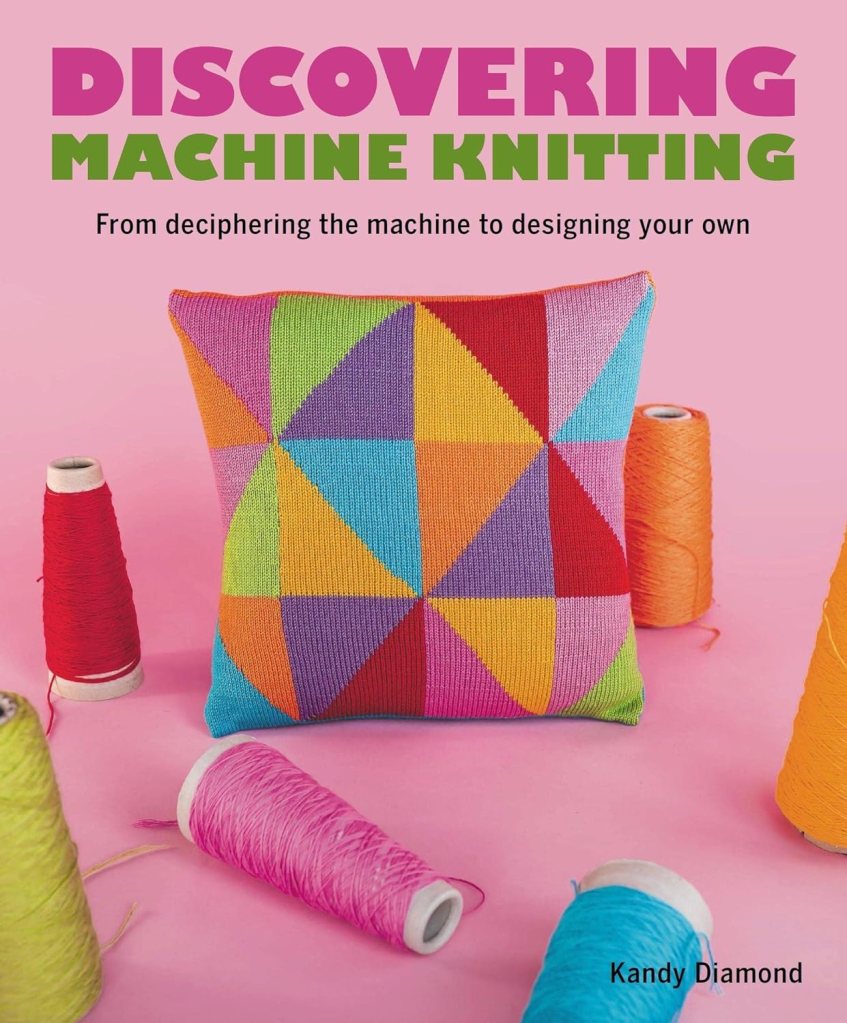
I love my vintage machine knitting book collection, but new machine knitting books just make my day. They’re proof that machine knitting isn’t dying — it’s still evolving, and dare I say, growing.
It’s more than just an eye-catching cover. Here are my thoughts:
Perfect for beginners, it starts with how the machine works and how stitches are formed, all the way through to shaping garment panels to your desired size and fit. Each chapter focuses on different skills that build throughout the book, with lots of projects so you can put the skills into practice and make some knits for yourself.
If you work through the step-by-step instructions and projects in this book, by the end of it you will be designing and knitting your own garments!
Schematics are the first thing I look for in a knitting book of any kind. Schematics make it possible to change yarns and still have a correctly sized finished garment. For plus-size knitters like myself, they make it much easier to adjust sizing. It’s non-negotiable for me– a “good” book requires schematics.
I want to see what makes up the designer’s perspective. What makes them unique? How do they work with the classics? What do they bring to the crafting community, and what do they think of that community?
If a book touts itself as a skill book, I want to see pictures and detailed how-to’s throughout. Machine knitting can become intuitive, but setup often includes multiple steps that are easy to miss if someone becomes overwhelmed during the learning process.
Overview
Discovering Machine Knitting by Kandy Diamond is a start from scratch course based on using a standard gauge (4.5mm) domestic knitting machine, but that doesn’t mean users with other gauge machines won’t find it useful. Basic skills translate between machines, and while mid-gauge users (6.5-7mm) will need to learn to hand select needles for colorwork, the skill-building projects are still worthwhile.
Diamond begins the book teaching readers about the knitting machine itself–parts and accessories; stitch formation; fiber considerations; basic cleaning, maintenance, and troubleshooting.
Chapters each teach a different set of skills and are further divided into sections with detailed written instructions accompanied by step-by-step photos and colorful diagrams. Example pictures use bright and easy to see colors with contrasting colors illustrating notable instances in the knitting process.
Designer profiles throughout the book introduce readers to artists across the industry, offering more perspectives to beginners along with showing the possibilities of what they, too, can do after they have completed the book’s course.
Thoughts
I greatly appreciate those with decades long machine knitting careers who have shared their work with us, but I often feel a generational disconnect because, well, we are from different generations, and sometimes machine knitting patterns and the craft itself just feel… old. I want my peers to look at my work and not think I’m just doing granny things.
Discovering Machine Knitting makes machine knitting look approachable, fun, and current. The book echoes the bright and fun vibe that Kandy Diamond curates on her Instagram account through her brand Knit and Destroy, and the beginner-appropriate projects feel updated and wearable.
The book is instructional without feeling sterile. The designer profiles and Diamond’s own designs offer inspiration and remind the reader that this is only the beginning. This combined with the well thought out photos and use of color to illustrate separation in steps keeps the book engaging and the messaging clear. There is so much attention to detail in this book, and I feel Diamond’s enthusiasm through the pages
Diamond walks you through the knitting design process from yarn selection and swatch to finishing and makes the math involved feel like just another step in the knitting process as opposed to the “intimidating barrier” many students I’ve encountered consider it. The book is worth a buy for the design math alone.
There aren’t a ton of projects in this book, but each is customizable, skill-building, and wearable, so I think you’ll find yourself making them more than once.
I made an autumn-themed version of Diamond’s Sweet and Simple Block Jumper using Brown Sheep Company’s NatureSpun Sport 100% wool.
This is a great project that will help beginners get a good feel for the machine and gain confidence in their design abilities. More on this yarn and project in a future post.
drying swatchpurl side view true-to-life colorsKitKat approvedhaving a soak
Schematics? Where appropriate Perspective? Explorative and focused on contemporary design How To’s? Detailed and well thought out
This book makes me excited. After reading my copy from Blackwell’s UK, I asked the shop owner where I teach to order a few copies for the North American release so I could recommend it to my students. One of my students even mentioned its upcoming release to me at a lesson to make sure I knew of it!
If you’re a beginner or someone who needs a skill refresh after years away, this book is for you. If you’re not a beginner but you want to learn more about machine knitting designers of today and support their work, this book is for you. If you’re just looking for project inspiration, this book is for you.
⭐⭐⭐⭐⭐
Rating: 5 out of 5.
Where to Buy
If you don’t have a local yarn shop or bookstore who can order this for you, please consider using my Amazon affiliate link when you purchase your copy of Kandy Diamond’s Discovering Machine Knitting. I may earn a small commission at no cost to you that helps me continue providing free content.
Thanks for joining me on my machine knitting journey! If you have an idea for a yarn, book, or product for me to review, please let me know through my contact page.
Did I miss something? Disagree? Let me know in the comments!
In my last post I showcased a project where I used NINE colors to push my creative boundaries. I ended that post feeling more confident, but when I went to choose colors for my next colorwork project, I found myself even more color-shy than before!
Since I’m still not convinced I know enough about colors to be allowed to choose combinations on my own, I thought I’d share different ways to choose a color palette that will help you build and discover your own color stories.
Use a Color Wheel
To me, using a color wheel feels like the “pro” way to choose colors. It’s the way “real” artists do it, or so my head says.
(I’ve considered myself a “real” artist for a while now, and I only just bought a color wheel, so let’s all remember to ignore those negative “not a ‘real’ artist” thoughts if they pop up, okay?)
If you don’t have a color wheel and/or a local place to buy one, please consider using my Amazon Affiliate link to support my site! I may receive a small commission at no cost to you, and it helps me keep my content free.
This post from Felt Magnet explains how to use color wheel and defines the associated terms. There are lots of other great posts on Color Theory and color wheels out there, so search up a few and give them a read if this one wasn’t enough for you.
I bought my color wheel from the Across Generations natural dye booth at the Fiber Christmas in July fiber festival. She doesn’t seem to have any in her Etsy shop, but her colors are so amazing and inspiring that I wanted to make sure I linked her because you can …
Use Your Favorite Artist’s Colors
You like them for a reason, right? If you aren’t confident enough to trust your gut, trust someone else’s!
Since most artists now have websites and/or social media, you can keep up with their work without going to galleries.
Find a piece that speaks to you and identify your favorite colors from that piece.
From my slightly overwhelming experience with nine colors, I suggest you start with just two or three.
Kacy Latham is my favorite artist, hands down. I love the way she plays with bright colors and texture as well as the way her shapes flow. We actually grew up in the same town, and while I don’t know her well because she’s a bit older than me, I’ve followed her art journey for years now. She is constantly pushing herself to create and share her work, even painting numerous public art pieces for the residents of that tiny town in Texas to enjoy.
What colors would you choose from this piece from Kacy’s Instagram?
I chose the darkest navy blue from the top right and the rosy, bronze-y brown just left of middle.
Follow Indie Dyer Collections
Don’t forget your favorite fiber artists!
If you keep up with your favorite dyers on social media, look through their feed or ask them how they choose their colors when you visit their booths at fiber festivals. Jenny at 316 Dye Studio recently released an entire collection inspired by Bob Ross paintings!
Sometimes indie dyers will even feature curated palettes of their yarns, so it’s worth it to go see what they’re up to when you’re looking for color inspiration.
Go Through Your Finished Objects
Even if you’ve knitted it up already, take a look at your favorite yarns and completed projects and try pulling your color palette from them, especially if you used a kit or a yarn with an existing color palette.
I don’t even know where this scarf is right now…
I hand knitted this Gallatin Scarf back in 2016. I hated the yarn but loved the colors. The self-striping element made knitting through the pattern interesting, and I can see this palette being perfect for a floral colorwork sweater.
Use an App
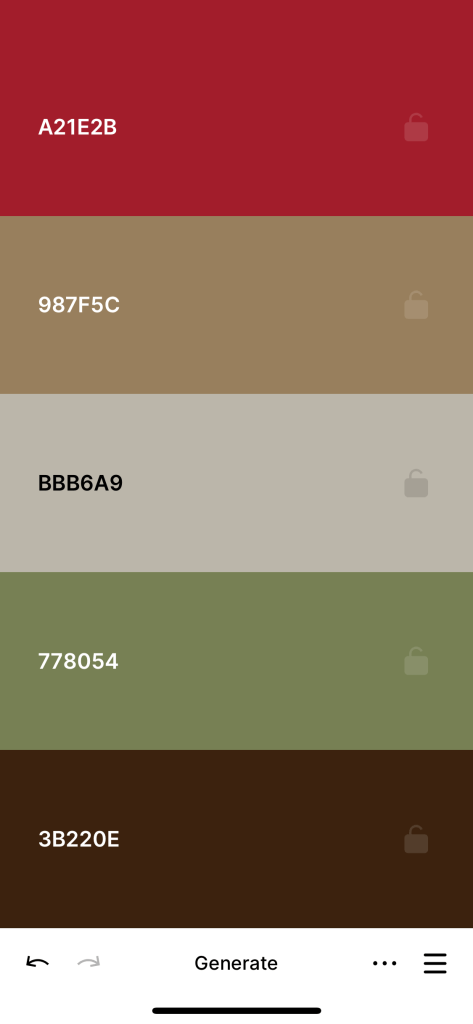
As mentioned in my Confronting Color post, you can browse a color palette app like Coolers.co for inspiration. You can also create your own palettes with up to five colors without a Pro subscription.
My favorite feature might be pulling a five color palette from an existing image.
sunflower from my gardenmy friendliest breakfast layerGoldie’s Palette
You simply drag the white circle selector to different colors to change what it generates in your palette.
Canva.com also has a similar image palette generator. I’ve only used the free versions, but both Coolers and Canva have additional features in their subscription only tiers.
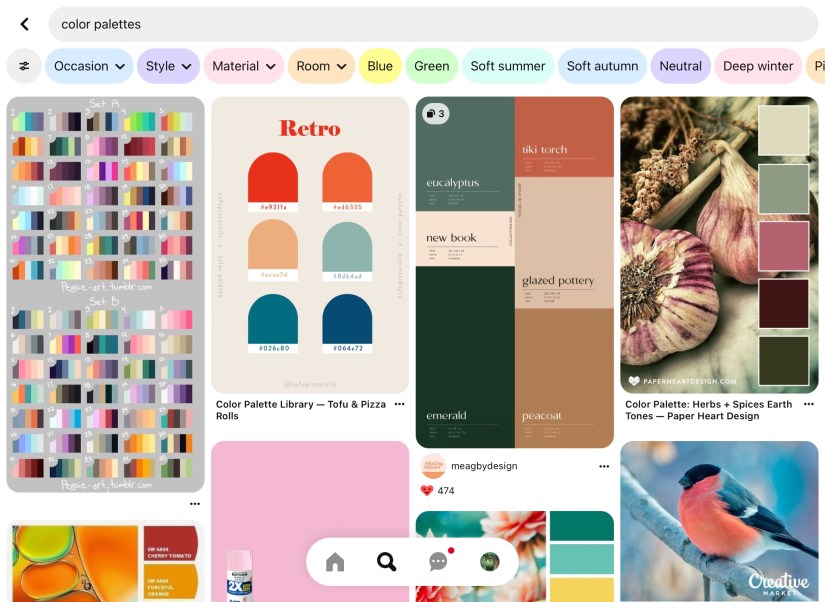
As ad-filled and misdirected as its links can be, Pinterest is still perfect for making mood and inspiration boards.
Ask Around
In addition to having fiber suggestions, your local yarn shop is a great place to ask about color combinations. Since the owners have likely already ordered for the coming season, they might be able to point you in the direction of future color trends.
Your LYS’s staff probably aren’t the only helpful people around in your fiber community. In my experience, there’s always at least one regular who everyone counts on for their color choosing capabilities.
Get Stitchin’, where I teach lessons, in Tulsa, OK almost always has a trunk show rotating through the shop. She also carries yarns and fiber from local specialists, so if you don’t have a favorite indie dyer or fiber farm, you will soon!
You probably have a local shop closer to you than you think. Ravelry has a Local Yarn Shop Directory, and most yarn brands have a stockist locator on their website. If you don’t have a local shop to frequent, I hope you find one soon!
How do you choose colors for your projects? What other ways should I try to find color inspiration? Let me know in the comments!
Thank you for joining me on this colorful leg of my machine knitting journey!
























 ELY Knits